
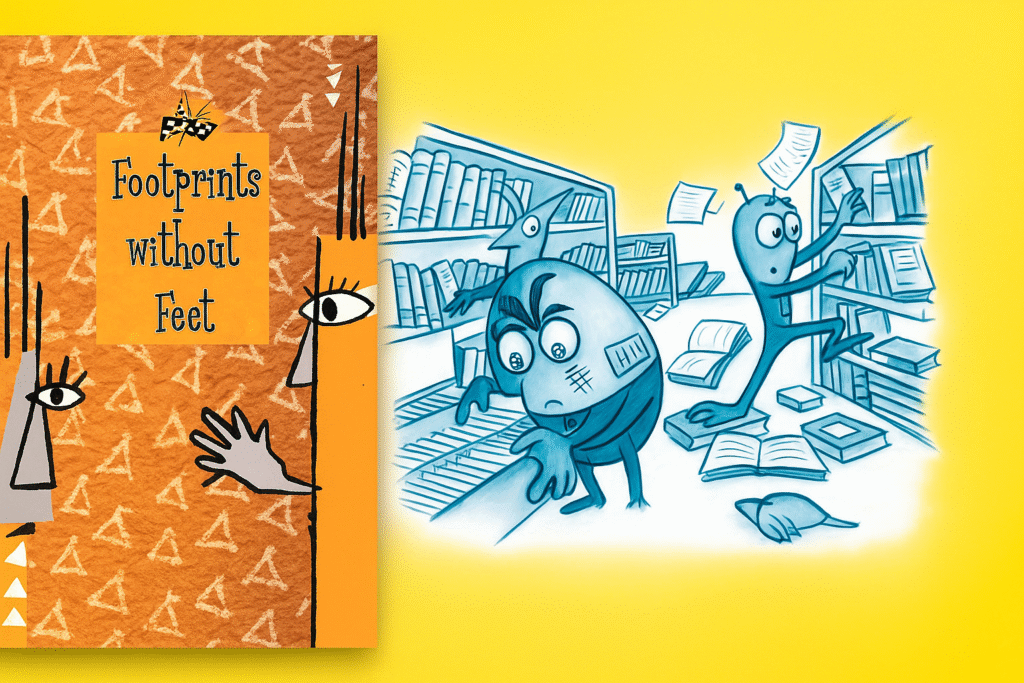
Master this humorous science-fiction play with our complete The Book That Saved the Earth Class 10 study guide covering detailed summaries, character analysis of Think-Tank and Noodle, and the clever role of Mother Goose nursery rhymes in stopping a Martian invasion. Explore the Noodle apprentice role and how he diplomatically corrects mistakes, understand the Era of the Book meaning, and examine the theme moral about pride and the power of literature. This page provides NCERT-style solutions, important questions with model answers, grammar exercises, extract-based practice, and thematic analysis. Perfect for exam preparation and deep understanding of this witty drama about books saving Earth.
Table of Contents
the book that saved the earth summary
English Summary
Have you ever imagined that a simple children’s book could save the whole planet?
What if a silly rhyme confused powerful aliens and stopped a war before it even began?
You are about to see how words, pictures, and misunderstandings saved Earth.
The chapter tells how Earth narrowly escapes a Martian invasion in the year 2040 because of a book of nursery rhymes. The Martians completely misunderstand books and mistake harmless poems for dangerous messages. In the end, fear and confusion force them to abandon their plan and flee.
The story opens in the twenty-fifth century inside the Museum of Ancient History on Planet Earth. A Historian welcomes the audience and explains that the twentieth century was called the “Era of the Book”, when books existed on every subject. She reveals that the strangest thing a book ever did was to save Earth from a Martian invasion. She switches on a projector to show events from the year 2040, when Mars planned to take over Earth.
The scene shifts to Mars Space Control, ruled by the Great and Mighty Think-Tank, a proud and arrogant Martian with a huge head. He believes himself to be the smartest being in the universe and constantly demands praise. His assistant, Apprentice Noodle, carefully flatters him while following orders. Think-Tank decides to invade Earth before lunch and sends a space probe to study the planet. He orders Noodle to contact the crew and gather information.
On Earth, the Martian crew—Captain Omega, Lieutenant Iota, and Sergeant Oop—lands safely inside the Centerville Public Library. Surrounded by thousands of books, they are completely confused. Iota counts over two thousand “peculiar items” and guesses the place might be a storage barn. Oop jokingly wears a book as a hat and thinks it could be a clothing shop. When they ask Think-Tank for guidance, he confidently declares the library a “refreshment stand” because Earthlings are always eating. He calls the books “sandwiches” and orders the crew to eat one. Sergeant Oop bravely bites into a book and pretends to chew, calling it dry and tasteless.
Noodle then adds that Earthlings use these “sandwiches” for communication. Think-Tank immediately claims they are “communication sandwiches” and orders the crew to listen to them. When nothing happens, he changes his theory again and says the books are for eye communication. The crew opens a large, colourful book titled Mother Goose and sees pictures with strange lines and symbols. After taking intelligence-boosting vitamins, they begin to read the nursery rhymes aloud.
The rhymes completely alarm Think-Tank. When he hears, “Mistress Mary, quite contrary, how does your garden grow?”, he believes Earthlings can grow silver and explosives. “Hey diddle diddle! The cow jumped over the moon” convinces him that animals are trained for space travel. Finally, “Humpty Dumpty sat on the wall” terrifies him when he sees a picture that looks like himself. Screaming, “It’s me! It’s my Great and Mighty Balloon Brain!”, he believes Earth plans to attack Mars. In panic, Think-Tank cancels the invasion, orders the Martians to erase all evidence, and flees with his people to Alpha Centauri.
The Historian returns and explains that one old book of nursery rhymes saved Earth. Centuries later, Earth and Mars become friends. Think-Tank is replaced by the wiser Noodle, and Martians learn to read—except for one book they still fear: Mother Goose.
Characters
Historian – curious and humorous – narrator who explains the past
Great and Mighty Think-Tank – arrogant and foolish – ruler of Mars who panics
Apprentice Noodle – intelligent and polite – assistant who quietly corrects mistakes
Captain Omega – obedient and calm – leader of the Mars probe
Lieutenant Iota – thoughtful – Martian officer who examines books
Sergeant Oop – simple and brave – soldier who “eats” the book
Theme / Moral
This story teaches you that knowledge without understanding can be dangerous.
It shows how ignorance and pride can turn harmless words into fear.
Books have great power—and reading them wisely truly matters.
the book that saved the earth Hindi Summary
क्या तुमने कभी सोचा है कि एक साधारण बच्चों की किताब पूरा ग्रह बचा सकती है?
अगर कोई मज़ेदार कविता ताकतवर एलियंस को भ्रमित कर दे और युद्ध शुरू होने से पहले ही रुक जाए तो?
अब तुम देखोगे कि शब्दों, चित्रों और गलतफहमियों ने पृथ्वी को कैसे बचाया।
यह अध्याय बताता है कि वर्ष 2040 में मंगल ग्रह के आक्रमण से पृथ्वी कैसे बाल-बाल बची, और इसकी वजह थी नर्सरी कविताओं की एक किताब। मंगलवासी किताबों को पूरी तरह गलत समझ लेते हैं और बेकार-सी कविताओं को खतरनाक संदेश मान लेते हैं। अंत में डर और उलझन उन्हें अपनी योजना छोड़ने और भागने पर मजबूर कर देती है।
कहानी की शुरुआत पच्चीसवीं सदी में पृथ्वी ग्रह पर स्थित प्राचीन इतिहास संग्रहालय से होती है। वहाँ एक इतिहासकार दर्शकों का स्वागत करती है और बताती है कि बीसवीं सदी को “किताबों का युग” कहा जाता था, जब हर विषय पर किताबें होती थीं। वह यह भी बताती है कि किसी किताब ने अब तक का सबसे अजीब काम किया था—उसने पृथ्वी को मंगल के आक्रमण से बचाया। वह एक प्रोजेक्टर चालू करती है और वर्ष 2040 की घटनाएँ दिखाती है, जब मंगल ने पृथ्वी पर कब्ज़ा करने की योजना बनाई थी।
दृश्य बदलकर मार्स स्पेस कंट्रोल में पहुँचता है, जिस पर ग्रेट एंड माईटी थिंक-टैंक का शासन है। वह एक घमंडी और अहंकारी मंगलवासी है, जिसका सिर बहुत बड़ा है। उसे लगता है कि वही पूरे ब्रह्मांड का सबसे बुद्धिमान प्राणी है और वह हमेशा अपनी तारीफ़ चाहता है। उसका सहायक एप्रेंटिस नूडल बड़े ध्यान से उसकी खुशामद करता है और उसके आदेश मानता है। थिंक-टैंक दोपहर के भोजन से पहले ही पृथ्वी पर हमला करने का फैसला करता है और ग्रह का अध्ययन करने के लिए एक अंतरिक्ष यान भेजता है। वह नूडल को आदेश देता है कि दल से संपर्क करे और जानकारी जुटाए।
पृथ्वी पर मंगल का दल—कैप्टन ओमेगा, लेफ्टिनेंट आइओटा और सार्जेंट ऊप—सुरक्षित रूप से सेंटर्विल पब्लिक लाइब्रेरी के अंदर उतरता है। चारों ओर हज़ारों किताबें देखकर वे पूरी तरह भ्रमित हो जाते हैं। आइओटा दो हज़ार से ज़्यादा “अजीब चीज़ें” गिनती है और सोचती है कि यह कोई भंडारघर होगा। ऊप मज़ाक में एक किताब को टोपी की तरह पहन लेता है और इसे कपड़ों की दुकान समझ बैठता है। जब वे थिंक-टैंक से सलाह लेते हैं, तो वह पूरे विश्वास से कहता है कि यह जगह एक “जलपान गृह” है, क्योंकि पृथ्वीवासी हमेशा खाते रहते हैं। वह किताबों को “सैंडविच” कहता है और दल को एक खाने का आदेश देता है। सार्जेंट ऊप बहादुरी से किताब में काट लेता है और चबाने का नाटक करता है, यह कहते हुए कि यह सूखी और बेस्वाद है।
इसके बाद नूडल बताता है कि पृथ्वीवासी इन “सैंडविचों” का इस्तेमाल बातचीत के लिए करते हैं। थिंक-टैंक तुरंत कहता है कि ये “संचार सैंडविच” हैं और दल को इन्हें सुनने का आदेश देता है। जब कुछ नहीं होता, तो वह फिर अपनी राय बदलता है और कहता है कि ये आँखों से पढ़ने के लिए हैं। दल मदर गूज़ नाम की एक बड़ी, रंगीन किताब खोलता है और उसमें अजीब रेखाएँ, चिन्ह और चित्र देखता है। बुद्धि बढ़ाने वाली गोलियाँ लेने के बाद वे नर्सरी कविताएँ ज़ोर-ज़ोर से पढ़ने लगते हैं।
ये कविताएँ थिंक-टैंक को पूरी तरह डरा देती हैं। जब वह सुनता है, “मिस्ट्रेस मैरी, क्वाइट कॉन्ट्रेरी, हाउ डज़ योर गार्डन ग्रो?”, तो वह मान लेता है कि पृथ्वीवासी चाँदी और विस्फोटक उगा सकते हैं। “हे डिडल डिडल! द काउ जंप्ड ओवर द मून” उसे यक़ीन दिला देता है कि जानवरों को अंतरिक्ष यात्रा की ट्रेनिंग दी गई है। आखिर में “हम्प्टी डम्प्टी सैट ऑन द वॉल” उसे तब डरा देती है, जब वह एक चित्र देखता है जो बिल्कुल उसी जैसा लगता है। वह चिल्लाता है, “ये मैं हूँ! मेरा ग्रेट एंड माईटी बैलून ब्रेन!” और मान लेता है कि पृथ्वी मंगल पर हमला करने वाली है। घबराहट में थिंक-टैंक आक्रमण रद्द कर देता है, मंगलवासियों को सारे सबूत मिटाने का आदेश देता है और अपने लोगों के साथ अल्फ़ा सेंटॉरी भाग जाता है।
अंत में इतिहासकार लौटती है और बताती है कि नर्सरी कविताओं की एक पुरानी किताब ने पृथ्वी को बचा लिया। कई सदियों बाद पृथ्वी और मंगल दोस्त बन जाते हैं। थिंक-टैंक की जगह समझदार नूडल ले लेता है और मंगलवासी पढ़ना सीख जाते हैं—लेकिन एक किताब से वे आज भी डरते हैं: मदर गूज़।
पात्र
इतिहासकार – जिज्ञासु और हास्यप्रिय – अतीत की कहानी सुनाने वाली
ग्रेट एंड माईटी थिंक-टैंक – घमंडी और मूर्ख – मंगल का शासक जो डरकर भाग जाता है
एप्रेंटिस नूडल – बुद्धिमान और विनम्र – सहायक जो चुपचाप गलतियाँ सुधारता है
कैप्टन ओमेगा – आज्ञाकारी और शांत – मंगल दल की नेता
लेफ्टिनेंट आइओटा – विचारशील – किताबों की जाँच करने वाली अधिकारी
सार्जेंट ऊप – सरल और बहादुर – किताब “खाने” वाला सैनिक
यह कहानी तुम्हें सिखाती है कि समझ के बिना ज्ञान खतरनाक हो सकता है।
यह दिखाती है कि अज्ञान और घमंड कैसे बेकार शब्दों को डर में बदल सकते हैं।
किताबों में बहुत शक्ति होती है—और उन्हें समझदारी से पढ़ना सच में ज़रूरी है।
the book that saved the earth Keywords with meanings:
- Important Keywords
- Historian — museum guide who narrates the story
- Think-Tank — Martian leader with an egg-shaped head
- Noodle — polite, clever apprentice to Think-Tank
- Captain Omega — leader of the probe crew on Earth
- Lieutenant Iota — crew member who reads/decodes
- Sergeant Oop — strong, simple crew member
- Martians — aliens from Mars planning invasion
- Earthlings — people on Earth
- Mother Goose — book of nursery rhymes
- nursery rhymes — simple children’s poems
- historiscope — projector showing past events
- Museum of Ancient History — setting of the frame story
- Era of the Book — twentieth century label
- Mars Space Control — Martian command center
- space probe — mission sent to explore Earth
- Centerville Public Library — small-town library on Earth
- sandwich — Think-Tank’s mistake for a book
- refreshment stand — Think-Tank’s mistake for a library
- code — written words seen as a secret system
- intelligence vitamins — pills to boost intelligence
- Humpty Dumpty — egg-like figure in a rhyme
- Mistress Mary — character from a rhyme
- Hey diddle diddle — rhyme about animals and moon
- Alpha Centauri — destination for Martian escape
- evacuation — leaving Mars quickly
- invasion — planned attack on Earth
- decoding — trying to understand the “code” in books
- communication — using books to share information
- Marsopolis — Martian capital city
- model library — example library for learning
- pride — overconfidence that leads to errors
- humility — learning attitude shown by Noodle
the book that saved the earth Important Phrases :
- “Era of the Book”
- “Museum of Ancient History”
- “You haven’t heard about the Martian invasion of 2040?”
- “let me turn on the historiscope”
- “GREAT AND MIGHTY THINK-TANK, COMMANDER-IN-CHIEF”
- “Mirror, mirror, in my hand.”
- “balloon brain”
- “that primitive ball of mud called Earth”
- “a crude refreshment stand”
- “That item in your hand is called a sandwich.”
- “They used them as some sort of communication device.”
- “Those sandwiches are not for ear communication, they are for eye communication.”
- “It appears to contain pictures of Earthlings.”
- “There seems to be some sort of code.”
- “vitamins to increase your intelligence.”
- “decipher that code.”
- “Mistress Mary, quite contrary,”
- “How does your garden grow?”
- “With cockle shells and silver bells”
- “Hey diddle diddle! The cat and the fiddle,”
- “The cow jumped over the moon,”
- “And the dish ran away with the spoon.”
- “Humpty Dumpty had a great fall;”
- “It’s my Great and Mighty Balloon Brain.”
- “Order the invasion fleet to evacuate the entire planet of Mars.”
- “We are heading for Alpha Centauri”
- “a model library in their capital city of Marsopolis.”
the book that saved the earth questions and answers
Text based questions and answers
Q1. Why was the twentieth century called the ‘Era of the Book’?
Answer:The twentieth century was called the ‘Era of the Book’ because books were the main source of knowledge, education, and entertainment during that time. People relied heavily on printed books for learning and sharing ideas. This era marked the peak of book publishing before electronic media became common. The importance of books shows how they connected people and preserved history. It reminds us that books shaped the way people lived and thought for many years.
Q2. Who tried to invade the earth in the twenty-first century?
Answer:In the twenty-first century, the Martians tried to invade the Earth. The play imagines a future where these aliens come to Earth, causing fear and concern among humans. The Martians’ invasion represents an external threat that challenges human knowledge and understanding. This idea teaches us about the importance of being prepared and cautious when facing unknown challenges.
Q3. What guesses are made by Think-Tank about the books found on earth?
Answer:Think-Tank guesses that the books found on Earth contain secret information or dangerous plans. He thinks the books might have hidden messages or threats to the Martians or other outsiders. His guesses show how easily misunderstandings can happen when we do not know the full context. This reminds us to be careful in interpreting information and not jump to conclusions.
Text based questions and answers
Q1. Noodle avoids offending Think-Tank but at the same time he corrects his mistakes. How does he manage to do that?
Answer:Noodle carefully chooses his words and uses polite language to avoid hurting Think-Tank’s feelings. He agrees with some points while gently pointing out errors by explaining facts calmly. This shows Noodle’s respect and tact, helping him maintain peace and correct misunderstandings. It teaches that patience and kindness are important when dealing with others’ mistakes.
Q2. If you were in Noodle’s place, how would you handle Think-Tank’s mistakes?
Answer:I would listen carefully and respect Think-Tank’s ideas before sharing my views. I would correct mistakes gently by giving clear reasons and example from books or facts. Like Noodle, I would avoid direct criticism and use polite, encouraging words. This helps in solving differences without conflict and builds better understanding between people.
Q3. Do you think books are being replaced by the electronic media? Can we do away with books altogether?
Answer:Electronic media is growing fast, but books still hold a special place for deep reading and knowledge. Books offer focused learning without distractions and preserve important history and culture. We cannot fully do away with books because they give a sense of comfort and trust. Both books and electronic media can work together to enrich our learning.
Q4. Why are books referred to as a man’s best companion? Which is your favourite book and why? Write a paragraph about that book.
Answer:Books are called man’s best companion because they provide knowledge, comfort, and company anytime. They help us learn, relax, and imagine new worlds. My favourite book is [insert favourite book name]. It teaches valuable lessons through interesting stories and relatable characters. Reading it feels like talking to a wise friend who guides me through life’s challenges.
Q5. In what ways does Think-Tank misinterpret innocent nursery rhymes as threats to the Martians? Can you think of any incidents where you misinterpreted a word or an action? How did you resolve the misunderstanding?
Answer:Think-Tank sees nursery rhymes as secret codes or attacks from Martians due to his fear and confusion. He reads innocent words as threats, showing how fear can distort understanding. I once misunderstood a friend’s message as rude, but later clarified by talking openly. This taught me that asking questions and listening carefully can clear up mistakes and avoid wrong assumptions.
Q6. The aliens in this play speak English. Do you think this is their language? What could be the language of the aliens?
Answer:The aliens speaking English is likely a creative choice for the audience to understand the play. In reality, their language would be different and unknown to humans. Their language might be sounds, signs, or symbols we cannot yet understand. This idea shows how communication depends on shared understanding and how language shapes our view of others.
the book that saved the earth Grammar
(Do as Directed)
Q1. Fill in the blank with the correct tense form of the verb given in brackets.
The twentieth century ________ (be) called the Era of the Book.
(Do as directed)
Q2. Fill in the blank with the correct tense form.
Think-Tank ________ (order) the invasion of Earth before lunch.
(Do as directed)
Q3. Change the following sentence into Passive Voice.
Think-Tank ordered the Martians to invade Earth.
(Do as directed)
Q4. Change the following sentence into Active Voice.
The book was mistaken for a sandwich by Think-Tank.
(Do as directed)
Q5. Change the following sentence into Indirect Speech.
Think-Tank said, “I am the most intelligent creature in the universe.”
(Do as directed)
Q6. Change the following sentence into Direct Speech.
Noodle said that the Earthlings used books for communication.
(Do as directed)
Q7. Fill in the blank with the correct article.
The Martians landed in ________ public library on Earth.
(Do as directed)
Q8. Fill in the blank with the correct preposition.
The crew arrived ________ Earth without incident.
(Do as directed)
Q9. Fill in the blank with a suitable modal verb.
Think-Tank ________ never accept that he was wrong.
(Do as directed)
Q10. Change the following sentence into Negative form.
Think-Tank understood the nursery rhymes correctly.
(Do as directed)
Q11. Change the following sentence into an Interrogative sentence.
The Martians cancelled the invasion of Earth.
(Do as directed)
Q12. Combine the sentences using a relative pronoun.
Think-Tank saw a picture.
The picture looked like him.
(Do as directed)
Q13. Find the error and rewrite the correct sentence.
The Martians was frightened by the nursery rhymes.
(Do as directed)
Q14. Fill in the blank with the correct form of the verb.
The crew ________ (read) the nursery rhymes after taking vitamins.
(Do as directed)
Q15. Fill in the blanks with suitable words.
The book Mother Goose saved the Earth because the Martians completely ________ the poems and became ________.
(Do as directed)
Here are grammar questions answers
A1.
was
A2.
ordered
A3.
The Martians were ordered to invade Earth by Think-Tank.
A4.
Think-Tank mistaken the book for a sandwich.
A5.
Think-Tank said that he was the most intelligent creature in the universe.
A6.
Noodle said, “The Earthlings use books for communication.”
A7.
a
A8.
on
A9.
could
A10.
Think-Tank did not understand the nursery rhymes correctly.
A11.
Did the Martians cancel the invasion of Earth?
A12.
Think-Tank saw a picture which looked like him.
A13.
The Martians were frightened by the nursery rhymes.
A14.
read
A15.
misunderstood, frightened
the book that saved the earth Short Answer Questions (30–40 words)
Q1.Why is the twentieth century called the “Era of the Book”?
Ans :Books on everything; they taught “how, when, where, and why.” They “illustrated, educated, punctuated, and decorated.” The Historian uses this to frame how one book even “saved the Earth.”
Q2. Who tried to invade Earth and when? Where did the probe land?
Ans :Martians under Great and Mighty Think-Tank planned an invasion in 2040. Their manned space probe reached a small-town setting: the Centerville Public Library on Earth.
Q3.How does Think-Tank misinterpret the library and a book at first?
Ans :He calls the library a “crude refreshment stand” and a book a “sandwich,” even ordering Oop to eat it, which tastes “dry as Martian dust.”
Q4. What role does Noodle play during the mission?
Ans :Polite and clever, Noodle hints the “sandwiches” are for communication and then for “eye communication,” gently correcting Think-Tank without hurting his pride.
Q5.What is the historiscope and who uses it?
Ans :A projector-like device used by the Historian to show events from 2040 and explain how the Earth was saved from invasion.
Q6.How do the Martians attempt to understand the “code” in the book?
Ans :They take “vitamins to increase intelligence,” then “decipher” rhymes from Mother Goose, mistaking them for advanced Earth messages.
Q7.Why does “Mistress Mary” alarm Think-Tank?
Ans :He believes Earth can grow silver and explosives, combining agriculture and mining—proof of a high-level civilization.
Q8. What does Think-Tank conclude from “Hey diddle diddle”?
Ans :Earth trains animals in music and space techniques; even cows “jump over the moon,” suggesting advanced space skills and brave animals.
Q9 .How does “Humpty Dumpty” trigger Think-Tank’s panic?
Ans :The egg-headed figure resembles him; “had a great fall” makes him fear a plan to topple Mars Central Control and his own “balloon brain.”
Q10.What decision does Think-Tank take, and what is the outcome years later?
Ans :He cancels invasion, orders evacuation, and flees toward Alpha Centauri. Five hundred years later, Earth and Mars become friends; Noodle replaces Think-Tank; a model library is set up in Marsopolis.
the book that saved the earth Long Answer Questions (100–120 words)
Q7. Describe the character of the Great and Mighty Think-Tank.
Answer:Think-Tank is the ruler of Mars and considers himself the most intelligent being.
He is arrogant, proud, and demands constant praise.
He never accepts his mistakes and always pretends to be right.
His intelligence is false, as he misunderstands simple things like books and poems.
He wrongly calls books sandwiches and nursery rhymes secret codes.
His fear and imagination make him panic easily.
In the end, his foolishness saves Earth, proving he lacks true wisdom.
Q8. How does Apprentice Noodle show intelligence and wisdom?
Answer:Apprentice Noodle is polite, respectful, and truly intelligent.
He avoids hurting Think-Tank’s ego while gently correcting his mistakes.
He provides correct information without openly opposing him.
Noodle hints that books are communication devices and are meant to be read.
Unlike Think-Tank, he observes and thinks logically.
In the future, Noodle replaces Think-Tank as the ruler of Mars, proving his wisdom.
Q9. How do the nursery rhymes create confusion among the Martians?
Answer:The Martians read nursery rhymes from the book Mother Goose.
Think-Tank takes them literally instead of understanding them as poems.
He believes Earthlings can grow silver, explosives, and train animals for space travel.
The rhyme about Humpty Dumpty frightens him the most.
These misunderstandings make him believe Earth is dangerous.
This confusion finally saves Earth from invasion.
Q10. What is the central message of the play?
Answer:The play shows that knowledge without understanding is dangerous.
Pride and ignorance can lead to foolish decisions.
Books are powerful tools, but only when read and understood properly.
Blind intelligence and false confidence can cause fear and destruction.
True wisdom lies in humility, learning, and correct interpretation.
the book that saved the earth Extract-Based Questions
Extract 1
“Mirror, mirror, in my hand. Who is the most fantastically intellectually gifted being in the land?”
Q1. Who speaks these lines and to whom?
Ans : Think-Tank speaks to his mirror; Noodle is present.
Q2. What do these lines show about the speaker’s personality?
Ans :He is vain and loves praise; he needs constant affirmation.
Q3.How does this trait affect later decisions?
Ans.Overconfidence leads to misreadings and panic-driven evacuation.
Extract 2
“Those sandwiches are not for ear communication, they are for eye communication.”
Q1.Who says this and after whose hint?
Ans :Think-Tank says it after Noodle’s hint about watching the “sandwiches.”
Q2.What does “sandwiches” actually refer to?
Ans :Books in the library (Mother Goose among them).
Q3. What action follows this realization?
Ans :The crew opens Mother Goose and starts decoding after taking vitamins.
Extract 3
“The cow jumped over the moon, … And the dish ran away with the spoon.”
Q1. From which book are these lines read?
Ans :Mother Goose, a nursery rhyme collection.
Q2. What false conclusion does Think-Tank draw?
Ans :Earth has advanced space skills and trained animals; a threat is imminent.
Q3. What command does he give the invasion fleet?
Ans :“No invasion today” and eventual evacuation toward Alpha Centauri.
FAQs
What is the setting of The Book That Saved the Earth and when does the story take place?
A: The play is set in the 25th century inside the Museum of Ancient History. Through a historiscope, the Historian shows how nursery rhymes in 2040 confused Martians and prevented their invasion of Earth.
Why is the twentieth century called the “Era of the Book”?
A: It is called the Era of the Book because printed books were the main source of knowledge, learning, and communication. People relied on books for information, entertainment, and education long before digital media existed.
Who is Think-Tank and what is his major flaw as a leader?
A: Think-Tank is the proud, egg-headed ruler of Mars. His overconfidence and quick judgments lead him to misinterpret books and nursery rhymes, causing panic and ultimately canceling the invasion.
How does Noodle help Think-Tank throughout the play?
A: Noodle is a polite, intelligent apprentice who corrects Think-Tank’s mistakes gently without hurting his pride. He guides the Martians toward understanding books and later becomes the wiser leader of Mars.
Why do Martians land in the Centerville Public Library?
A: They arrive there by mistake, believing it is a target for invasion research. The library full of books becomes the key place where confusion begins, leading to their fearful retreat.
How do nursery rhymes from Mother Goose stop the Martian invasion?
A: The Martians misunderstand simple rhymes as secret warnings and signs of Earth’s advanced power. “Mistress Mary,” “Hey diddle diddle,” and “Humpty Dumpty” convince Think-Tank Earth is too dangerous to attack.
Why does the rhyme “Humpty Dumpty” frighten Think-Tank the most?
A: The egg-shaped figure resembles Think-Tank himself. The line “had a great fall” makes him fear that Earth plans to destroy Mars and his own “balloon brain,” leading to immediate evacuation.
What message does the play give about books and understanding?
A: The play shows that books hold great power and knowledge, but misunderstanding them can create fear. It highlights humility, learning, and careful interpretation as tools for peace — not panic.