
This page offers clear, exam-ready help with the a triumph of surgery summary for Class 10 students. Here you will find the English and a triumph of surgery Hindi summary, important keywords, key phrases, and complete question answers. The notes are explained in simple language so you can understand the chapter quickly and revise without confusion. Extra questions and solved NCERT-style answers are included to support homework, class tests, and board exam preparation.
Table of Contents
a triumph of surgery summary
Have you ever loved something so much that you accidentally made it sick? Imagine watching a tiny dog struggle to walk, gasping for breath, while believing you are helping him. This is the story of Tricki, a dog whose life changes completely because love turns into excess.
This chapter shows how Tricki, a small dog, becomes seriously ill because his rich owner Mrs Pumphrey feeds him too much and protects him from every discomfort. When things get dangerous, Mr Herriot, the veterinary surgeon, takes firm action. In the end, Tricki recovers—not through surgery, but through discipline, exercise, and a simple life.
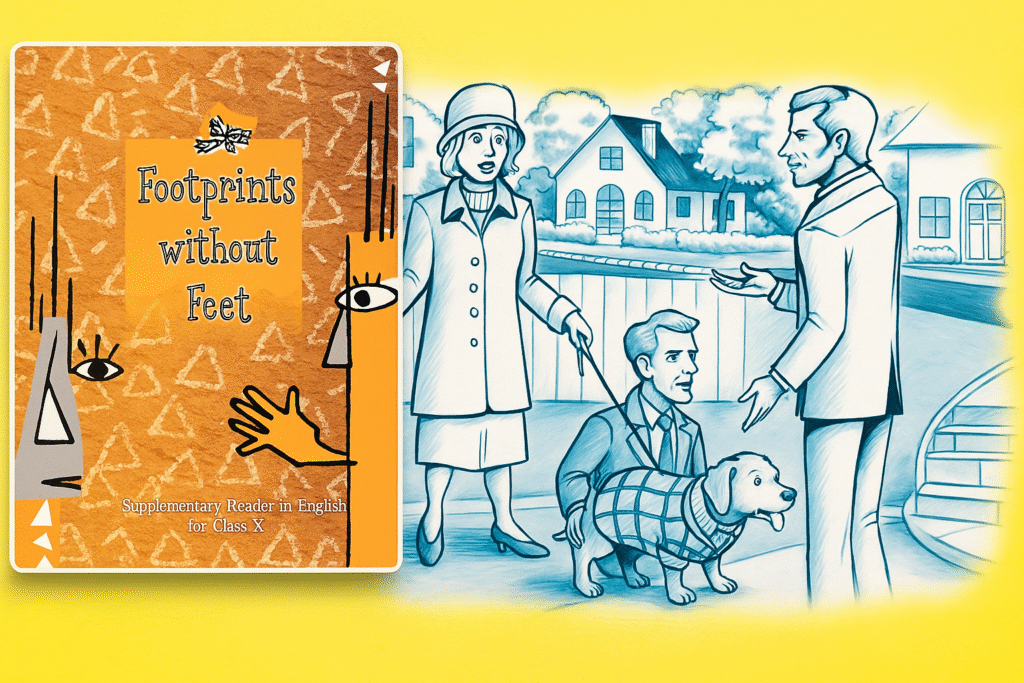
Mr Herriot, the narrator and a veterinary surgeon, first sees Tricki in the street with his mistress, Mrs Pumphrey, and is shocked by his condition. The little dog has grown “hugely fat, like a bloated sausage,” with bloodshot eyes and a hanging tongue. Mrs Pumphrey explains anxiously that Tricki is listless and weak, so she has been giving him “little extras” like malt, cod-liver oil, and a bowl of Horlicks every night. Though she claims it is “nothing much really,” she admits she cannot refuse him cream cakes and chocolates. Mr Herriot quickly understands the real problem. Tricki is not ill from lack of food but from greed and overfeeding. He warns Mrs Pumphrey firmly to cut down his food and give him more exercise, or he will become seriously ill.
A few days later, the situation worsens. Mrs Pumphrey calls in distress. Tricki has stopped eating, vomits often, lies panting on a rug, and refuses to walk. Mr Herriot decides there is only one solution: to remove Tricki from his home completely. He insists on taking the dog to his surgery for about a fortnight. Mrs Pumphrey nearly faints with worry, convinced that Tricki will “pine and die” without her. Still, Mr Herriot takes a strict stand and carries Tricki away wrapped in a blanket. The household staff rushes about, loading beds, cushions, toys, bowls, and coats. As Mr Herriot drives off, everyone is in tears. Looking at the weak dog beside him, he murmurs kindly, “I think I know a cure for you.”
At the surgery, Tricki is placed among other dogs. At first, he lies still and ignored. Mr Herriot gives him no food, only water, for two days. Slowly, Tricki begins to show interest. On the third day, he starts moving out to join the other dogs. Soon, he is running, playing, and competing at mealtimes. He learns to fight for food, run hard, and live like a normal dog. He receives no medicines at all, only exercise and discipline. Meanwhile, Mrs Pumphrey keeps calling for updates and starts sending eggs, wine, and even brandy to “build up” Tricki’s strength. Ironically, these gifts are enjoyed by the people at the surgery while Tricki grows fitter every day.
After two weeks, Tricki is completely transformed. He is now lithe, strong, and full of energy, running happily with the pack. When Mrs Pumphrey arrives in her grand car, she can hardly believe her eyes. Tricki leaps from Mr Herriot’s arms straight into her lap, licking her face and barking with joy. Overcome with emotion, she cries, “This is a triumph of surgery!” Little does she realize that no surgery was done at all—only common sense saved Tricki.
Characters
Tricki – greedy but lovable – the overfed dog who recovers through discipline
Mrs Pumphrey – foolishly indulgent – Tricki’s rich and overprotective owner
Mr Herriot – sensible and firm – the veterinary surgeon who cures Tricki
The central message of the chapter is clear and exam-ready. You learn that too much love without wisdom can cause harm. True care sometimes means being strict. You should remember that discipline and balance are often better than comfort and excess.

a triumph of surgery Hindi summary
क्या कभी तुमने किसी को इतना ज़्यादा प्यार किया है कि अनजाने में उसे नुकसान पहुँचा दिया हो? ज़रा सोचो, एक छोटे-से कुत्ते को चलते हुए हाँफते देखना, साँस के लिए जूझते देखना, और फिर भी यह मानना कि तुम उसकी मदद कर रहे हो। यह कहानी है ट्रिकी की, एक ऐसे कुत्ते की, जिसकी ज़िंदगी पूरी तरह बदल जाती है, क्योंकि प्यार हद से ज़्यादा हो जाता है।
यह अध्याय दिखाता है कि कैसे ट्रिकी, एक छोटा-सा कुत्ता, अपनी अमीर मालकिन मिसेज़ पम्फ्रे की ज़रूरत से ज़्यादा देखभाल और भोजन की वजह से गंभीर रूप से बीमार हो जाता है। जब हालात खतरनाक हो जाते हैं, तो पशु-चिकित्सक मिस्टर हैरियट सख़्त फैसला लेते हैं। अंत में ट्रिकी ठीक हो जाता है—किसी ऑपरेशन से नहीं, बल्कि अनुशासन, व्यायाम और सादगी भरी ज़िंदगी से।
कहानी के कथावाचक और पशु-चिकित्सक मिस्टर हैरियट पहली बार ट्रिकी को सड़क पर उसकी मालकिन मिसेज़ पम्फ्रे के साथ देखते हैं और उसकी हालत देखकर चौंक जाते हैं। छोटा-सा कुत्ता “एक फूली हुई सॉसेज की तरह बहुत ज़्यादा मोटा” हो गया है। उसकी आँखें लाल और पानी से भरी हैं, और उसकी जीभ बाहर लटकी हुई है। मिसेज़ पम्फ्रे घबराकर बताती हैं कि ट्रिकी बहुत सुस्त और कमज़ोर हो गया था, इसलिए वे उसे “थोड़ा-सा अतिरिक्त” देती रहीं—माल्ट, कॉड-लिवर ऑयल और हर रात हॉर्लिक्स का एक कटोरा। वे कहती हैं कि यह “असल में ज़्यादा कुछ नहीं है”, लेकिन यह भी मान लेती हैं कि वे उसे क्रीम केक और चॉकलेट देने से खुद को रोक नहीं पातीं। मिस्टर हैरियट तुरंत असली समस्या समझ जाते हैं। ट्रिकी खाने की कमी से नहीं, बल्कि लालच और ज़्यादा खाने से बीमार है। वे मिसेज़ पम्फ्रे को सख़्ती से चेतावनी देते हैं कि अगर उन्होंने उसका खाना कम नहीं किया और उसे ज़्यादा व्यायाम नहीं कराया, तो वह बहुत गंभीर रूप से बीमार पड़ जाएगा।
कुछ ही दिनों बाद हालत और बिगड़ जाती है। मिसेज़ पम्फ्रे घबराकर फोन करती हैं। ट्रिकी ने खाना छोड़ दिया है, उसे बार-बार उल्टी हो रही है, वह गलीचे पर पड़ा हाँफता रहता है और टहलने से भी इनकार कर देता है। मिस्टर हैरियट तय करते हैं कि अब केवल एक ही रास्ता है—ट्रिकी को पूरी तरह उसके घर से दूर ले जाना। वे ज़ोर देकर कहते हैं कि कुत्ते को लगभग पंद्रह दिनों के लिए अपनी सर्जरी में रखना होगा। मिसेज़ पम्फ्रे चिंता से लगभग बेहोश हो जाती हैं और उन्हें पूरा यकीन होता है कि ट्रिकी उनके बिना “सूखकर मर जाएगा।” फिर भी मिस्टर हैरियट सख़्त बने रहते हैं और ट्रिकी को कंबल में लपेटकर ले जाते हैं। घर के नौकर बिस्तर, गद्दे, खिलौने, कटोरे और कोट लाने के लिए इधर-उधर भागते हैं। जब मिस्टर हैरियट गाड़ी लेकर निकलते हैं, तो सबकी आँखों में आँसू होते हैं। पास बैठे कमज़ोर-से कुत्ते को देखकर वे प्यार से कहते हैं, “मुझे लगता है, मुझे तुम्हारा इलाज पता है।”
सर्जरी में ट्रिकी को दूसरे कुत्तों के बीच रखा जाता है। शुरू में वह चुपचाप पड़ा रहता है और कोई उसकी ओर ध्यान नहीं देता। मिस्टर हैरियट उसे दो दिन तक कोई खाना नहीं, सिर्फ़ पानी देते हैं। धीरे-धीरे ट्रिकी अपने आसपास में दिलचस्पी दिखाने लगता है। तीसरे दिन वह बाहर निकलकर दूसरे कुत्तों के साथ जुड़ने लगता है। जल्दी ही वह दौड़ने, खेलने और खाने के समय प्रतिस्पर्धा करने लगता है। वह खाना पाने के लिए लड़ना, तेज़ दौड़ना और एक सामान्य कुत्ते की तरह जीना सीख जाता है। उसे एक भी दवा नहीं दी जाती—सिर्फ़ व्यायाम और अनुशासन। इसी बीच मिसेज़ पम्फ्रे बार-बार हाल पूछने के लिए फोन करती रहती हैं और ट्रिकी की “ताकत बढ़ाने” के लिए अंडे, वाइन और यहाँ तक कि ब्रांडी भी भेजने लगती हैं। मज़े की बात यह है कि ये सब चीज़ें सर्जरी के लोग खाते-पीते हैं, जबकि ट्रिकी हर दिन और ज़्यादा स्वस्थ होता जाता है।
दो हफ्तों के बाद ट्रिकी पूरी तरह बदल चुका होता है। अब वह फुर्तीला, मज़बूत और ऊर्जा से भरा हुआ है, और दूसरे कुत्तों के साथ खुशी-खुशी दौड़ता है। जब मिसेज़ पम्फ्रे अपनी शानदार कार में आती हैं, तो उन्हें अपनी आँखों पर यकीन नहीं होता। ट्रिकी मिस्टर हैरियट की बाँहों से छलांग लगाकर सीधे उनकी गोद में पहुँच जाता है, उनका चेहरा चाटता है और खुशी से भौंकता है। भावनाओं से भरकर वे कह उठती हैं, “यह तो सर्जरी की एक बड़ी जीत है!” उन्हें ज़रा भी एहसास नहीं होता कि कोई ऑपरेशन हुआ ही नहीं—सिर्फ़ समझदारी ने ट्रिकी को बचाया है।
ट्रिकी – लालची लेकिन प्यारा – ज़रूरत से ज़्यादा खिलाया गया कुत्ता, जो अनुशासन से ठीक होता है
मिसेज़ पम्फ्रे – बेवजह लाड़ करने वाली – ट्रिकी की अमीर और ज़रूरत से ज़्यादा चिंता करने वाली मालकिन
मिस्टर हैरियट – समझदार और सख़्त – पशु-चिकित्सक, जो ट्रिकी को ठीक करता है
इस अध्याय का मुख्य संदेश बिल्कुल साफ़ और परीक्षा के लिए उपयुक्त है। तुम सीखते हो कि समझदारी के बिना किया गया ज़्यादा प्यार नुकसान पहुँचा सकता है। सच्ची देखभाल कभी-कभी सख़्ती माँगती है। तुम्हें यह याद रखना चाहिए कि अनुशासन और संतुलन, आराम और ज़्यादती से कहीं बेहतर होते हैं।
a triumph of surgery Keywords and Meaning
Tricki – overfed small dog who becomes ill and then recovers with routine care
Mrs Pumphrey – rich, overindulgent mistress who spoils Tricki with treats
Mr Herriot – practical veterinary narrator who cures with diet and exercise
Surgery – the vet’s clinic where Tricki is kept and recovers
Listless – low energy and inactive condition shown by Tricki
Malnutrition – mistaken reason Mrs Pumphrey assumes for Tricki’s weakness
Extras – rich add-ons like malt, cod-liver oil, Horlicks, cakes, chocolates
Lumbago – gardener’s back pain; reason for no ring-throwing exercise
Regime – strict diet and exercise plan advised by the vet
Convalescing – recovering after illness; triggers gifts from Mrs Pumphrey
Greyhound (Joe) – dog at the surgery that engulfs Tricki in the pack
Scrimmages – friendly rough-and-tumble play among the dogs
Extra bowl – sign of Tricki rejoining normal eating at feeding time
Eggs/Wine/Brandy – gifts meant “to enrich his blood,” enjoyed by the household
Chauffeur – driver of the long black car who brings/collects Tricki
Lithe – slim and flexible, Tricki’s fit condition at the end
Hard‑muscled – strong, toned physique of recovered Tricki
Tweed coat – symbol of pampering; one of many small coats
Ring‑throwing – exercise routine that stopped due to lumbago
Triumph – successful recovery attributed to “surgery” by Mrs Pumphrey
a triumph of surgery Important Phrases
“Like a bloated sausage with a leg at each corner”
“His eyes, bloodshot and rheumy, stared straight ahead”
“I can’t bear to refuse him.”“You must harden your heart and keep him on a very strict diet.”
“Tricki was tottering along in his little tweed coat”
“Refused even his favourite dishes”
“I marched out to the car carrying the little dog wrapped in a blanket.”
“At the surgery, the household dogs surged round me.”
“lay motionless on the carpet”
“rolling slightly with his surplus fat”
“There was the usual headlong rush”
“licking casually inside one or two of them”
“an extra bowl was put out for him”
“joining in their friendly scrimmages”
“fighting like a tiger for his share at mealtimes”
“convalescing rapidly”
“to enrich Tricki’s blood”
“For a few nights the fine spirit was rolled around, inhaled and reverently drunk.”
“a lithe, hard‑muscled animal”
“This is a triumph of surgery!”
a triumph of surgery question answer
Text Based questions and answers
Q1. Why is Mrs Pumphrey worried about Tricki?
Answer:Mrs Pumphrey is worried because Tricki, her pet dog, has become very weak, listless, and has lost his energy. She notices that he is not moving around like before and thinks he is suffering from malnutrition. Her anxiety grows as she sees his health getting worse day by day. This shows her deep affection and concern for Tricki’s well-being, like how a parent worries for a child.
Q2. What does she do to help him? Is she wise in this?
Answer: Mrs Pumphrey tries to help Tricki by giving him extra food, such as malt, cod-liver oil, and Horlicks, believing it will make him stronger. However, she is not wise in this because overfeeding actually makes Tricki sicker and more inactive. Instead of helping, her actions cause more harm, showing that good intentions can sometimes lead to the wrong results if not guided by proper knowledge.
Q3. Who does ‘I’ refer to in this story?
Answer:‘I’ in the story refers to the narrator, who is Mr. Herriot, a veterinary doctor. He is the one telling the story about Tricki and his treatment. As a caring and practical doctor, Mr. Herriot looks after Tricki and understands what is really needed for the dog’s health. His role reminds us that sometimes experts know best how to solve a problem.
Text based questions and answers
Q1. Is the narrator as rich as Tricki’s mistress?
Answer:The narrator is not as rich as Tricki’s mistress, Mrs. Pumphrey. He lives a simple life and works hard as a veterinary doctor, while Mrs. Pumphrey is wealthy and can afford many luxuries for her pet. This contrast shows that happiness and kindness don’t depend on being rich; simple actions can make a big difference in life.
Q2. How does he treat the dog?
Answer: The narrator treats Tricki with practical care and understanding. He does not give any medicine but puts Tricki on a strict diet and lets him play with other dogs. Tricki soon becomes active and healthy again. This method teaches that sometimes simple, natural solutions are best for health and happiness.
Q3. Why is he tempted to keep Tricki on as a permanent guest?
Answer: The narrator feels tempted to keep Tricki because the dog brings plenty of delicious food and treats from Mrs. Pumphrey, such as eggs and wine. The narrator and his staff enjoy these unexpected luxuries. This shows a humorous side to the story and reminds us to enjoy small joys, but always do what is right.
Q4. Why does Mrs Pumphrey think the dog’s recovery is “a triumph of surgery”?
Answer: Mrs. Pumphrey believes Tricki’s recovery is “a triumph of surgery” because she thinks only medical intervention could save him. In reality, it was the simple care and sensible treatment by the narrator that cured Tricki. Her words reflect her love for Tricki and show how people often overestimate complex solutions, while simple actions can have great results.
Text based questions and answers
Q1. What kind of a person do you think the narrator, a veterinary surgeon, is? Would you say he is tactful as well as full of common sense?
Answer: The narrator, Mr. Herriot, is a kind and practical veterinary surgeon. He understands Tricki’s real problem and avoids giving unnecessary medicines. By controlling Tricki’s diet and letting him play, he helps the dog recover naturally. He is tactful as he handles Mrs. Pumphrey’s emotions gently and never blames her for overfeeding Tricki. His actions show true common sense and a caring heart. Such people are a blessing to those around them.
Q2. Do you think Tricki was happy to go home? What do you think will happen now?
Answer: Tricki was excited to see Mrs. Pumphrey again, showing affection and joy. However, he was also happy with his new friends and active life at the doctor’s place. If Mrs. Pumphrey learns to care for him properly and stops overfeeding, Tricki will stay healthy and cheerful. This situation teaches us that real love means giving what is actually needed, not just what feels good.
Q3. Do you think this is a real-life episode, or mere fiction? Or is it a mixture of both?
Answer: The story feels real because it shows believable characters, daily problems, and simple solutions based on care and understanding. It is likely a mixture of both real-life experience and a bit of fiction to make the story interesting. Such stories help us understand the importance of sensible love and practical care in everyday life.
Text based questions and answers
Q1. This episode describes the silly behaviour of a rich woman who is foolishly indulgent, perhaps because she is lonely. Do you think such people are merely silly, or can their actions cause harm to others?
Answer: Such people may seem silly at first, but their actions can cause real harm, especially if they ignore advice. Mrs. Pumphrey’s overindulgence made Tricki very unhealthy. When people give too much or do not listen to experts, it can lead to problems for others, even if they mean well. It’s important to balance love with good sense to keep everyone safe and happy.
Q2. Do you think there are also parents like Mrs Pumphrey?
Answer: Yes, there are parents who behave like Mrs. Pumphrey by pampering their children too much. They might give too many gifts or allow unhealthy habits, thinking it shows love. This can make children weak or dependent. Real care means setting the right limits and helping children grow strong and confident.
Q3. What would you have done if you were: (i) a member of the staff in Mrs Pumphrey’s household, (ii) a neighbour? What would your life have been like, in general?
Answer: If I were a staff member, I would gently try to suggest better ways to care for Tricki and politely share my worries. If I were a neighbour, I might notice how much time Mrs. Pumphrey spends on her dog and hope she listens to good advice. Life in such a rich but lonely house might feel dull, but helping someone make better choices can give meaning to our role.
Q4. What would you have done if you were in the narrator’s place?
Answer: If I were in the narrator’s place, I would have chosen the same practical approach—removing unhealthy food and letting Tricki exercise with other dogs. I would also reassure Mrs. Pumphrey kindly so she doesn’t feel blamed. A caring and honest attitude helps people trust you and learn what’s best for their loved ones.
a triumph of surgery Grammar
- Do as directed.
1) Fill in the blanks with the correct verb forms.
a) Mrs Pumphrey ____ (hasten) to explain that Tricki ____ (be) listless and she ____ (give) him malt and cod-liver oil.
b) The narrator ____ (pull) up his car when he ____ (see) Tricki in the street with his mistress.
c) By the end of the second day, Tricki ____ (begin) to show interest in his surroundings.
d) The household dogs ____ (surge) round the narrator when he ____ (arrive) at the surgery.
2)Change the voice (Active ↔ Passive) as indicated. Do as directed.
a) The maids brought his day bed, night bed, cushions, toys and rubber rings. (Change into Passive)
b) The narrator had made a bed for Tricki in a warm loose box. (Change into Passive)
c) An extra bowl was put out for Tricki. (Change into Active)
d) Mrs Pumphrey leaned out of the window. (Change into Passive)
3)Convert the following into Indirect Speech. Do as directed.
a) “He was so listless, Mr Herriot,” said Mrs Pumphrey.
b) “If you don’t cut his food right down, he is going to be really ill,” warned the narrator.
c) “Oh, Mr Herriot, do tell me the truth. Is he really better?” asked Mrs Pumphrey. (Report the entire question)
d) “Poor old lad, you haven’t a kick in you, but I think I know a cure for you,” said the narrator.
4)Fill in the blanks with suitable articles/prepositions. Do as directed.
a) I was shocked at his appearance; he had become ____ bloated sausage with a leg at ____ each corner.
b) He lay motionless ____ the carpet while the dogs sniffed ____ him.
c) The chauffeur drew up ____ the surgery and opened the door ____ the mistress.
d) The narrator carried Tricki ____ his arms ____ the passage to the front of the house.
5)Choose the correct modal to complete each sentence. Do as directed.
a) Mrs Pumphrey said she ____ (could/can/may) not bear to refuse him cream cakes and chocolates.
b) The narrator told her she ____ (must/should/might) keep him on a very strict diet.
c) Tricki ____ (could/must/should) jostle his way to the extra bowl once he recovered.
d) The narrator thought he ____ (might/must/can) be tempted to keep Tricki as a permanent guest.
6) Sentence transformation (Negative ↔ Affirmative/Question formation). Do as directed.
a) He had never been known to refuse food. (Change to affirmative without changing meaning)
b) The other dogs decided he was an uninteresting object. (Form a yes/no question)
c) Mrs Pumphrey was not wise in giving him extras. (Change to affirmative using an appropriate word)
d) The narrator was certain that hospitalising Tricki was the only way. (Change to negative without changing meaning)
7) Combine the sentences using the instructions. Do as directed.
a) He had surplus fat. He rolled slightly. (Combine using an adverbial clause)
b) Mrs Pumphrey was distraught. Tricki refused even his favourite dishes. (Combine using ‘because’)
c) The bottles of wine began to arrive. The household realised the possibilities. (Combine using a participle)
d) The staff brought beds, toys and bowls. None of them were used. (Combine using ‘which’)
8) Editing (Error spotting). One error in each line; write the incorrect and the corrected word pair. Do as directed.
a) The narrator decide to take Tricki without delay.
b) He give him no food for two days but plenty of water.
c) At the third day he began to whimper on hearing the dogs.
d) He become an accepted member of the gang.
9) Omission (Missing words). One word is missing in each line; indicate the position and the inserted word. Do as directed.
a) The chauffeur opened the door and I could just make ____ the figure of Mrs Pumphrey.
b) He was keeping up ____ with the pack, stretching out in great bounds.
c) Lunch became a ceremonial occasion ____ two glasses of wine before the meal.
d) The narrator helped the chauffeur ____ bring out the beds, toys, cushions and bowls.
10) Gap filling Do as direct.
Tricki lay motionless at the surgery while the household dogs sniffed him. For two days, he was given only ____ (a) ____ but no food. On the third day, he began to ____ (b) ____ when he heard the dogs in the yard. Later, at feeding time, he first licked the ____ (c) ____ bowls, and next day an ____ (d) ____ bowl was put out for him. From then on, his progress was ____ (e) ____ as he ran about with the dogs and fought like a tiger at ____ (f) ____.
11) Tenses (Complete with suitable forms). Do as directed.
a) By the time Mrs Pumphrey’s car ____ (arrive), Tricki ____ (transform) into a lithe, hard‑muscled animal.
b) When the narrator ____ (open) the door, Tricki ____ (trot) out and was engulfed by the dogs.
c) The narrator ____ (feel) tempted to keep Tricki, but he ____ (know) Mrs Pumphrey was suffering.
d) The staff ____ (rush) in and out bringing his things as the narrator ____ (carry) the dog to the car.
12) Voice change from the chapter’s actions. Do as directed.
a) They rolled him over and inspected him thoroughly. (Change into Passive)
b) The narrator phoned and told her that Tricki had recovered. (Change into Passive)
c) Two eggs were brought daily to build up Tricki’s strength. (Change into Active)
d) The fine spirit was reverently drunk for a few nights. (Change into Active)
13) Reported speech (Commands/Requests/Exclamations). Do as directed.
a) “Fetch him. I’ll go,” said Mrs Pumphrey to the chauffeur. (Report as a command)
b) “Oh! How can I ever thank you!” cried Mrs Pumphrey. (Report as an exclamatory statement)
c) “Turn his cushions regularly,” Mrs Pumphrey insisted. (Report as a reported command)
d) “Is he really better?” she asked anxiously. (Report as an interrogative statement)
14) Articles and prepositions in context. Do as directed.
a) He patted ____ head and Tricki made ____ brave effort to wag his tail.
b) The narrator walked ____ the house ____ the garden to fetch Tricki.
c) He stood ____ the corner of the drive and looked ____ the mirror.
d) The car moved ____ and Mrs Pumphrey leaned ____ of the window.
15) Sentence transformation (Degree/change of form). Do as directed.
a) Tricki was as happy as he had ever been in his life. (Change to comparative degree)
b) The staff were too busy to load all the stuff into the car. (Remove ‘too’)
c) Keeping Tricki as a permanent guest was tempting. (Change to a negative statement with ‘not easy to resist’)
d) It was the only way to save him. (Change to ‘No other way…’)
Here are the answers corresponding to the “Do as directed” exercise set:
Ans1
a) hastened; was; had given
b) had pulled; saw
c) had begun/began; (both acceptable per context)
d) surged; arrived
a) His day bed, night bed, cushions, toys and rubber rings were brought by the maids.
b) A bed had been made for Tricki by the narrator in a warm loose box.
c) They put out an extra bowl for Tricki.
d) The window was leaned out of by Mrs Pumphrey.
Ans 3
a) Mrs Pumphrey said that he was so listless.
b) The narrator warned that if she didn’t cut his food right down, he was going to be really ill.
c) Mrs Pumphrey asked Mr Herriot to tell her the truth and asked whether he was really better.
d) The narrator told the dog that he hadn’t a kick in him but he thought he knew a cure for him.
Ans 4
a) a; each
b) on; at
c) outside; for
d) in; along
Ans 5
a) could
b) must
c) could
d) might
Ans 6
a) He was always known to accept food.
b) Did the other dogs decide he was an uninteresting object?
c) Mrs Pumphrey was unwise in giving him extras.
d) The narrator was not uncertain that hospitalising Tricki was the only way.
Ans 7
a) Because he had surplus fat, he rolled slightly.
b) Mrs Pumphrey was distraught because Tricki refused even his favourite dishes.
c) With the bottles of wine beginning to arrive, the household realised the possibilities.
d) The staff brought beds, toys and bowls which were not used.
Ans 8
a) decide → decided
b) give → gave
c) at → on
d) become → became
Ans 9
a) make ____ out
b) up ____ well
c) occasion ____ with
d) chauffeur ____ to
Ans 10
a) water
b) whimper
c) shining
d) extra
e) rapid
f) mealtimes
Ans 11
a) arrived; had been transformed
b) opened; trotted
c) felt; knew
d) rushed; was carrying
Ans 12
a) He was rolled over and thoroughly inspected by them.
b) Mrs Pumphrey was phoned by the narrator and told that Tricki had recovered.
c) They brought two eggs daily to build up Tricki’s strength.
d) They reverently drank the fine spirit for a few nights.
Ans 13
a) Mrs Pumphrey ordered the chauffeur to fetch him and said she would go.
b) Mrs Pumphrey exclaimed in gratitude that she could never thank him enough.
c) Mrs Pumphrey insisted that his cushions be turned regularly.
d) She anxiously asked whether he was really better.
Ans 14
a) his; a
b) through; into
c) at; into
d) away; out
Ans 15
a) Tricki was happier than he had ever been in his life.
b) The staff were so busy that they could not load all the stuff into the car.
c) Keeping Tricki as a permanent guest was not easy to resist.
d) No other way was there to save him.
a triumph of surgery Short answers (30–40 words)
Q1.Why was Mrs Pumphrey worried about Tricki?
Ans.Tricki had become “hugely fat,” “listless,” and “refused even his favourite dishes,” with bouts of vomiting and panting on a rug, so she feared he was “really ill” and needed urgent care.
Q2.What advice did Mr Herriot give to Mrs Pumphrey?
Ans.He said, “You must harden your heart and keep him on a very strict diet,” and increase exercise, or Tricki was “going to be really ill.”
Q3.Why did the narrator hospitalise Tricki “without delay”?
Ans.Tricki would “eat nothing,” had “bouts of vomiting,” lay “panting” and didn’t want to do anything; taking him away was “the only way to save him.”
Q4.How was Tricki treated at the surgery in the first two days?
Ans.He was kept under watch with “no food but plenty of water,” and lay “motionless on the carpet,” ignored by the pack.
Q5. What showed Tricki’s recovery at feeding time?
Ans.After licking “shining bowls,” “an extra bowl was put out for him,” and he was seen “jostling his way towards it.”
Q6. What did Mrs Pumphrey send to the surgery and why?
Ans.She sent “fresh eggs,” “bottles of wine,” and “brandy” “to enrich Tricki’s blood,” believing it would build his strength.
Q7.Describe Tricki after two weeks at the surgery.
Ans.He was “a lithe, hard‑muscled animal,” “keeping up well with the pack,” “stretching out in great bounds,” with his chest “almost brushing the ground.”
a triumph of surgery Long answers (100–120 words)
- Character sketch of Mrs Pumphrey
Mrs Pumphrey is rich, loving, and overindulgent; she “can’t bear to refuse him,” gives “some little extras,” and keeps a wardrobe of “little tweed coats,” which makes Tricki “hugely fat.”
She misreads “listless” as “malnutrition,” sends “fresh eggs,” “wine,” and “brandy” “to enrich Tricki’s blood,” showing affection but poor judgement.
She is emotional, “ringing a dozen times a day,” in tears when Tricki leaves and returns, finally crying, “This is a triumph of surgery!”
She causes Tricki’s illness through pampering, yet her generosity and sincere love are clear, making her a well‑meaning but foolishly indulgent owner.
- Theme: Overindulgence vs true care
The story shows that pampering harms while discipline heals: Tricki becomes “like a bloated sausage,” “listless,” and refuses “even his favourite dishes” due to “extras” and little exercise.
At the surgery, there is “no medicinal treatment,” only “no food but plenty of water,” exercise with the pack, and an “extra bowl,” leading to rapid recovery.
He joins “friendly scrimmages,” “fighting like a tiger” at mealtimes, and turns into “a lithe, hard‑muscled animal,” proving that routine and restraint restore health.
The title’s irony—“a triumph of surgery”—means the clinic’s simple regime, not an operation, cured him.
a triumph of surgery Extract based questions and answers
Extract: “He had become hugely fat, like a bloated sausage with a leg at each corner.”
Q1.Who is described here?
Ans.Tricki, Mrs Pumphrey’s small dog.
Q2.What made him reach this condition?
Ans.Overfeeding with “some little extras,” sweets like cream cakes and chocolates, and little exercise due to “lumbago.”
Q3. What effect did this have on him?
Ans.He was “listless,” vomited, panted on a rug, and refused food.
Extract: “You must harden your heart and keep him on a very strict diet.”
Q1. Who says this and to whom?
Ans.Mr Herriot says this to Mrs Pumphrey.
Q2. Why is this advice necessary?
Ans.Without it, Tricki was “going to be really ill” because of overfeeding and no proper exercise.
Q3. What action followed later?
Ans.Hospitalisation, “no food but plenty of water,” and recovery through play with the dogs.
Extract: “From then on, his progress was rapid… fighting like a tiger for his share at mealtimes.”
Q1. What change is shown here?
Ans.Tricki goes from lying “motionless” to active, competitive eating and play.
Q2. How did the other dogs help?
Ans.They “rolled him over,” “inspected him,” and drew him into “friendly scrimmages,” building strength.
Q3. What is the final outcome?
Ans.He becomes “a lithe, hard‑muscled animal” and returns home healthy.
Extract: “Oh, Mr Herriot… This is a triumph of surgery!”
Q1. Why does Mrs Pumphrey say this?
Ans.She sees Tricki leap into her lap, lively and strong, and thanks the doctor.
Q2. Was any operation done?
Ans.No; the cure was diet, water, and exercise at the surgery (clinic), not an operation.
Q3. What does this reveal about her?
Ans.She is grateful and loving but naive about real treatment methods.
FAQs
What is the main story of “A Triumph of Surgery” in Class 10 English?
A: “A Triumph of Surgery” shows how Tricki, a pampered dog, becomes dangerously obese because of overfeeding by Mrs Pumphrey. Vet James Herriot takes him to his surgery, gives only simple diet, exercise and company of other dogs, and Tricki returns home fit and active.
Who are the main characters in “A Triumph of Surgery” and what do they represent?
A: The key characters are Tricki (the overfed pet), Mrs Pumphrey (a rich, overindulgent mistress) and Mr Herriot (a sensible veterinary doctor). Together they show how foolish love harms health and how practical care and discipline truly help.
Why does Mr Herriot hospitalise Tricki “without delay”?
A: Tricki refuses food, keeps vomiting, pants on the carpet and has become “like a bloated sausage.” Herriot knows that taking him away from rich food and putting him on a strict regime at the surgery is the only way to save his life.
How is Tricki actually cured at the surgery? Is any real operation done?
A: No operation is done on Tricki. Herriot gives him only water for two days, then small amounts of normal food, and lets him run and play with other dogs. This simple routine of diet and exercise makes him slim, strong and happy again.
Why does Mrs Pumphrey call Tricki’s recovery “a triumph of surgery”?
A: Seeing Tricki leap into her lap as a “lithe, hard-muscled animal,” Mrs Pumphrey assumes some great medical operation has been done. In reality, the “triumph” is of commonsense treatment, not of surgical knives, which makes the title humorous and ironic.
What is the main theme or moral of “A Triumph of Surgery” for Class 10 students?
A: The story teaches that overindulgence and too many “extras” are dangerous, whether for pets or people. True love means controlled diet, regular exercise and firm discipline, not unlimited treats and emotional weakness.
How does the story use humour to convey its message?
A: The pile of beds, coats and toys, Tricki being treated like a prince, and Herriot’s staff enjoying Mrs Pumphrey’s eggs, wine and brandy all create gentle comedy. This humour makes the lesson about health, diet and sensible care easy to remember for exams.
What kind of person is James Herriot as a veterinary surgeon?
A: James Herriot is calm, practical and kind. He understands Tricki’s real problem, avoids unnecessary medicines, handles Mrs Pumphrey’s emotions tactfully, and relies on simple, natural methods. His common sense and compassion make him an ideal doctor figure in the chapter.