
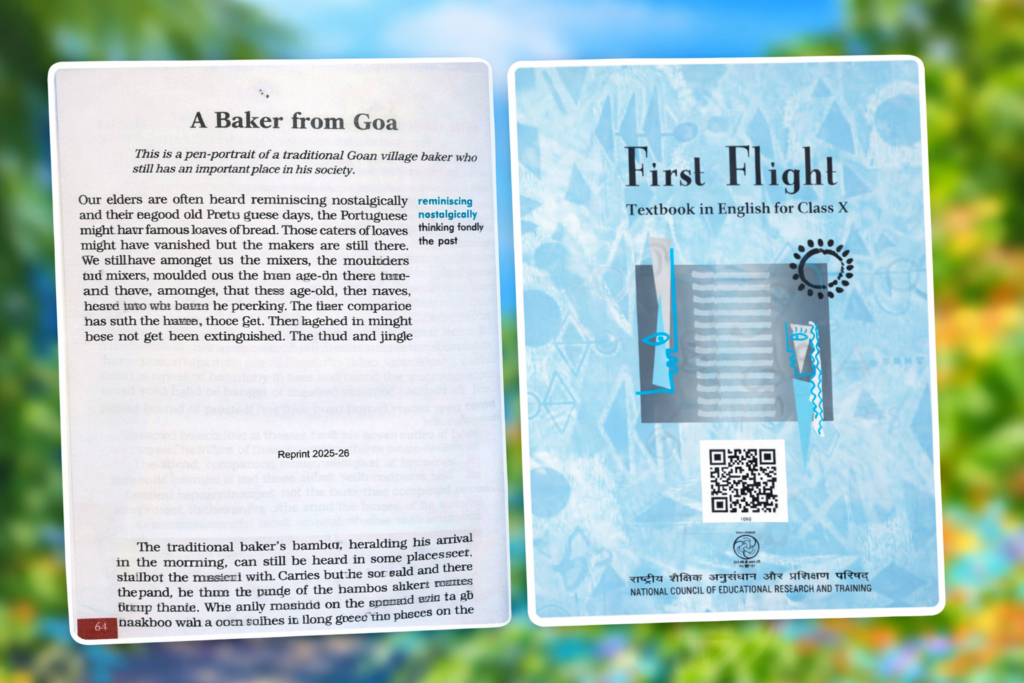
This page helps you revise fast with A Baker from Goa summary in simple words, followed by clear explanation, NCERT solutions, and exam-focused practice. You will find a short summary, detailed notes, and A Baker from Goa questions and answers to strengthen concepts. For self-testing, the page also includes A Baker from Goa MCQ questions and answers and links for MCQ online test practice. Extra questions are added to cover board-exam patterns from Glimpses of India, making this a complete revision guide for Class 10 students.
Table of Contents
a baker from goa summary
I A Baker from Goa
You wake up to a soft “jhang, jhang” sound in the quiet morning. You rush outside barefoot, not for toys or sweets, but for the smell of warm bread in the air. This is not just about food—it is about a village rhythm you can almost hear and feel.
The chapter shows how the Goan village baker, called the pader, was once—and still is—an important part of everyday life. Even though Portuguese rule ended long ago, the tradition of bread-making continues through families. The story ends by showing how this simple profession brought joy, unity, and steady living to the village.
The writer begins by remembering how elders in Goa often spoke fondly of the old Portuguese days and their famous bread. The people who enjoyed eating those loaves may be gone, but the people who baked them are still around. The old furnaces still burn, and the fire has “not yet been extinguished.” Early each morning, the sound of the baker’s bamboo stick hitting the ground announced his arrival. Even if the father baker had passed away, the son continued the family work. These bakers were, and still are, known as paders.
During the writer’s childhood, the baker was more than a seller. He was a friend, companion, and guide. He came twice a day—once in the morning and once again after selling all his bread. The “jingling thud” of his bamboo woke the children from sleep, and they ran to greet him with excitement. Surprisingly, the children were not waiting for the loaves. The bread was bought by the maid of the house. What the children truly wanted were the bread-bangles, which they carefully chose. Sometimes, the baker also brought sweet bread of a special kind. He entered each house with music, holding a big basket on his head and striking the bamboo on the ground. He greeted the lady of the house politely and placed his basket down to deliver bread. The children were pushed aside with a gentle scolding, but they did not give up. They climbed benches or parapets just to peek inside the basket. The writer still remembers the “typical fragrance” of those loaves. Bread was for elders, bangles for children. They did not even bother brushing their teeth. As the writer jokes, “The tiger never brushed his teeth,” and hot tea was enough to clean everything.
The baker’s importance went far beyond daily visits. In Goan life, bread was part of every celebration. Marriage gifts were incomplete without bol, a special sweet bread. No party or feast felt right without bread. For a daughter’s engagement, sandwiches had to be prepared. During Christmas and other festivals, cakes and bolinhas were a must. This made the baker’s furnace essential to village life. Bakers also had a special dress called the kabai, a single-piece frock reaching the knees. Later, they wore shirts and half-length trousers. Even today, someone wearing knee-length pants is teased for being dressed like a pader. Bakers collected money monthly, writing accounts on walls with pencil. Baking was a profitable job. The baker and his family never starved. Their healthy, plump bodies were an open sign of their prosperity, often compared to a jackfruit-like appearance.
Characters
The Baker (Pader) – hardworking and cheerful – village bread-maker who connects daily life and celebrations
The Narrator – observant and nostalgic – shares childhood memories of the baker
Village Children – playful and eager – symbolise joy and routine linked to the baker
The story teaches you that simple traditions give strength to a community. It reminds you that honest work, passed through generations, keeps culture alive. Even small daily sounds can hold deep memories and meaning for you.
a baker from goa Hindi Summary
तुम शांत सुबह में एक हल्की सी “झन-झन” की आवाज़ से जागते हो। नंगे पाँव बाहर भागते हो—खिलौनों या मिठाइयों के लिए नहीं, बल्कि हवा में फैली गरम ब्रेड की खुशबू के लिए। यह सिर्फ खाने की बात नहीं है—यह गाँव की वह लय है जिसे तुम सुन भी सकते हो और महसूस भी कर सकते हो।
यह अध्याय दिखाता है कि गोवा के गाँव का बेकर, जिसे पाडर कहा जाता है, पहले भी और आज भी रोज़मर्रा की ज़िंदगी का एक अहम हिस्सा है। पुर्तगाली शासन बहुत पहले खत्म हो गया, लेकिन ब्रेड बनाने की परंपरा परिवारों के ज़रिये आज भी चलती आ रही है। कहानी अंत में बताती है कि कैसे यह साधारण पेशा गाँव में खुशी, जुड़ाव और स्थिर जीवन लेकर आया।
लेखक शुरुआत करता है यह याद करते हुए कि गोवा के बुज़ुर्ग पुराने पुर्तगाली दिनों और उनकी मशहूर ब्रेड को कितने प्यार से याद करते थे। जो लोग वे ब्रेड खाते थे, वे शायद अब नहीं रहे, लेकिन जो उन्हें बनाते थे, वे आज भी मौजूद हैं। पुराने भट्टे आज भी जलते हैं और आग “अभी बुझी नहीं है।” हर सुबह बेकर की बाँस की छड़ी ज़मीन पर पड़ने की आवाज़ उसके आने की खबर देती थी। अगर पिता बेकर नहीं रहे, तब भी बेटा परिवार का काम आगे बढ़ाता था। ये बेकर तब भी और आज भी पाडर कहलाते हैं।
लेखक के बचपन में बेकर सिर्फ बेचने वाला नहीं था। वह दोस्त, साथी और मार्गदर्शक भी था। वह दिन में कम से कम दो बार आता था—एक बार सुबह और फिर तब, जब उसकी बड़ी टोकरी खाली हो जाती थी। उसकी बाँस की “झनकती थाप” बच्चों को नींद से जगा देती थी और वे खुशी-खुशी उससे मिलने दौड़ पड़ते थे। हैरानी की बात यह थी कि बच्चे ब्रेड के लिए इंतज़ार नहीं करते थे। ब्रेड तो घर की नौकरानी खरीदती थी। बच्चों को असल में चाहिए होती थीं ब्रेड-बैंगल्स, जिन्हें वे ध्यान से चुनते थे। कभी-कभी बेकर खास तरह की मीठी ब्रेड भी लाता था। वह हर घर में संगीत के साथ आता—सिर पर बड़ी टोकरी, और हाथ से बाँस ज़मीन पर मारता हुआ। वह घर की मालकिन को नम्रता से “सुप्रभात” कहता और ब्रेड देने के लिए टोकरी रख देता। बच्चों को हल्की सी डाँट के साथ हटा दिया जाता, लेकिन वे हार नहीं मानते। वे बेंच या मुँडेर पर चढ़कर किसी तरह टोकरी में झाँक लेते। लेखक आज भी उन ब्रेड की “खास खुशबू” याद करता है। बड़ों के लिए ब्रेड और बच्चों के लिए बैंगल्स। तब बच्चे दाँत ब्रश करने या मुँह धोने की भी परवाह नहीं करते थे। लेखक मज़ाक में कहता है, “बाघ कभी दाँत नहीं ब्रश करता,” और गरम चाय सब कुछ साफ कर देती थी।
बेकर की अहमियत रोज़ की मुलाकातों से कहीं आगे थी। गोवा के जीवन में हर खुशी के मौके पर ब्रेड ज़रूरी थी। शादी के तोहफे बोल—एक खास मीठी ब्रेड—के बिना अधूरे माने जाते थे। बिना ब्रेड के कोई पार्टी या दावत अच्छी नहीं लगती थी। बेटी की सगाई पर सैंडविच बनाना ज़रूरी था। क्रिसमस और दूसरे त्योहारों पर केक और बोलिन्हास होना ही चाहिए। इसी वजह से गाँव में बेकर का भट्टा बहुत ज़रूरी माना जाता था। बेकर एक खास पहनावा भी पहनते थे, जिसे कबाई कहा जाता था—घुटनों तक पहुँचने वाला एक टुकड़े का फ्रॉक। बाद में वे शर्ट और आधी लंबाई की पैंट पहनने लगे। आज भी जो कोई घुटनों तक की पैंट पहनता है, उसे मज़ाक में पाडर जैसा कपड़े पहनने वाला कहा जाता है। बेकर महीने के अंत में पैसे लेते थे और हिसाब दीवार पर पेंसिल से लिखते थे। ब्रेड बनाना एक लाभदायक काम था। बेकर और उसका परिवार कभी भूखा नहीं रहा। उनके स्वस्थ, भरे-पूरे शरीर उनकी खुशहाली का साफ़ सबूत थे, जिन्हें अक्सर कटहल जैसे शरीर से तुलना की जाती थी।
बेकर (पाडर) – मेहनती और खुशमिज़ाज – गाँव का ब्रेड बनाने वाला जो रोज़मर्रा की ज़िंदगी और त्योहारों को जोड़ता है
कथावाचक – देखने-समझने वाला और भावुक – बेकर से जुड़ी बचपन की यादें साझा करता है
गाँव के बच्चे – चंचल और उत्सुक – बेकर से जुड़ी खुशी और दिनचर्या का प्रतीक
यह कहानी तुम्हें सिखाती है कि साधारण परंपराएँ एक समुदाय को मज़बूत बनाती हैं। यह याद दिलाती है कि पीढ़ियों से चला आ रहा ईमानदार काम संस्कृति को ज़िंदा रखता है। रोज़मर्रा की छोटी-छोटी आवाज़ें भी तुम्हारे लिए गहरी यादें और मायने रख सकती हैं।
a baker from goa Keywords with meanings:
pader – Goan baker who sells bread door-to-door
bamboo – staff that makes jhang jhang sound to announce arrival
loaves – ordinary bread for elders
bread-bangles – ring-shaped bread kids love
bol – sweet bread must for marriage gifts
kabai – traditional frock-like dress of baker
plump physique – fat body showing prosperity
Coorg – misty hill area in Karnataka famous for coffee
Iruppu Falls – silver cascades from Brahmagiri hills
Kodavus – brave people of Coorg who love freedom
tea gardens – vast green plantations in Assam
Rajvir – excited visitor learning about tea
Pranjol – Assam boy who explains tea flushes
first flush – tastiest March tea, silvery green
samovar – urn for brewing strong Assamese tea
a baker from goa Important Phrases:
“thud and jingle of the traditional baker’s bamboo”
“jhang, jhang sound”
“remisnicing nostalgically about those good old Portuguese days”
“mixers, the moulders and those who bake the loaves”
“The tiger never brushed his teeth”
“marriage gifts are meaningless without the sweet bread known as the bol”
“jackfruit-like physical appearance”
“tiny rainforest in Karnataka’s Western Ghats”
“as brave as the soldiers of Alexander’s army”
“Chulo bhulo!”
“even more vast”
“the real luxury”
“muscatel-flavoured”
a baker from goa questions and answers
Text based questions and answers:
Q1. What are the elders in Goa nostalgic about?
Answer:Elders in Goa fondly remember the good old Portuguese days and their famous loaves of bread. They talk about how those times brought special bread traditions to their villages. This nostalgia shows how deeply these memories connect them to their past.
Q2. Is bread-making still popular in Goa? How do you know?
Answer:Yes, bread-making is still popular in Goa. The thud and jingle of the traditional baker’s bamboo can still be heard in some places, and age-old furnaces still exist with fire not extinguished. Sons carry on the family profession, keeping the tradition alive today.
Q3. What is the baker called?
Answer:The baker is called pader in Goa. This name comes from Portuguese times and is still used today for these traditional bread sellers. It reminds us how language preserves old customs in daily life.
Q4. When would the baker come everyday? Why did the children run to meet him?
Answer:The baker came twice a day—once in the morning on his selling round and again after emptying his huge basket. Children ran to meet him for bread-bangles they chose carefully, not the plain loaves bought by maid-servants. That excitement made mornings special and full of joy.
Q5. Match the following. What is a must
i as marriage gifts? – cakes and bolinhas
ii for a party or a feast? – sweet bread called bol
iii for a daughters engagement? – bread
iv for Christmas? – sandwiches
Answer:
i as marriage gifts? – cakes and bolinhas
ii for a party or a feast? – sweet bread called bol
iii for a daughter’s engagement? – sandwiches
iv for Christmas? – bread
These matches show bread’s role in every celebration, making events complete.
Q6. What did the bakers wear
i in the Portuguese days?
ii when the author was young?
Answer:i) In Portuguese days, bakers wore a peculiar dress known as the kabai, a single-piece long frock reaching down to the knees.
ii) When the author was young, they wore a shirt and trousers shorter than full-length ones and longer than half pants. This style still marks someone as “dressed like a pader.”
Q7. Who invites the comment he is dressed like a pader? Why?
Answer:Anyone who wears a half pant reaching just below the knees invites the comment “he is dressed like a pader.” This happens because it matches the trousers bakers wore in the author’s childhood. Traditions live on in simple ways like clothing styles.
Q8. Where were the monthly accounts of the baker recorded?
Answer:Monthly accounts were recorded on some wall in pencil. The baker collected bills at the end of the month this way. Such simple methods highlight the trustworthy village life of those days.
Q9. What does a jackfruit-like appearance mean?
Answer:A jackfruit-like appearance means a plump physique, pleasantly fat body showing prosperity and happiness. Bakers and their families had this look as proof of their profitable trade. It paints a picture of success you can see.
Text based questions and answers:
Q1. Which of these statements are correct?
i The pader was an important person in the village in old times.
ii Paders still exist in Goan villages.
iii The paders went away with the Portuguese.
iv The paders continue to wear a single-piece long frock.
v Bread and cakes were an integral part of Goan life in the old days.
vi Traditional bread-baking is still a very profitable business.
vii Paders and their families starve in the present times.
Answer:
Correct statements: i, ii, v.
The pader held importance, still exists, and bread-cakes were key to Goan life. Others are wrong—paders didn’t leave, don’t wear frocks now, business thrives, and they don’t starve. This shows traditions evolve but endure.
Q2. Is bread an important part of Goan life? How do you know this?
Answer:Yes, bread is an important part of Goan life. Marriage gifts are meaningless without bol, daughter’s engagement needs sandwiches, Christmas requires cakes and bolinhas, and no feast charms without bread. The baker’s furnace is essential in every village, proving bread ties into all celebrations and daily joy.
Q3. Tick the right answer. What is the tone of the author when he says the following?
i The thud and the jingle of the traditional bakers bamboo can still be heard in some places. nostalgic, hopeful, sad
ii Maybe the father is not alive but the son still carries on the family profession. nostalgic, hopeful, sad
iii I still recall the typical fragrance of those loaves. nostalgic, hopeful, naughty
iv The tiger never brushed his teeth. Hot tea could wash and clean up everything so nicely, after all. naughty, angry, funny
v Cakes and bolinhas are a must for Christmas as well as other festivals. sad, hopeful, matter-of-fact
vi The baker and his family never starved. They always looked happy and prosperous. matter-of-fact, hopeful, sad
Answer:
i. nostalgic
ii. hopeful
iii. nostalgic
iv. funny
v. matter-of-fact
vi. matter-of-fact
These tones bring the chapter alive, mixing fond memories with facts for easy recall.
a baker from goa Activity (pre-chapter):
(These are discussion-based; sample student-friendly responses for exam prep)
Q1. What images of people and of places come to your mind, when you think of our country?
Answer:Images of diverse people like farmers in green fields, bakers with bamboo staffs, and tea pluckers in Assam gardens come to mind. Places like misty Coorg hills, Goan villages, and vast tea estates show India’s rich variety. This diversity makes our country feel like one big, colorful family.
Q2. What parts of India have you lived in, or visited? Can you name some popular tourist destinations?
Answer:(Personalize for students: e.g.) Lived in Maharashtra, visited Goa beaches and Kerala backwaters. Popular spots include Taj Mahal, Goa, Shimla, and Kerala—places blending history, nature, and fun. Exploring them builds love for our land.
Q3. You may know that apart from the British, the Dutch and the French, the Portuguese have also played a part in the history of our country. Can you say which parts of India show French and Portuguese influences?
Answer:Goa, Daman, and Diu show Portuguese influences like bread-making and architecture. Pondicherry and parts of Tamil Nadu show French influences in buildings and food. These colonial marks add unique flavors to India’s history.
Q4. Can you say which parts of India grow i tea, ii coffee?
Answer:i Tea grows in Assam, Darjeeling (West Bengal), and Nilgiris (Tamil Nadu).
ii Coffee grows in Coorg (Karnataka), Wayanad (Kerala), and Nilgiris. These regions thrive on these crops, supporting local lives and economy.
a baker from goa Grammar
(Fill in the blank with correct tense form of the verb)
The baker ______ (come) twice a day with his basket.
(Fill in the blank with correct tense form of ‘reminisce’)
Elders often ______ about Portuguese days.
(Change to passive voice)
The thud and jingle ______ heard in some places.
(Change to reported speech)
“Good morning,” the baker said to the lady.
(Fill in the blank with correct article)
The children ran to meet ______ baker.
(Fill in the blank with correct preposition)
The baker supported ______ basket on his head.
(Fill in the blank with correct modal)
Sons ______ carry on the family profession.
(Combine the sentences using superlative degree)
The pader was important in old times. It is the most essential person in village life.
(Change to active voice)
Bread-bangles are longed for by children.
(Fill in the blank with correct form of ‘not be’)
The fire ______ extinguished in furnaces.
(Join using ‘not only…but also’)
He would greet the lady and place his basket.
Editing Exercise: Identify and correct the error in the underlined word in the sentence.
The baker’s bamboo make a jhang jhang sound announcing his arrive. (Error 1: ____ Correction: ____)
Omission Exercise: Fill in the blank with the most appropriate word from the chapter.
Marriage gifts are meaningless ______ the sweet bread known as bol.
(Change to indirect speech)
“Chulo bhulo!” grandma smiled.
Gap Filling (Cloze Test): Complete the passage with correct options.
Our elders are often heard ______ (a) (reminiscing/reminisce) nostalgically about those good old Portuguese days, ______ (b) (a/the) Portuguese and their famous loaves ______ (c) (from/of) bread.
(Fill in the blank with correct tense/modal)
Anyone who wears half pants invites the comment that he ______ dressed like a pader.
(Correct the verb form)
The baker’s family never starve.
(Combine using ‘while’)
The loaves were bought by maid-servant. Children longed for bread-bangles.
(Change to negative without changing meaning)
Baking was a profitable profession.
(Add question tag)
The kabai reached down to knees.
Here are grammar questions answers:
came
reminisce
can still be heard
The baker greeted the lady with “Good morning.”
the
the
must / can
The pader was the most important person in old village life.
Children long for bread-bangles.
has not been
He not only greeted the lady but also placed his basket.
Error: make → makes; Error: arrive → arrival
without
Grandma told (them) to go in. (Chulo bhulo!)
(a) reminiscing (b) the (c) of
is dressed
The baker’s family never starved.
While the loaves were bought by maid-servant, children longed for bread-bangles.
Baking was not an unprofitable profession.
didn’t it?
Extra Question-Answers based on “Glimpses of India”
Short Answer Questions (30-40 words):
Q1. Why does the author compare the baker to a friend, companion and guide?
Answer: Baker came twice daily with fresh bread that excited children
His jhang, jhang bamboo sound woke kids and brought joy
Bread-bangles were special treats children eagerly chose themselves
Q2. What shows that baking was a profitable profession?
Answer: Bakers collected bills monthly, recorded on walls in pencil
Their families never starved and always looked happy
Plump physique like jackfruit showed their prosperity and success
Q3. How do Coorgis show their love for nature?
Answer: They trek misty mountain trails and visit Iruppu Falls
Listen to Cauvery River and breathe coffee-honey scents
Enjoy wildlife like langurs on mossy branches in rainforest
Q4. What makes Rajvir excited during his train journey?
Answer: Sees tea bushes lining railway tracks everywhere
Knows “even more vast” plantations wait ahead
Learns tea grows nowhere like Assam’s hill slopes
Long Answer Questions (100-120 words):
Q5. Describe the importance of the baker in Goan village life.
Answer: Pader held central role in daily life and celebrations
Marriage gifts meaningless without sweet bol bread
Daughter’s engagement needed sandwiches, Christmas required cakes-bolinhas
No party or feast charmed without regular bread
Furnace presence absolutely essential in every village
Children loved bread-bangles, elders got loaves
Bamboo’s thud-jingle announced arrival like morning music
Family profession passed father to son, keeping tradition alive
This shows bread connected all village emotions and events.
Q6. How does the chapter show India’s diversity through its three glimpses?
Answer: Goa preserves Portuguese bread tradition with paders and furnaces
Coorg offers misty rainforest, brave Kodavus, coffee estates
Assam reveals vast tea gardens, different flushes, samovar culture
Each place unique yet united by nature’s bounty
Traditions thrive despite changing times everywhere
From bamboo jingles to tea plucking, all celebrate heritage
Shows India’s colorful tapestry of people, places, professions
Extract Based Questions and answers:
Extract: “Our elders are often heard reminiscing nostalgically about those good old Portuguese days, the Portuguese and their famous loaves of bread. Those eaters of loaves might have vanished but the makers are still there.”
Q7. What does “reminiscing nostalgically” mean?
Answer:Thinking fondly about happy past memories
Elders miss Portuguese era’s special bread culture
Shows emotional connection to vanishing traditions
Q8. Why does author say “makers are still there”?
Answer:Bread-making tradition continues despite Portuguese leaving
Mixers, moulders, bakers work in age-old furnaces
Sons carry family profession when fathers pass away
Q9. The baker made his musical entry… with the jhang, jhang sound… One hand supported the basket on his head and the other banged the bamboo.
What does this description show about the baker’s arrival?
Answer:Arrival announced by distinctive bamboo sound
Balanced heavy basket skillfully on head
Greeted housewives politely before selling bread
Created excitement that woke sleeping children
*Q10. Cakes and bolinhas are a must for Christmas as well as other festivals.
Why are these items essential?
Answer:Formed integral part of all Goan celebrations
Made festivals complete and joyful
Showed baker’s role beyond daily bread supply
Linked community through shared traditions
Q11. Describe different tea flushes mentioned in Assam section.
Answer:First flush (March): tastiest, silvery green, curled leaves like fish hooks
Second flush (June): real luxury, muscatel flavour like fruit
Rain flush: bushes turn lush green
Autumn flush: used in abroad blends
Each season gives unique tea character and taste.
Q12. What picture does “jackfruit-like physical appearance” paint?
Answer:Shows plump, prosperous, healthy body shape
Indicates profitable baking business success
Bakers’ families never starved, always happy
Public testimony of their comfortable village life
FAQs
Q1. What are the Goan elders nostalgic about in A Baker from Goa?
They fondly remember the good old Portuguese days and the famous traditional loaves of bread. These memories reflect a strong emotional connection to past village life and food culture.
Q2. How does the chapter show that bread-making is still active in Goa?
The bakers, mixers, and moulders still work in age-old furnaces, and the fire has not been extinguished. Sons continue the family profession, keeping the tradition alive.
Q3. Who is called a pader in Goa?
A pader is the traditional Goan baker who sells bread door to door. The term comes from Portuguese times and is still used in villages today.
Q4. When did the baker visit the houses, and why twice a day?
He came once in the morning on his selling round and again after his basket was empty. This shows his regular role in daily village routine.
Q5. Why were children excited to see the baker’s arrival?
Children waited for bread-bangles, not regular loaves bought by the maid. The jhang, jhang sound of the bamboo also made his arrival fun and musical.
Q6. What was the kabai, and when was it worn?
The kabai was a single-piece frock reaching the knees, worn by bakers during Portuguese days. Later, bakers wore shirts and half-length trousers instead.
Q7. What does jackfruit-like appearance mean in the chapter?
It means a plump and healthy body showing prosperity. It proves that baking was a profitable profession and bakers lived comfortably.
Q8. Why was bread essential in Goan festivals and ceremonies?
Marriage gifts needed bol, engagements required sandwiches, and Christmas needed cakes and bolinhas. Without bread, no party or feast felt complete.
