
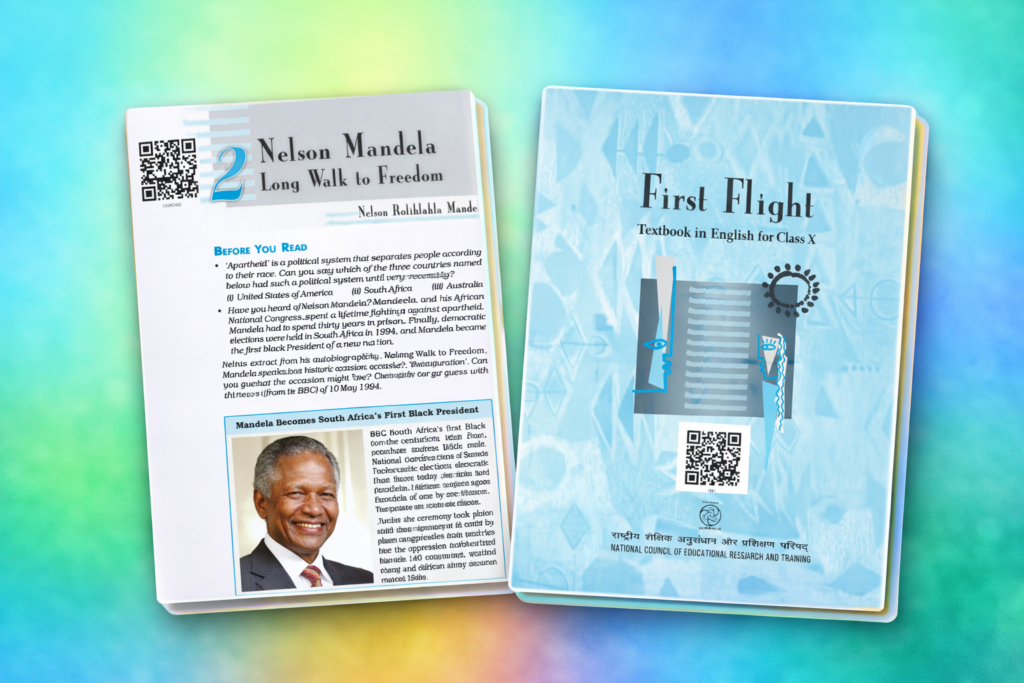
This page helps students revise the chapter quickly and clearly with nelson mandela long walk to freedom class 10 explained in simple language. You will find a clear summary, exam-ready notes, and NCERT solutions covering all important ideas. The page also includes class 10 english chapter 2 nelson mandela question answer, detailed class 10 nelson mandela question answer, and extra questions for practice. Important themes, characters, and values from long walk to freedom class 10 are explained step by step to support tests and board exam preparation.
Table of Contents
Nelson Mandela class 10 summary
Long walk to freedom
English Summary
You are standing in a place once known for injustice, watching history change right in front of your eyes. The air is bright, the crowd is huge, and the man stepping forward was once a prisoner. This is the day South Africa turns a painful page and begins again.
The chapter describes the inauguration of Nelson Mandela as South Africa’s first Black President. It shows how a land ruled for decades by apartheid welcomes freedom, unity, and democracy. Mandela reflects on past suffering, honours sacrifices, and promises a future where no one is oppressed again.
On 10 May, the day dawned “bright and clear.” For days before the ceremony, Nelson Mandela had been pleasantly besieged by leaders from all over the world who came to honour this moment. The inauguration took place at the Union Buildings in Pretoria, a beautiful sandstone amphitheatre. For many years, this building had been the seat of white supremacy, but now it hosted a “rainbow gathering of different colours and nations.” Mandela arrived with his daughter Zenani, fully aware of the long journey that had led to this day. First, Mr de Klerk was sworn in as second deputy president. Then Thabo Mbeki took his oath as first deputy president. Finally, Mandela stepped forward and pledged to obey the Constitution and serve his people.
As he addressed the crowd and the watching world, Mandela spoke with pride and hope. He said, “Today, all of us do… confer glory and hope to newborn liberty.” He reminded everyone of the “extraordinary human disaster” of apartheid, but also of the victory that had come from it. He thanked the international leaders for standing by South Africa when it was once treated as an outlaw nation. He promised to free all people from poverty, suffering, and discrimination. His most powerful words rang out clearly: “Never, never, and never again shall it be that this beautiful land will again experience the oppression of one by another.” He ended with a blessing and a call for freedom to reign.
Soon after the speech, the crowd looked up in awe as fighter jets, helicopters, and troop carriers flew overhead in perfect formation. This air show was not just a show of strength. It proved the military’s loyalty to democracy and the new government. Mandela noticed the deep change—these same generals who now saluted him would once have arrested him. Jets released smoke in the colours of the new South African flag, marking a fresh beginning. The day also showed unity through music. Two national anthems were played. Whites sang “Nkosi Sikelel-iAfrika”, and Blacks sang “Die Stem.” Though many did not yet know the words, they would soon sing them together.
Mandela then reflected on history. He remembered how, early in the twentieth century, white rulers built a harsh system of racial domination. Now, near the century’s end, that system had been overturned forever. He thought of the countless men and women who suffered, fought, and sacrificed so this day could come. He named leaders like Oliver Tambo and Walter Sisulu, calling them South Africa’s greatest wealth. He spoke of courage learned in prison, saying it was “not the absence of fear, but the triumph over it.” Even in the darkest moments, he saw “a glimmer of humanity” in others. The day proved that goodness, though hidden, can never be destroyed.
Nelson Mandela – resilient and hopeful – first Black President of South Africa
F.W. de Klerk – cooperative – deputy president at the inauguration
Thabo Mbeki – loyal – first deputy president
Zenani Mandela – supportive – Mandela’s daughter
The chapter teaches you that freedom is hard-won but powerful, and that unity can rise even from deep suffering. It reminds you that true freedom means dignity, equality, and justice for everyone.
Nelson Mandela Hindi Summary
तुम उस जगह खड़े हो जहाँ कभी अन्याय का राज था, और अपनी आँखों के सामने इतिहास को बदलते देख रहे हो। हवा उजली है, भीड़ बहुत बड़ी है, और आगे बढ़ने वाला आदमी कभी एक कैदी था। यह वही दिन है जब दक्षिण अफ्रीका अपने दर्द भरे अतीत को पीछे छोड़कर नई शुरुआत करता है।
यह अध्याय नेल्सन मंडेला के दक्षिण अफ्रीका के पहले अश्वेत राष्ट्रपति के रूप में शपथ ग्रहण का वर्णन करता है। यह दिखाता है कि कैसे दशकों तक अपार्थाइड के शासन में रहा देश अब स्वतंत्रता, एकता और लोकतंत्र का स्वागत करता है। मंडेला बीते हुए कष्टों को याद करते हैं, बलिदानों का सम्मान करते हैं, और एक ऐसे भविष्य का वादा करते हैं जहाँ किसी पर फिर कभी अत्याचार नहीं होगा।
10 मई की सुबह “उजली और साफ़” थी। समारोह से कई दिनों पहले ही नेल्सन मंडेला दुनिया भर के नेताओं से घिरे हुए थे, जो इस ऐतिहासिक पल को सम्मान देने आए थे। शपथ ग्रहण समारोह प्रिटोरिया में स्थित यूनियन बिल्डिंग्स के सुंदर बलुआ पत्थर से बने खुले मंच पर हुआ। कई वर्षों तक यह इमारत श्वेत वर्चस्व की प्रतीक रही थी, लेकिन अब यहाँ “विभिन्न रंगों और देशों की इंद्रधनुषी सभा” एकत्र हुई थी। मंडेला अपनी बेटी ज़ेनानी के साथ वहाँ पहुँचे, और उन्हें इस दिन तक पहुँचने वाले लंबे संघर्ष का पूरा एहसास था। सबसे पहले श्री डी क्लार्क ने दूसरे उप-राष्ट्रपति के रूप में शपथ ली। इसके बाद थाबो मबेकी ने पहले उप-राष्ट्रपति के रूप में शपथ ली। अंत में मंडेला आगे बढ़े और संविधान का पालन करने तथा अपने लोगों की सेवा करने की शपथ ली।
जब मंडेला ने वहाँ मौजूद भीड़ और पूरी दुनिया को संबोधित किया, तो उनकी आवाज़ में गर्व और आशा थी। उन्होंने कहा, “आज, हम सब यहाँ उपस्थित होकर नवजात स्वतंत्रता को सम्मान और आशा प्रदान करते हैं।” उन्होंने अपार्थाइड को “एक असाधारण मानवीय आपदा” बताया, लेकिन साथ ही उससे मिली जीत की भी बात की। उन्होंने अंतरराष्ट्रीय नेताओं को धन्यवाद दिया, जिन्होंने उस समय दक्षिण अफ्रीका का साथ दिया जब उसे एक अपराधी राष्ट्र की तरह देखा जाता था। उन्होंने वादा किया कि वे सभी लोगों को गरीबी, पीड़ा और भेदभाव से मुक्त करेंगे। उनके सबसे शक्तिशाली शब्द साफ़ गूँज उठे: “कभी नहीं, कभी नहीं, और कभी भी नहीं, यह सुंदर धरती फिर से एक व्यक्ति द्वारा दूसरे पर किए गए अत्याचार को देखेगी।” उन्होंने अपने भाषण का अंत आशीर्वाद और स्वतंत्रता के राज की कामना के साथ किया।
भाषण के तुरंत बाद, भीड़ ने आश्चर्य से ऊपर देखा, जब लड़ाकू विमान, हेलीकॉप्टर और सैनिक वाहन एकदम सटीक क्रम में ऊपर से गुज़रे। यह हवाई प्रदर्शन केवल ताकत दिखाने के लिए नहीं था। यह लोकतंत्र और नई सरकार के प्रति सेना की निष्ठा का प्रमाण था। मंडेला ने इस बड़े बदलाव को महसूस किया—जो जनरल आज उन्हें सलामी दे रहे थे, वही कुछ साल पहले उन्हें गिरफ़्तार कर लेते। विमानों ने नए दक्षिण अफ्रीकी ध्वज के रंगों का धुआँ छोड़ा, जो एक नई शुरुआत का संकेत था। संगीत के ज़रिए भी उस दिन एकता दिखाई दी। दो राष्ट्रगान बजाए गए। श्वेत लोगों ने “एनकोसी सिखेलेल–इआफ्रिका” गाया, और अश्वेत लोगों ने “डी स्टेम” गाया। भले ही उस दिन बहुतों को शब्द याद न हों, लेकिन जल्द ही वे सब उन्हें साथ मिलकर गाने वाले थे।
इसके बाद मंडेला इतिहास पर विचार करते हैं। उन्हें याद आता है कि बीसवीं सदी की शुरुआत में श्वेत शासकों ने नस्लीय प्रभुत्व की एक कठोर व्यवस्था बनाई थी। अब, सदी के अंत के पास, वह व्यवस्था हमेशा के लिए समाप्त हो चुकी थी। उन्होंने उन अनगिनत पुरुषों और महिलाओं के बारे में सोचा, जिन्होंने इस दिन को संभव बनाने के लिए कष्ट सहे, संघर्ष किया और बलिदान दिए। उन्होंने ओलिवर टैम्बो और वॉल्टर सिसुलु जैसे नेताओं के नाम लिए और उन्हें दक्षिण अफ्रीका की सबसे बड़ी संपत्ति बताया। उन्होंने जेल में सीखी गई बहादुरी की बात की और कहा कि यह “डर की अनुपस्थिति नहीं, बल्कि उस पर विजय पाना है।” सबसे अंधेरे पलों में भी उन्होंने दूसरों में “मानवता की एक झलक” देखी। यह दिन साबित करता है कि अच्छाई, चाहे छिपी हुई हो, कभी नष्ट नहीं होती।
नेल्सन मंडेला – दृढ़ और आशावादी – दक्षिण अफ्रीका के पहले अश्वेत राष्ट्रपति
एफ.डब्ल्यू. डी क्लार्क – सहयोगी – शपथ ग्रहण में उप-राष्ट्रपति
थाबो मबेकी – निष्ठावान – पहले उप-राष्ट्रपति
ज़ेनानी मंडेला – सहायक – मंडेला की बेटी यह अध्याय तुम्हें सिखाता है कि स्वतंत्रता पाना कठिन होता है, लेकिन उसकी शक्ति बहुत बड़ी होती है, और गहरे दुख से भी एकता जन्म ले सकती है। यह तुम्हें याद दिलाता है कि सच्ची स्वतंत्रता का अर्थ है गरिमा, समानता और सभी के लिए न्याय।
Nelson Mandela Keywords with meanings:
- Apartheid – A system that kept people apart based on race
- Mandela – The main leader who fought against apartheid
- Inauguration – The official ceremony where Mandela became president
- Union Buildings – A famous place in Pretoria where the ceremony happened
- Democracy – Rule by the people, not by one race
- Constitution – The set of laws Mandela promised to obey
- Oppression – Harsh treatment or unfair control of people
- Courage – Bravery to face fear or danger
- Resilience – Ability to recover and stay strong despite hardship
- Sacrifice – Giving up something important for a cause
- Freedom – The right to live without unfair restrictionsHatred – Strong dislike or unfair feelings toward others
- Humanity – The quality of being kind and fair to others
- Rainbow gathering – People of different races coming together
- Jets flying in formation – Military planes flying closely as a symbol of loyalty
- National anthems – Official songs of the country’s different groups
- Emancipation – Freedom from control or restriction
- Twilight existence – A secret, hidden life under oppression
- Political emancipation – Gaining full political freedom
- Important Phrases :
- “Never, never again will this beautiful land experience the oppression of one by another.”
- “A rainbow gathering of different colours and nations”
- “Be overwhelmed with a sense of history”
- “Resilience that defies the imagination”
- “A glimmer of humanity”
- “The seat of white supremacy”
- “Outlaws not so long ago”
- “The sun shall never set on so glorious a human achievement.”
- “Courage was not the absence of fear, but the triumph over it.”
- “Man’s goodness is a flame that can be hidden but never extinguished.”
- “Freedom is indivisible; the chains on anyone of my people were the chains on all of them.”
- “The oppressed and the oppressor alike are robbed of their humanity.”
- “A man who takes away another man’s freedom is a prisoner of hatred.”
- “The brave man is not he who does not feel afraid, but he who conquers that fear.”
- “People must learn to hate, and if they can learn to hate, they can be taught to love.”
nelson mandela class 10 questions and answers
Nelson Mandela Text based questions and answers
Q1. Can you say which of the three countries named below had such a political system until very recently?
Answer: South Africa had apartheid, a political system that separated people by race and kept black people oppressed until very recently. The other countries listed did not have such a system for as long as South Africa. This shows how serious and long-lasting apartheid was there.
Q2. Have you heard of Nelson Mandela?
Answer: Nelson Mandela was a great leader who spent his life fighting against apartheid in South Africa. He was imprisoned for 30 years for his fight against racial discrimination and became South Africa’s first black president in 1994. His story teaches us about courage and justice.
Q3. Can you guess what the occasion might be?
Answer: The occasion is the inauguration of Nelson Mandela as South Africa’s first black president. This was a historic event marking the end of apartheid and the start of democracy in South Africa, symbolizing hope and unity for the whole nation.
Q4. Where did the ceremonies take place? Can you name any public buildings in India that are made of sandstone?
Answer: The ceremonies took place in the Union Buildings amphitheatre in Pretoria, South Africa. In India, examples of public buildings made of sandstone include the Red Fort and the Jaisalmer Fort. These buildings, like the Union Buildings, are important symbols of history and power.
Q5. Can you say how 10 May is an autumn day in South Africa?
Answer: South Africa is in the Southern Hemisphere, so its seasons are opposite to those in the Northern Hemisphere. Therefore, 10 May falls during autumn there, while in northern countries it might be spring. This explains why the inauguration day was a bright autumn day.
Q6. At the beginning of his speech, Mandela mentions an extraordinary human disaster. What does he mean by this? What is the glorious human achievement he speaks of at the end?
Answer: Mandela refers to apartheid as the extraordinary human disaster, a system causing long suffering and injustice. The glorious human achievement is the peaceful end of apartheid and the creation of a new, democratic South Africa where all people have equal rights and dignity.
Q7. What does Mandela thank the international leaders for?
Answer: Mandela thanks the international leaders for their support and for coming to witness South Africa’s first democratic election and inauguration. Their presence showed global support for justice, freedom, and peace in South Africa after years of hardship.
Q8. What ideals does he set out for the future of South Africa?
Answer: Mandela sets ideals of freedom, justice, peace, and ending poverty, suffering, and discrimination based on gender or race. He promises a future where no one will oppress another and all people will have dignity and equal rights under the law.
Q9. What do the military generals do? How has their attitude changed, and why?
Answer: The military generals saluted Mandela and pledged loyalty to the new democratic government. Their attitude changed because before, they would have arrested him as a rebel, but now they respect the democratic election and support unity in the country.
Q10. Why were two national anthems sung?
Answer: Two national anthems, ‘Nkosi Sikelel iAfrika’ and ‘Die Stem,’ were sung to symbolize the coming together of blacks and whites who had been divided. Singing both anthems showed a new beginning and unity in the diverse country.
Q11. How does Mandela describe the systems of government in his country i in the first decade, and ii in the final decade, of the twentieth century?
Answer: In the early 1900s, a system of racial domination was set up by white settlers against black people, creating one of the world’s harshest governments. By the late 1900s, that system was overturned and replaced by a government that gave equal rights to all, regardless of skin color.
Q12. What does courage mean to Mandela?
Answer: For Mandela, courage is not the absence of fear but the ability to overcome fear. True bravery is standing firm and acting with strength even when afraid, which he observed in comrades who faced attacks and torture without giving up hope.
Q13. Which does he think is natural, to love or to hate?
Answer: Mandela believes love is natural to the human heart, but hate is learned through experience. Because hate can be taught, people can also learn to love, making love the more natural and hopeful emotion for humanity.
Q14. What “twin obligations” does Mandela mention?
Answer: Mandela mentions a man’s twin obligations—first, to his family (parents, wife, children), and second, to his people, community, and country. In a fair society, a man can fulfill both, but apartheid made it very difficult for black South Africans to do so.
Q15. What did being free mean to Mandela as a boy, and as a student? How does he contrast these “transitory freedoms” with “the basic and honourable freedoms”?
Answer: As a boy, Mandela felt free in nature and simple joys. As a student, he wanted personal freedoms like staying out late and reading what he chose—these are transitory, or temporary. Later, he longed for basic, honorable freedoms such as earning a living, building a family, and living lawfully without discrimination.
Q16. Does Mandela think the oppressor is free? Why/Why not?
Answer: Mandela says the oppressor is not truly free because they are prisoners of hatred and narrow-mindedness. Taking away someone else’s freedom traps them in these negative feelings, so both the oppressor and oppressed lose their humanity.
Q17. Why did such a large number of international leaders attend the inauguration? What did it signify the triumph of?
Answer: Many international leaders attended to show support for South Africa’s peaceful end to apartheid and the victory of democracy, justice, and human dignity. Their presence signified global recognition of this historic triumph over injustice.
Q18. What does Mandela mean when he says he is “simply the sum of all those African patriots” who had gone before him?
Answer: Mandela means his achievements are not just his own but are the result of the sacrifices and struggles of many brave African patriots before him. He honors their courage and feels his role continues their noble fight.
Q19. Would you agree that the “depths of oppression” create “heights of character”? How does Mandela illustrate this? Can you add your own examples to this argument?
Answer: Mandela shows that extreme suffering led to the rise of courageous leaders with great wisdom and generosity. He explains that difficult challenges can build strong character. This idea can be seen in many historical figures who grew through hardship to inspire change.
Q20. How did Mandela’s understanding of freedom change with age and experience?
Answer: Mandela’s idea of freedom grew from enjoying simple joys as a child to wanting personal freedom as a student, and finally to fighting for the freedom and dignity of all black South Africans. His experience taught him freedom is about justice and equality for everyone.
Q21. How did Mandela’s “hunger for freedom” change his life?
Answer: Mandela’s hunger for freedom transformed him from a shy young man to a bold leader ready to risk everything. It made him leave his family duties to serve his people, live in hardship, and commit fully to ending apartheid and achieving equality.
Q22. Do you think there is colour prejudice in our own country?
Answer: Yes, colour prejudice exists when people are judged unfairly because of their skin color. It causes discrimination and hurts unity. Recognizing this helps us fight prejudice, promote equality, and build a more just and fair society where everyone is respected.
Nelson Mandela Grammar
- Do as directed: Fill in the correct form of the verb in the present perfect tense.
- Nelson Mandela _________ (spend) thirty years in prison fighting against apartheid.
- Do as directed: Change the sentence into passive voice.
- The military generals saluted Mandela and pledged their loyalty.
- Do as directed: Rewrite the sentence in indirect speech.
- Mandela said, “Never, never again will this beautiful land experience the oppression of one by another.”
- Do as directed: Fill in the correct article (a, an, the, or no article).
- The inauguration took place in ______ Union Buildings in Pretoria.
- Do as directed: Use the correct preposition to complete the sentence.
- Mandela was accompanied ______ his daughter on the day of the inauguration.
- Do as directed: Fill in the blanks with suitable modals (must, should, can, may).
- We ______ all work together for peace and justice.
- Do as directed: Combine the sentences using the word ‘because’.
- The government was unfair. Mandela fought against it.
- Do as directed: Change the following into a comparative sentence.
- Mandela’s courage was great. His comrades’ courage was greater.
- Do as directed: Form a question for the following statement.
- Mandela pledged to obey and uphold the Constitution.
- Do as directed: Change the sentence from negative to affirmative.
- No one is born hating another person.
- Do as directed: Spot and correct the error in the sentence.
- More than 100,000 South African peoples sang and danced joyfully.
- Do as directed: Insert the missing word(s) in the sentence.
- Mandela’s hunger ______ freedom changed his life forever.
- Do as directed: Fill in the blanks with the correct tense forms.
- When Mandela ______ (begin) his speech, he ______ (mention) an extraordinary human disaster.
- Do as directed: Change the sentence from active to passive voice.
- The international leaders attended the inauguration ceremony.
- Do as directed: Fill in the prepositions to complete the passage below.
- Mandela thanked the leaders ______ coming ______ South Africa ______ show their support ______ democracy.
- Here is grammar questions and answers
- has spent
- Mandela was saluted by the military generals and loyalty was pledged by them.
- Mandela said that never, never again would that beautiful land experience the oppression of one by another.
- the
- by
- must / should
- Mandela fought against the government because it was unfair.
- His comrades’ courage was greater than Mandela’s courage.
- What did Mandela pledge to do?
- Everyone is born loving other people.
- Replace “peoples” with “people”.
- for
- began, mentioned
- The inauguration ceremony was attended by the international leaders.
- for, to, to, for
Nelson Mandela Extra questions and answers
Q1. Can you say which of the three countries named below had such a political system until very recently?
Answer:South Africa had apartheid, a political system that separated people according to their race.
United States of America and Australia did not have apartheid like South Africa.
Apartheid kept black South Africans oppressed for many years.
Q2. Have you heard of Nelson Mandela?
Answer:Nelson Mandela was a brave leader who fought against apartheid in South Africa.
He spent thirty years in prison for his beliefs.
In 1994, he became the first black president of South Africa after democratic elections.
Q3. Can you guess what the occasion might be?
Answer:The occasion is Mandela’s inauguration as South Africa’s first black president.
It marked the peaceful end of apartheid and the start of a new democratic era.
Leaders and people from many countries attended this historic event.
Q4. Where did the ceremonies take place? Can you name any public buildings in India that are made of sandstone?
Answer:The ceremonies took place at the Union Buildings amphitheatre in Pretoria, South Africa.
In India, famous sandstone buildings include the Red Fort and Jaisalmer Fort.
Q5. Can you say how 10 May is an autumn day in South Africa?
Answer:South Africa is in the Southern Hemisphere.
So, when it is May, the season is autumn, unlike in Northern Hemisphere countries.
Q6. At the beginning of his speech, Mandela mentions an extraordinary human disaster. What does he mean by this? What is the glorious human achievement he speaks of at the end?
Answer:The “extraordinary human disaster” is apartheid, which caused suffering and injustice.
The glorious achievement is ending apartheid and creating a free, democratic South Africa.
Mandela calls this a victory for justice, peace, and human dignity.
Q7. What does Mandela thank the international leaders for?
Answer:Mandela thanks them for attending the inauguration and supporting South Africa’s freedom.
Their presence showed global support for democracy and human rights in South Africa.
Q8. What ideals does he set out for the future of South Africa?
Answer:Mandela promises freedom for all, an end to poverty, discrimination, and oppression.
He pledges to uphold justice, peace, and equality for every citizen.
He says the land will never again experience racial oppression.
Q9. What do the military generals do? How has their attitude changed, and why?
Answer:The highest military generals saluted Mandela and pledged loyalty to the new government.
Earlier, they would have arrested him, but now they accept the new democratic rule.
Q10. Why were two national anthems sung?
Answer:Two anthems, one historically sung by blacks and another by whites, were played.
This symbolized unity and the coming together of all races in South Africa.
Q11. How does Mandela describe the systems of government in his country i in the first decade, and ii in the final decade, of the twentieth century?
Answer:Early 1900s: White settlers created a harsh, racist system dominating black South Africans.
Late 1900s: That system was completely overturned and replaced by a government recognizing equal rights for all.
Q12. What does courage mean to Mandela?
Answer:Courage is not the absence of fear but the ability to overcome it.
True bravery means facing fear and hardship without surrendering.
Mandela witnessed this courage in comrades who endured torture but kept their hope.
Q13. Which does he think is natural, to love or to hate?
Answer:Mandela believes love is natural to the human heart.
Hate is learned behavior, so it can be unlearned and replaced by love.
Q14. What “twin obligations” does Mandela mention?
Answer:A man has obligations to his family (parents, wife, children) and to his community and country.
Apartheid made it very difficult for black men to fulfill both responsibilities.
Q15. What did being free mean to Mandela as a boy, and as a student? How does he contrast these “transitory freedoms” with “the basic and honourable freedoms”?
Answer:As a boy: Freedom meant enjoying nature and simple joys.
As a student: Freedom meant personal liberties like staying out late and choosing what to read.
These were transitory, temporary freedoms.
Later, he desired honorable freedoms: earning a living, building a family, living without discrimination.
Q16. Does Mandela think the oppressor is free? Why/Why not?
Answer:The oppressor is not free but a prisoner of hatred and narrow-mindedness.
Taking away someone else’s freedom traps the oppressor in hate, denying true freedom to both.
Q17. Why did such a large number of international leaders attend the inauguration? What did it signify the triumph of?
Answer:The leaders attended to support South Africa’s peaceful transition to democracy.
It marked the triumph of justice, freedom, and human dignity worldwide.
Q18. What does Mandela mean when he says he is “simply the sum of all those African patriots” who had gone before him?
Answer:Mandela acknowledges his achievements are because of many brave Africans who fought before him.
He honors their sacrifices and sees himself continuing their fight.
Q19. Would you agree that the “depths of oppression” create “heights of character”? How does Mandela illustrate this? Can you add your own examples to this argument?
Answer:Mandela says extreme oppression produced courageous leaders with wisdom and generosity.
He teaches that difficulties can build great character and strength.
Many historical leaders have grown from hardship and inspired change.
Q20. How did Mandela’s understanding of freedom change with age and experience?
Answer:He moved from seeing freedom as simple pleasures to understanding it as justice and equal rights for all.
His own fight expanded from personal freedom to freedom for all black South Africans.
Q21. How did Mandela’s “hunger for freedom” change his life?
Answer: Mandela’s desire for freedom made him brave and committed.
He gave up family life, faced imprisonment, and risked everything for his people’s freedom.
Q22. Do you think there is colour prejudice in our own country?
Answer: Colour prejudice is unfair judgment based on skin color and causes discrimination.
Recognizing and fighting prejudice is essential to build equality and respect for everyone.
FAQs
Q1. What is the central idea of Nelson Mandela: Long Walk to Freedom?
A: The chapter highlights the end of apartheid and the birth of democracy in South Africa. It shows Mandela’s belief in equality, unity, and freedom for all people.
Q2. What does Mandela mean by apartheid and why does he call it an extraordinary human disaster?
A: Apartheid was a system of racial separation that oppressed black South Africans. Mandela calls it a human disaster because it caused deep suffering, injustice, and loss of humanity.
Q3. How did Mandela’s idea of freedom change as he grew older?
A: As a boy, freedom meant simple joys and personal choices. As an adult, Mandela understood true freedom as dignity, equality, and rights for all people.
Q4. What are the twin obligations mentioned by Nelson Mandela in the chapter?
A: Mandela says every person has obligations to their family and to their community or nation. Apartheid made it difficult for black people to fulfill both responsibilities.
Q5. Why is 10 May 1994 an important day in Long Walk to Freedom Class 10?
A: On this day, Nelson Mandela was inaugurated as South Africa’s first black president. It marked the official end of apartheid and the beginning of democracy.
Q6. What does Mandela say about courage in the chapter?
A: Mandela defines courage as not the absence of fear but the victory over it. True courage means facing fear and standing firm for what is right.
Q7. Why were two national anthems sung during Mandela’s inauguration?
A: Singing two national anthems symbolized unity between blacks and whites. It showed reconciliation and the coming together of a divided nation.
Q8. What does Mandela mean when he says freedom is indivisible?
A: Mandela means that one person cannot be free if others are oppressed. The freedom of one group is linked to the freedom of all people.
