

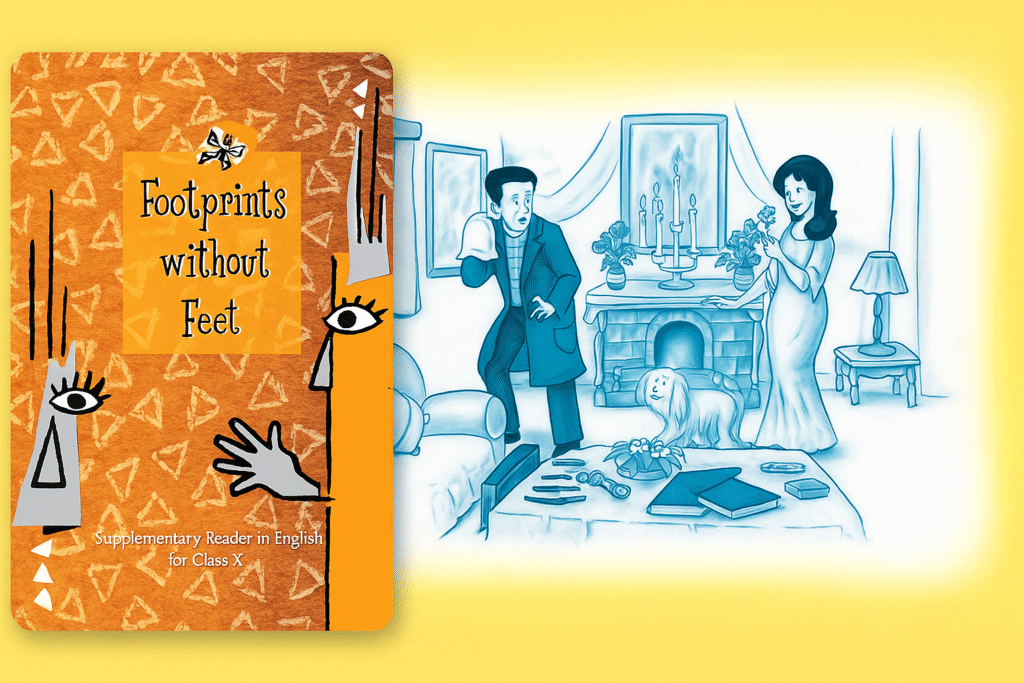
Prepare for your Class 10 English board exams with this complete A Question of Trust Class 10 study guide. This page covers everything you need: full story summary in English and Hindi, detailed character sketches of Horace Danby and the clever impostor, exploration of the theme and moral lessons about trust and deception, NCERT solutions with step-by-step answers, important questions with model responses, and extra practice questions for deeper understanding. Whether you’re studying for exams or completing assignments, find all A Question of Trust answers and notes in one place.
Table of Contents
question of trust summary
English Summary
What if the thief you’re rooting for walks straight into a trap that feels like kindness, sounds like trust, and looks like help—would you see it coming?
Horace Danby is a quiet lock-maker who loves rare books, steals once a year to buy them, and thinks he harms no one—this summer, he picks Shotover Grange after studying it for two weeks. He plans a clean job: servants gone to the movies, a key on a hook, a safe behind a poor painting, and about fifteen thousand pounds in jewels he will sell for five thousand—just enough for the year and three special books in autumn. You follow Horace as he slips in with gloves, calls the dog “Sherry,” cuts the weak alarm wire, and fights hay fever from a bowl of flowers—yes, but a gentle voice from the doorway asks, “What is it? A cold or hay fever?” and the loop snaps tight. A young woman in red—calm, firm, and kind—smiles, pets Sherry, and calls him a burglar, no, and she also promises to call the police if he runs. Horace tries charm and threats, yes, but she stays steady and talks about “society” needing protection, and he admits he steals only from the rich and hates prison. She lights a cigarette; he takes off his gloves to offer his lighter—small mistake, big cost. Then the twist: she says she’s the lady of the house, forgot the safe numbers, wants her jewels for a party; he agrees to help, yes, but he must break the safe, and she says her husband won’t return for a month. The tension climbs as Horace opens the safe “within an hour,” hands her the glittering jewels, and walks away free—hope high, fear low. Two days of peace pass, no, and by the third morning, just as he thinks of new books and another plan, the police arrest him for the Shotover Grange robbery. His fingerprints are everywhere because he took off his gloves, and the real lady—gray-haired, sharp-tongued, about sixty—calls his story nonsense, closing the trap. Now Horace works as an assistant librarian in prison, still thinking of that charming, clever “lady” in the same profession as him who tricked him, and he gets angry when anyone says there’s honour among thieves—because that day, trust cut deeper than any lock.
Characters:
Horace Danby: Careful, book-loving lock-maker and once-a-year thief; fooled by charm and his own need.
Young woman in red: Clever impostor thief; calm voice, firm control, uses trust to steal the jewels.
Real lady of the house: Gray-haired, sharp-tongued owner who denies Horace’s story to the police.
Sherry: Friendly house dog who welcomes both thieves without suspicion.
Theme / Moral:
Trust without proof can turn skill into weakness, and a small lapse—like removing gloves—can ruin perfect plans. Crime dressed as kindness is still crime; clever deceit can outplay careful planning and leave no honour among thieves.
question of trust Hindi Summary
क्या तुमने कभी किसी पर इतना भरोसा किया है कि सवाल पूछना ही भूल गए—यहाँ तक कि जब कुछ थोड़ा-सा गलत लग रहा हो? अगर भरोसे का वही एक पल तुम्हारी पूरी योजना उलट दे तो? यह कहानी तुम्हें एक शांत घर, एक चालाक चोर और एक ऐसी गलती में ले जाती है जो सब कुछ बदल देती है।
यह अध्याय Horace Danby की कहानी बताता है, जो एक सम्मानित व्यक्ति है और जिसे दुर्लभ किताबें बहुत पसंद हैं। उन्हीं किताबों को खरीदने के लिए वह हर साल चुपके से चोरी करता है। Shotover Grange में उसकी सावधानी से बनाई गई चोरी की योजना बिल्कुल सही लगती है, लेकिन जब वह गलत व्यक्ति पर भरोसा कर लेता है, तो सब कुछ बिगड़ जाता है। अंत में Horace पकड़ा जाता है, जबकि असली चोर बच निकलता है, और गलत भरोसे की वजह से बढ़े अपराध की सज़ा Horace को भुगतनी पड़ती है।
Horace Danby एक शांत, मध्यम उम्र का व्यक्ति था, जो देखने में ईमानदार और सम्मानित लगता था। वह अकेला रहता था और उसके साथ एक गृह-सेविका रहती थी, जो उसके स्वास्थ्य को लेकर चिंतित रहती थी, खासकर गर्मियों में होने वाले उसके hay fever को लेकर। Horace तालों का काम करता था और उसका कारोबार अच्छा चल रहा था। फिर भी, पंद्रह साल पहले वह एक बार जेल जा चुका था। Horace को दुर्लभ और महँगी किताबों से बहुत प्यार था। उन्हें खरीदने के लिए उसने एक अजीब आदत बना ली थी—वह हर साल एक तिजोरी चुराता था। हर बार वह बहुत सावधानी से योजना बनाता, बारह महीनों के लिए जितने पैसों की ज़रूरत होती उतना ही चुराता, और एक एजेंट के ज़रिए चुपचाप किताबें खरीद लेता था।
एक चमकीली जुलाई की दोपहर Horace को पूरा भरोसा था कि इस बार भी उसकी योजना सफल होगी। दो हफ्तों से वह Shotover Grange का अध्ययन कर रहा था—कमरे, बिजली की तारें, बगीचे के रास्ते और रोज़मर्रा की दिनचर्या। परिवार लंदन गया हुआ था और दोनों नौकर फ़िल्म देखने चले गए थे। Horace ने उन्हें जाते देखा, इंतज़ार किया, और फिर अपने औज़ारों के साथ बगीचे की दीवार फाँद ली। रसोई में Sherry नाम का एक छोटा-सा कुत्ता था, जो पूँछ हिलाने लगा। Horace ने उससे शांति से बात की, क्योंकि वह जानता था कि प्यार से पेश आने पर कुत्ते शांत रहते हैं। बैठक में तिजोरी एक घटिया-सी पेंटिंग के पीछे छिपी हुई थी। Horace ने अपने औज़ार रखे और सोचा कि उसके पास चार घंटे हैं। काम करते समय फूलों की खुशबू से उसे छींक आने लगी। उसे यह सोचकर हैरानी हुई कि लोग अपने घरों की इतनी जानकारी पत्रिकाओं में क्यों छपवाते हैं, क्योंकि उसने एक पत्रिका में इसी कमरे का ज़िक्र और छिपी तिजोरी का वर्णन पढ़ा था।
तभी सब कुछ बदल गया। दरवाज़े से एक शांत आवाज़ आई, “क्या हुआ? सर्दी है या hay fever?” बिना सोचे Horace ने जवाब दिया, “Hay fever,” और फिर छींक गया। वहाँ लाल कपड़े पहने एक युवा महिला खड़ी थी, जो मुस्कुरा रही थी और पूरी तरह शांत थी। उसने कहा कि वह अचानक लौट आई है और एक चोर से मिलने पर मज़ाक किया। Horace ने खुद को शांत रखने की कोशिश की। जब उसने कहा कि वह भाग सकता है, तो उसने जवाब दिया कि वह बस पुलिस को फ़ोन कर देगी। Horace ने फ़ोन की तार काटने और उसे चुप रखने की बात छेड़ी, लेकिन तुरंत कहा कि वह सिर्फ़ डराना चाहता था। उसने उससे विनती की कि उसे जाने दे और वादा किया कि वह फिर कभी चोरी नहीं करेगा। महिला ध्यान से सुनती रही और उसे जेल जाने के डर को समझती हुई लगी।
फिर उस महिला ने एक प्रस्ताव रखा। उसने कहा कि वह घर की मालकिन है और तिजोरी के नंबर भूल गई है। उसे उस रात एक पार्टी में पहनने के लिए अपने गहने चाहिए थे और उसने Horace से तिजोरी खोलने को कहा। राहत और उम्मीद से भरे Horace ने हाँ कर दी। उसने अपने दस्ताने उतारे और तिजोरी खोलकर सारे गहने उसे दे दिए। एक घंटे के भीतर वह खुश-खुश चला गया, यह सोचते हुए कि वह मुसीबत से बच गया है।
दो दिनों तक Horace ने चोरी न करने का अपना वादा निभाया। तीसरे दिन उसे फिर से किताबों की याद आई और उसने एक और चोरी की योजना बनाई। इससे पहले कि वह कुछ कर पाता, पुलिस ने उसे Shotover Grange की गहनों की चोरी के आरोप में गिरफ़्तार कर लिया। उसने बिना दस्तानों के काम किया था, इसलिए उसके उँगलियों के निशान हर जगह थे। जब उसने कहा कि उस महिला ने उससे तिजोरी खोलने को कहा था, तो किसी ने विश्वास नहीं किया। असली मालिक की पत्नी एक बूढ़ी महिला थी, जिसने सब कुछ नकार दिया। Horace फिर से जेल पहुँच गया और अब वहाँ सहायक पुस्तकालयाध्यक्ष के रूप में काम करता है। वह अक्सर उस “charming, clever young lady” को याद करता है जिसने उसे धोखा दिया था, और जब भी कोई “honour among thieves” की बात करता है, तो उसे बहुत गुस्सा आता है।
Horace Danby – सावधान और किताबों से प्रेम करने वाला – एक सम्मानित व्यक्ति जो हर साल चुपके से चोरी करता है
लाल कपड़ों वाली युवा महिला – चालाक और धोखेबाज़ – असली चोर जो Horace को फँसाती है
Sherry – दोस्ताना – वह कुत्ता जो चोरी के दौरान शांत रहता है
यह कहानी तुम्हें सिखाती है कि आँख बंद करके किया गया भरोसा गंभीर नतीजे ला सकता है। यह याद दिलाती है कि अगर तुम गलत व्यक्ति पर भरोसा कर लो, तो सबसे चालाक योजना भी बेकार हो जाती है, और बेईमानी अक्सर उसी पर
भारी पड़ती है जो खुद को सब कुछ नियंत्रित करने वाला समझता है।
question of trust Keywords and meanings
- Cigarette lighter – small tool that made Horace remove gloves
- Party – event for which the young lady
- Horace Danby – careful lock-maker and once-a-year thief
- Housekeeper – woman who looks after Horace’s home and worries about his health
- Shotover Grange – the big house chosen for the robbery
- Servants – two helpers at the Grange who go to the movies
- Sherry – the friendly house dog at the Grange
- Safe – metal box hiding the jewels behind a painting
- Jewels – costly stones worth about fifteen thousand pounds
- Gloves – hand covers Horace wears to avoid fingerprints
- Fingerprints – marks left by fingers that identify a person
- Burglar alarm – device meant to warn about intruders
- Magazine article – published piece that revealed the house plan and safe
- Hay fever – allergy causing sneezing from flowers and pollen
- Young lady – woman in red who tricks Horace
- Telephone – used to threaten calling the police
- Police – officers who arrest Horace for the robbery
- London – city where the Grange family has gone
- Kitchen key – key on a hook used to enter the house
- Drawing room – room where the safe is kept
- Painting – picture hiding the safe on the wallwants the jewels
- Bank – safe place where jewels were promised to be kept
- Prison – place where Horace works as assistant librarian
- Honour among thieves – idea that thieves are loyal to each other
- Agent – person who buys rare books for Horace secretly
question of trust Important Phrases
- “set a thief to catch a thief”
- “honour among thieves”
- “good and respectable — but not completely honest”
- “rare, expensive books”
- “There were about fifteen thousand pounds’ worth of jewels”
- “If he sold them one by one, he expected to get at least five thousand”
- “All right, Sherry”
- “The safe was in the drawing room, behind a rather poor painting.”
- “There was a great bowl of flowers on the table”
- “What is it? A cold or hay fever?”
- “You’d better see a doctor, if you’re serious about your work.”
- “Down, Sherry”
- “I came back just in time, though I didn’t expect to meet a burglar.”
- “I didn’t expect to meet one of the family.”
- “I would telephone the police”
- “You’d hurt me?”
- “You didn’t frighten me.”
- “Society must be protected from men like you.”
- “I steal only from those who have a lot of money.”
- “I hate the thought of prison.”
- “I have always liked the wrong kind of people.”
- “You’ll let me go?”
- “Yes, but only if you’ll do something for me.”
- “You’ve forgotten the numbers to open the safe, haven’t you?”
- “within an hour Horace had opened the safe, given her the jewels, and gone happily away.”
- “His fingerprints… were all over the room”
- “a gray-haired, sharp-tongued woman of sixty”
- “the same profession as he was, and who tricked him.”
question of trust question answer
Text based questions and answers.
Q1. What does Horace Danby like to collect?
Answer:Horace Danby loves to collect rare and expensive books.
He finds great joy in owning these special books.
The story says, “He loved rare, expensive books.”
This hobby makes him different from ordinary thieves and shows his passion for knowledge.
Q2. Why does he steal every year?
Answer:Horace Danby steals every year to get money for his book collection.
He plans each theft carefully and only takes enough to last twelve months.
The text mentions, “He robbed a safe every year… secretly bought the books he loved.”
His actions show that even good people can make mistakes when they want something badly.
Q3. Who is speaking to Horace Danby?
Answer:A young woman in red is speaking to Horace Danby.She pretends to be the lady of the house and tricks him.
The story describes her as confident and clever, saying, “She behaved with such authority.”
This shows how appearances can be misleading and trust can be easily broken.
Q4. Who is the real culprit in the story?
Answer:The real culprit is the young woman in red.
She is actually a thief who tricks Horace Danby into opening the safe.
The story reveals, “She decamped with the jewels while Horace was arrested.”
This teaches us that sometimes, the cleverest person is not always the one we expect.
Text based questions and answers.
Q1. Did you begin to suspect, before the end of the story, that the lady was not the person Horace Danby took her to be? If so, at what point did you realise this, and how?
Answer:The suspicion begins when the lady appears too calm and self-assured for a homeowner surprised by a thief. Her clever control over the situation and unusual knowledge raised doubts. This moment shows how appearances can be deceiving and encourages careful observation.
Q2. What are the subtle ways in which the lady manages to deceive Horace Danby into thinking she is the lady of the house? Why doesn’t Horace suspect that something is wrong?
Answer:The lady uses quiet confidence, polite speech, and knowledge of the house’s details to convince Horace. She acts naturally and never shows fear, which makes Horace trust her. His own overconfidence in his planning blinds him to warning signs, showing how even skilled people can be fooled by charm.
Q3. “Horace Danby was good and respectable — but not completely honest”. Why do you think this description is apt for Horace? Why can’t he be categorised as a typical thief?
Answer:Horace is respected because of his everyday behavior and work, but he steals to fund his book collection, not out of greed or cruelty. He plans carefully and steals only what he needs yearly. This shows he is different from typical thieves, who steal for quick gain rather than passion.
Q4. Horace Danby was a meticulous planner but still he faltered. Where did he go wrong and why?
Answer:Horace went wrong by underestimating the woman’s cleverness and trusting appearances. His careful plans did not account for someone outsmarting him. This shows that even the best plans can fail if people ignore unexpected risks and overestimate their control.
Q5. Do you think Horace Danby was unfairly punished, or that he deserved what he got?
Answer:Horace deserved punishment because stealing is wrong, even if his reasons seemed innocent. However, the story also suggests fairness depends on perspective, as the real criminal escaped blame. This teaches that justice can be complex and not always fair.
Q6. Do intentions justify actions? Would you, like Horace Danby, do something wrong if you thought your ends justified the means? Do you think that there are situations in which it is excusable to act less than honestly?
Answer:Intentions can explain but never fully justify wrong actions. Horace’s love for books doesn’t excuse theft. It is important to find honest ways to achieve goals. Sometimes, small compromises might be understandable, but honesty should remain a key value in lif
question of trust Grammar
(Do as directed)
Horace Danby _______ (rob) one safe every year to buy rare books.
(Fill in the blank with the correct tense form)
Horace _______ (study) the house at Shotover Grange for two weeks before the robbery.
(Fill in the blank with the correct tense form)
The servants went to the movies.
(Change the sentence into Passive Voice)
Horace opened the safe without gloves.
(Change the sentence into Passive Voice)
The woman said to Horace, “I would telephone the police.”
(Change into Indirect Speech)
Horace said, “Hay fever.”
(Change into Indirect Speech)
Horace waited _______ four hours before the servants returned.
(Fill in the blank with the correct preposition)
He hid the safe _______ a poor painting in the drawing room.
(Fill in the blank with the correct preposition)
Horace _______ open the safe because he was an expert in locks.
(Fill in the blank with a suitable modal verb)
The woman told Horace that society must be protected from men like him.
(Change into Direct Speech)
Horace trusted the young woman completely.
(Change the sentence into Negative form)
Horace is honest. Horace steals every year.
(Combine the sentences using a suitable conjunction)
The lady was clever. Horace was careless.
(Change the sentence into Comparative Degree)
One word in the sentence is incorrect. Identify and correct it:
“Horace did not left any fingerprints in the house.”
(Do as directed – Editing)
Fill in the blanks with suitable words from the chapter:
Horace removed his _______ and opened the _______ without fear.
(Do as directed – Gap Filling)
Here are grammar questions answers
robs
had studied
The movies were gone to by the servants.
The safe was opened without gloves by Horace.
The woman told Horace that she would telephone the police.
Horace said that he had hay fever.
for
behind
could
The woman said, “Society must be protected from men like you.”
Horace did not trust the young woman completely.
Horace is honest, but he steals every year.
The lady was cleverer than Horace.
Incorrect word: left → Correct word: leave
gloves, safe
question of trust Short Answer Questions (30–40 words)
Q1. Why did Horace Danby steal only once a year?
Ans. He loved “rare, expensive books” and robbed a safe once a year to buy them, selling jewels “one by one” to get “at least five thousand,” enough for a year and upcoming autumn books.
Q2. How did Horace enter Shotover Grange without force?
Ans. He had seen the housekeeper hang the kitchen key on a hook, put on “a pair of gloves,” took the key, and opened the door carefully to avoid fingerprints.
Q3. What detail in the drawing room troubled Horace and why?
Ans. A “great bowl of flowers” made his hay fever worse; he kept sneezing, which drew attention and led to the young woman’s quiet, firm voice from the doorway.
Q4.Where was the safe and how did Horace locate it?
Ans. The safe was in “the drawing room, behind a rather poor painting,” a fact even mentioned in a magazine article that described the rooms and picture.
Q5.How did the young woman control the situation without violence?
Ans. She spoke kindly but firmly, threatened to “telephone the police,” used calm dialogue, and made Horace take off his gloves by asking for a light, gaining his trust.
Q6. What mistake led to Horace’s arrest?
Ans. He removed his gloves to offer a lighter; his fingerprints were “all over the room,” so the police arrested him for the jewel robbery at Shotover Grange.
Q7. Who exposed Horace’s story as false at the end?
Ans. The real wife, “a gray-haired, sharp-tongued woman of sixty,” called his story “nonsense,” proving the young lady was an impostor.
Q8. What job did Horace get after prison and how does he feel about “honour among thieves”?
Ans. He became an assistant librarian in prison and gets very angry when anyone talks about “honour among thieves,” remembering how he was tricked.
question of trust Long Answer Questions (100–120 words)
1. Describe the character of Horace Danby.
Answer: Horace Danby appeared honest, respectable, and quiet.
He ran a successful lock-making business.
He loved rare books and valued knowledge.
However, he was not completely honest.
He stole once every year in a planned manner.
He avoided violence and unnecessary theft.
Horace believed his thefts harmed no one.
His weakness was blind trust and overconfidence.
This flaw caused his downfall and imprisonment.
2. How did the young woman deceive Horace Danby?
Answer: The young woman pretended to be the owner of the house.
She appeared confident, calm, and well-informed.
She spoke firmly and threatened to call the police.
She gained Horace’s sympathy by mentioning her jewels.
She claimed to have forgotten the safe numbers.
Horace trusted her and opened the safe without gloves.
She escaped with the jewels.
Horace was later arrested for the crime.
3. “A Question of Trust” shows that intelligence without caution can be dangerous. Explain.
Answer: Horace was intelligent and a careful planner.
He studied the house and security systems well.
However, he trusted the young woman blindly.
He did not question her identity.
His emotional weakness overpowered his intelligence.
Removing gloves proved to be a serious error.
His lack of caution ruined his perfect plan.
Thus, intelligence without alertness led to his failure.
question of trust Extract Based Questions
Extract 1: “The safe was in the drawing room, behind a rather poor painting.”
Q1.What does “rather poor painting” suggest about the owners’ taste?
Ans.It hints at weak artistic taste and careless security choices, making the safe easier to find.
Q2. How did Horace know about the safe’s location?
A magazine article described the rooms and even mentioned the painting hiding a safe.
Q3.What tools or steps did Horace prepare before opening the safe?
Ans. He arranged his tools, cut the burglar alarm wire, and wore gloves to avoid fingerprints.
Extract 2: “Yes, but only if you’ll do something for me.”
Q1.Who says this and to whom?
Ans. The young lady in red says it to Horace Danby.
Q2. What does she request and why?
Ans.She asks him to open the safe to get her jewels, claiming she wants them for a party and forgot the numbers.
Q3. How does this line change Horace’s plan?
Ans. It makes him act as her helper, so he opens the safe and gives her the jewels “within an hour.”
Extract 3: “His fingerprints… were all over the room.”
Q1. Why were fingerprints present despite his usual care?
Ans. He took off his gloves to offer his cigarette lighter to the woman.
Q2. What was the immediate outcome of this evidence?
Ans. A policeman arrested him for the jewel robbery at Shotover Grange.
Q3. Who rejected Horace’s claim about helping the lady and how?
Ans. The real wife, “a gray-haired, sharp-tongued woman of sixty,” called his story “nonsense.”

FAQs
Who is Horace Danby and why does he steal once a year?
A: Horace Danby is a careful lock-maker who steals once a year to buy rare, expensive books. He plans each theft carefully and takes only enough money to fund his book collection for the year.
Q: How did Horace enter Shotover Grange without forcing a lock?
A: He watched the house, found the kitchen key hung on a hook, put on gloves, took the key and opened the door quietly — avoiding noise and direct breaking-in so the servants wouldn’t suspect anything.
What role did the magazine article and the “poor painting” play in Horace’s plan?
A: A magazine description revealed the house layout and the drawing-room painting that hid the safe, so Horace used that public detail to locate the safe behind a rather poor painting.
How did hay fever and the great bowl of flowers cause problems for Horace?
A: The flowers triggered his hay fever and sneezing, which drew attention and invited the young woman’s friendly voice — a small human detail that started the chain leading to his capture.
Why did Horace remove his gloves, and how did that lead to his arrest?
A: The impostor asked for a light and Horace offered his cigarette lighter, taking off his gloves to do so. His fingerprints were left “all over the room,” giving the police the evidence to arrest him.
Who was the young woman in red and how did she trick Horace?
A: The young woman in red was a clever impostor who pretended to be the lady of the house, used calm authority and a believable story to make Horace open the safe, then escaped with the jewels.
Did Horace actually get the jewels, and why was his story rejected?
A: Horace opened the safe and gave the jewels to the impostor, but the real lady later called his story “nonsense,” so the police believed the evidence (fingerprints) and arrested Horace while the impostor got away.
What is the main moral of “A Question of Trust” for Class 10 students?
A: The story warns that misplaced trust and small lapses (like removing gloves) can ruin even the best plans; it teaches that deception often wins over careful planning and that honesty matters.