

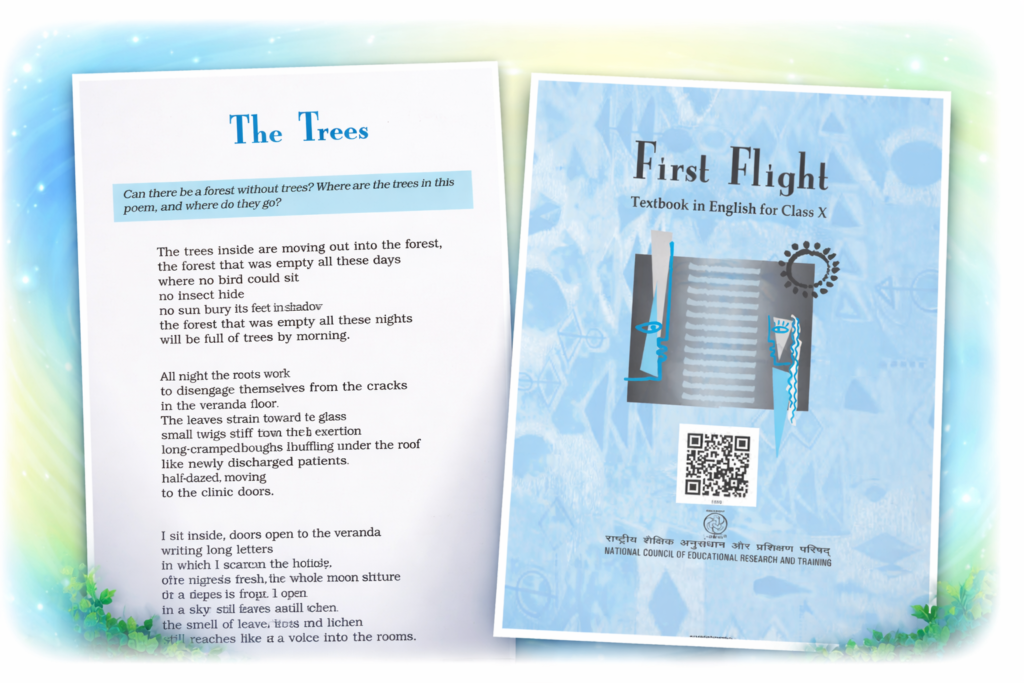
This page helps students revise quickly with The Trees Class 10 summary explained in clear, simple language within the first few lines. You will find an easy the trees poem class 10 explanation, detailed the trees class 10 questions and answers, and step-by-step NCERT-style solutions. It also includes the trees class 10 extra questions and answers for exam practice, along with short notes, poetic devices, and stanza-wise explanation. Whether you need a quick recap or full exam preparation, this page covers all key ideas, themes, and answers required for Class 10 English exams.
Table of Contents
the trees summary
Can you imagine waking up one morning to find that the trees in your house have decided to leave? What if the quiet plants you ignore every day suddenly begin to move, break free, and walk away into the night?
The poem shows trees that have been trapped inside a house finally escaping and returning to the forest. By morning, the empty forest will be alive again. Inside the house, silence and loss remain, while outside, nature regains its freedom.
The poem opens with a strange but powerful scene. The trees that were once kept inside the house are now “moving out into the forest.” The forest, which had been empty for days and nights, had no place for birds, insects, or even sunlight to rest. There was no shade where “no sun bury its feet in shadow.” But now, things are changing. By morning, the forest that stood empty for so long will be full again. Life is quietly returning to its rightful place.
As night continues, the effort of the trees becomes clear. All night long, the roots work hard to pull themselves free from the cracks in the veranda floor. The leaves push toward the glass windows, as if searching for the open air outside. The twigs are stiff with effort, and the long, cramped boughs move slowly under the roof. Their movement is awkward and weak, “like newly discharged patients,” still unsteady as they walk toward the clinic doors. The house feels crowded and restless as the trees struggle to escape the spaces that held them captive for so long.
Inside the house, the speaker sits quietly with the doors open to the veranda. She is busy writing long letters, yet she hardly mentions “the departure of the forest from the house.” Outside, the night feels fresh and calm. The full moon shines brightly in a sky that still feels open and wide. The smell of leaves and lichen drifts into the rooms, reaching inside “like a voice.” Even as the trees prepare to leave, their presence can still be felt within the house.
As the moment of escape arrives, the speaker’s mind fills with whispers that she knows will be silent by morning. Suddenly, the silence breaks. “Listen. The glass is breaking.” The trees stumble forward into the night, finally free. The winds rush eagerly to meet them, welcoming them back into the open world. The moon now looks different. It is “broken like a mirror,” and its shining pieces flash among the branches of the tallest oak tree. The trees have fully returned to the forest, and the house is left behind, empty and still.
Trees – determined – living beings escaping confinement
Speaker – quiet observer – watches the trees leave without stopping them
The central message is that nature cannot remain trapped forever. When living things are confined, they will struggle to regain freedom. You learn that the natural world must be allowed to exist where it truly belongs.
the trees Hindi Summary
क्या तुम कल्पना कर सकते हो कि एक सुबह जागो और पता चले कि तुम्हारे घर के पेड़ जाने का फैसला कर चुके हैं? क्या होगा अगर वे शांत पौधे, जिन्हें तुम रोज़ नज़रअंदाज़ करते हो, अचानक हिलने लगें, खुद को आज़ाद करें और रात में बाहर निकल जाएँ?
यह कविता उन पेड़ों को दिखाती है जो घर के अंदर फँसे थे और अब निकलकर जंगल में लौट रहे हैं। सुबह तक, जो जंगल खाली था, फिर से जीवित हो जाएगा। घर के अंदर सन्नाटा और खालीपन रह जाता है, जबकि बाहर प्रकृति अपनी आज़ादी वापस पा लेती है।
कविता एक अजीब लेकिन ताक़तवर दृश्य से शुरू होती है। जो पेड़ कभी घर के अंदर रखे गए थे, अब “जंगल की ओर निकल रहे हैं।” वह जंगल कई दिनों और रातों से खाली था। वहाँ न कोई पक्षी बैठ सकता था, न कोई कीड़ा छिप सकता था, और न ही धूप को ठहरने की जगह मिलती थी। वहाँ कोई छाया नहीं थी जहाँ “सूरज अपने पाँव छाया में दबा सके।” लेकिन अब हालात बदल रहे हैं। सुबह तक, जो जंगल इतने समय से खाली था, वह फिर से भर जाएगा। जीवन चुपचाप अपनी सही जगह पर लौट रहा है।
जैसे-जैसे रात बढ़ती है, पेड़ों की मेहनत साफ़ दिखने लगती है। पूरी रात जड़ें बरामदे की फ़र्श की दरारों से खुद को अलग करने में लगी रहती हैं। पत्तियाँ काँच की खिड़कियों की ओर धकेलती हैं, जैसे बाहर की खुली हवा को खोज रही हों। टहनियाँ ज़ोर लगाने से अकड़ी हुई हैं, और लंबे, तंग डाल छत के नीचे धीरे-धीरे खिसकती हैं। उनकी चाल कमजोर और अटपटी है, “जैसे अभी-अभी अस्पताल से छुट्टी पाए मरीज़,” जो आधे होश में क्लिनिक के दरवाज़ों की ओर बढ़ रहे हों। घर भरा-भरा और बेचैन सा लगता है, क्योंकि पेड़ उन जगहों से निकलने के लिए जूझ रहे हैं जिन्होंने उन्हें इतने समय तक क़ैद करके रखा था।
घर के अंदर वक्ता बरामदे की ओर खुले दरवाज़ों के साथ चुपचाप बैठी है। वह लंबे पत्र लिखने में लगी है, लेकिन वह मुश्किल से “घर से जंगल के जाने” का ज़िक्र करती है। बाहर रात ताज़ा और शांत महसूस होती है। पूरा चाँद उस आसमान में चमक रहा है जो अब भी खुला और फैला हुआ लगता है। पत्तियों और लाइकेन की गंध कमरों में बहती हुई आती है, “एक आवाज़ की तरह” अंदर तक पहुँचती है। पेड़ जाने की तैयारी कर रहे हैं, फिर भी उनकी मौजूदगी घर के भीतर महसूस होती रहती है।
जैसे ही आज़ादी का पल आता है, वक्ता का मन फुसफुसाहटों से भर जाता है, जिन्हें वह जानती है कि सुबह तक खामोशी में बदल जाएँगी। अचानक, सन्नाटा टूट जाता है। “सुनो। काँच टूट रहा है।” पेड़ लड़खड़ाते हुए रात में आगे बढ़ते हैं, अब पूरी तरह आज़ाद। हवाएँ तेज़ी से उनकी ओर दौड़ती हैं और खुले संसार में उनका स्वागत करती हैं। अब चाँद अलग दिखता है। वह “आईने की तरह टूट गया है,” और उसके चमकते टुकड़े सबसे ऊँचे ओक पेड़ की डालियों में चमकते हैं। पेड़ पूरी तरह जंगल में लौट चुके हैं, और घर पीछे छूट जाता है—खाली और शांत।
पेड़ – दृढ़ निश्चयी – क़ैद से निकलते जीवित प्राणी
वक्ता – शांत दर्शक – बिना रोके पेड़ों को जाते हुए देखती है
इस कहानी का मुख्य संदेश यह है कि प्रकृति हमेशा क़ैद में नहीं रह सकती। जब जीवित चीज़ों को बाँध दिया जाता है, तो वे आज़ादी पाने के लिए संघर्ष करती हैं। तुम यह सीखते हो कि प्राकृतिक दुनिया को वहाँ रहने देना चाहिए जहाँ वह सच में belongs करती है।
the trees Keywords with meanings:
trees – plants moving out from house to forest
forest – empty wild place waiting for trees
roots – tree parts pulling free from floor cracks
leaves – tree parts straining toward glass
twigs – small branches stiff from effort
boughs – long-cramped tree branches shuffling
veranda – open porch where trees are stuck
moon – full light that breaks like mirror
glass – windows cracking under tree pressure
winds – rushing air greeting escaping trees
oak – tallest tree catching moon pieces
lichen – crusty growth smelling like voice
poet – narrator watching trees leave quietly
the trees Important Phrases :
no bird could sit
no insect hide
no sun bury its feet in shadow
roots work to disengage themselves
leaves strain toward the glass
small twigs stiff with exertion
long-cramped boughs shuffling under the roof
like newly discharged patients half-dazed
writing long letters
scarcely mention the departure of the forest
smell of leaves and lichen still reaches like a voice
My head is full of whispers
The glass is breaking
trees are stumbling forward into the night
Winds rush to meet them
moon is broken like a mirror
pieces flash now in the crown of the tallest oak
the trees class 10 questions and answers
Text based questions and answers
Q1. Can there be a forest without trees?
Answer:No, a forest cannot exist without trees because trees define a forest.
The poem shows an empty forest without birds sitting, insects hiding, or sun in shadows.
This rhetorical question highlights nature’s need for trees to be complete.
It makes us see how vital trees are to life.
Q2. Where are the trees in this poem, and where do they go?
Answer:The trees are inside the house, trapped in the veranda and rooms.
They move out at night into the empty forest.
By morning, the forest will be full of trees again.
This escape shows trees longing for their natural home.
Q3.i Find, in the first stanza, three things that cannot happen in a treeless forest.
Answer:In a treeless forest, no bird could sit, no insect hide, and no sun bury its feet in shadow.
These show the forest’s emptiness without trees.
Birds need branches, insects need cover, and sun needs shade.
Trees bring life and balance to the wild.
Q4.ii What picture do these words create in your mind … sun bury its feet in shadow…? What could the poet mean by the suns feet?
Answer:These words create a picture of the sun resting its warm rays in cool tree shadows, like feet dipping into shade.
The poet means the sun’s rays by “sun’s feet,” showing how sunlight sinks into dark tree shade.
It personifies the sun, making nature feel alive and cozy.
This imagery helps us feel the forest’s peace.
Q5.i Where are the trees in the poem? What do their roots, their leaves, and their twigs do?
Answer:The trees are inside the house on the veranda floor.
Roots work to disengage from cracks, leaves strain toward the glass, and small twigs go stiff with exertion.
They struggle all night to break free.
This shows their strong will to return to the forest.
Q6.ii What does the poet compare their branches to?
Answer:The poet compares the long-cramped boughs to newly discharged patients, half-dazed, moving to the clinic doors.
They shuffle under the roof, weak and wobbly after being trapped.
This simile shows their tired but determined escape.
It makes the trees feel human and relatable.
Q7.i How does the poet describe the moon a at the beginning of the third stanza, and b at its end? What causes this change?
Answer:At the beginning, the moon is whole, shining in a sky still open.
At the end, it is broken like a mirror, with pieces flashing in the tallest oak’s crown.
The trees stumbling forward and winds rushing cause the glass to break, shattering the moon’s reflection.
This change marks the trees’ successful freedom.
Q8.ii What happens to the house when the trees move out of it?
Answer:The house becomes emptier and quieter as the trees leave.
The poet notes the smell of leaves and lichen fades, whispers in her head go silent, and glass breaks.
No direct change is described, but it feels hollow without the forest inside.
It shows how nature’s presence fills a space with life.
Q9.iii Why do you think the poet does not mention the departure of the forest from the house in her letters?
Answer:The poet scarcely mentions the trees’ departure because it is too surprising and personal to share easily.
She sits writing long letters with doors open to the veranda but stays silent on this big event.
Unexpected changes like this can embarrass or overwhelm us, so we hold back.
This silence adds mystery and makes the poem thoughtful.
Grammar based on “The Trees” by Adrienne Rich
Do the following exercises. Each carries 1 mark.
(Tenses)
All night the roots _____ (work) to disengage themselves from the cracks in the veranda floor.
Do as directed: Fill in the blank with the correct form of the verb ‘work’.
(Voice Change)
The trees are stumbling forward into the night.
Do as directed: Change the voice to passive.
(Reported Speech)
“Listen,” said the poet.
Do as directed: Change to indirect speech.
(Articles)
_____ forest that was empty all these days will be full of _____ trees by morning.
Do as directed: Fill in the blanks with appropriate articles.
(Modals)
No bird _____ sit, no insect _____ hide in a treeless forest.
Do as directed: Fill in the blanks with modals ‘could’ or ‘can’ to show impossibility.
(Prepositions)
The leaves strain _____ the glass. Small twigs stiff _____ exertion.
Do as directed: Fill in the blanks with correct prepositions.
(Sentence Transformation)
The boughs are long-cramped. They shuffle under the roof.
Do as directed: Combine the sentences using ‘and’.
(Voice Change)
Winds rush to meet them.
Do as directed: Change to passive voice.
(Tenses)
By morning, the forest _____ (be) full of trees.
Do as directed: Fill in the blank with the correct future form of ‘be’.
(Reported Speech)
“My head is full of whispers,” thought the poet.
Do as directed: Change to indirect speech.
(Modals)
The trees _____ return to their forest home. (possibility)
Do as directed: Fill in the blank with a suitable modal.
(Editing – Error Spotting)
The moon shine in a sky still open. (Error in sentence 1)
Do as directed: Spot and correct the error.
(Sentence Transformation)
The forest was emptier than the house.
Do as directed: Change to superlative degree.
(Gap Filling)
The smell of leaves and _____ still reaches like a voice into the _____.
Do as directed: Fill in the blanks with words from the poem.
(Omission)
Long-cramped boughs shuffling _____ roof like newly discharged patients.
Do as directed: Insert the missing preposition.
(Voice Change)
The poet scarcely mentions the departure of the forest.
Do as directed: Change to passive voice.
(Question Formation)
The trees move out into the forest.
Do as directed: Change into a question.
(Negative Transformation)
Birds could sit on branches.
Do as directed: Change to negative.
Here are grammar questions answers:
worked
They are being stumbled forward into the night.
The poet asked to listen.
The, the
could, could
toward, with
The long-cramped boughs shuffle under the roof and…
They are rushed to meet by winds.
will be
The poet thought that her head was full of whispers.
can/may
shines
The forest was the emptiest.
lichen, rooms
under the
The departure of the forest is scarcely mentioned by the poet.
Are the trees moving out into the forest?
No birds could sit on branches.
Extra questions and answers
Short Answer Questions (30-40 words each)
Q1. What does the poet mean by “the forest that was empty all these days”?
Answer:The forest lacks trees, so no bird could sit, no insect hide, and no sun bury its feet in shadow.
It shows a lifeless, barren place without nature’s balance.
This emptiness pulls the house-trapped trees back home.
Q2. Describe the movement of the trees’ roots at night.
Answer:All night, roots work to disengage themselves from cracks in the veranda floor.
They twist and pull hard to break free from being stuck.
This starts their determined escape to the forest.
Q3. Why do the poet’s letters not mention the trees leaving?
Answer:The poet writes long letters but scarcely mentions the departure of the forest from the house.
The event feels too surprising and personal to share.
Silence adds mystery to the big change happening.
Extract Based Question
Read the extract and answer the questions that follow:
“All night the roots work to disengage themselves from the cracks in the veranda floor. The leaves strain toward the glass small twigs stiff with exertion long-cramped boughs shuffling under the roof like newly discharged patients half-dazed, moving to the clinic doors.”
(a) What is happening to the roots, leaves, twigs, and boughs? (20 words)
Answer:
Roots disengage from cracks, leaves strain toward glass, twigs stiffen with effort, boughs shuffle like dazed patients.
(b) Why does the poet compare boughs to patients? (30 words)
Answer: Long-cramped boughs shuffle under the roof like newly discharged patients, half-dazed, moving to clinic doors.
It shows trees weak and wobbly after being trapped long.
Long Answer Questions (100-120 words each)
Q1. Explain the symbolism of the moon in the poem. How does it change and why?
Answer:At the start of the third stanza, the whole moon shines in a sky still open, looking calm and complete.
By the end, the moon is broken like a mirror, its pieces flash in the crown of the tallest oak.
This change happens when trees stumble forward, glass breaks under pressure, and winds rush to meet them.
The moon symbolizes the poet’s view of nature—first peaceful, then shattered by trees’ wild escape.
Broken pieces lighting the oak show freedom’s chaotic beauty.
It marks trees reclaiming their forest, turning emptiness into life.
Q2. Discuss the central theme of freedom and nature in “The Trees”. Give examples from the poem.
Answer:The poem shows nature’s strong urge for freedom from human captivity.
Trees trapped inside fight all night—roots disengage from veranda cracks, leaves strain toward glass, boughs shuffle like dazed patients.
They move to fill the empty forest where no bird sat, no insect hid, no sun found shadow.
Winds rush to greet them, moon breaks like mirror, signaling successful escape by morning.
Poet watches silently, head full of whispers that fade, showing quiet awe at nature’s power.
Theme teaches that wild things can’t stay caged forever—they return to roots despite comfort.
Q3. How does the poet create a sense of suspense and movement in the poem?
Answer:Poet builds suspense with sounds and actions: roots work all night, leaves strain, glass starts breaking—Listen!
Trees stumble forward clumsily into dark, winds rush suddenly, moon shatters dramatically.
Sensory details heighten tension: fresh night air, smell of leaves and lichen like a voice, head full of whispers going silent.
Personification makes trees alive—twigs stiff with exertion, boughs shuffling like half-dazed patients.
Climax peaks when trees burst out, forest transforms from empty to full by morning.
This step-by-step escape keeps readers hooked on nature’s thrilling rebellion.
FAQs
Q1. Where are the trees at the start of the poem and why is this setting important?
At the beginning, the trees are trapped inside the house, stuck in rooms and the veranda. This setting shows how nature is confined by humans and prepares us for the theme of freedom in The Trees poem Class 10.
Q2. What three things cannot happen in a forest without trees in the first stanza?
In a treeless forest, no bird can sit, no insect can hide, and the sun cannot rest in shade. These details show that trees are essential for life and balance in nature.
Q3. Why does the poet say the forest was empty all these days?
The forest is called empty because it had no trees, so no birds, insects, or shade existed there. This highlights how nature becomes lifeless when trees are removed from their natural place.
Q4. What do the roots, leaves, and twigs do during the night?
All night, roots pull free from floor cracks, leaves strain toward the glass, and twigs become stiff with effort. These actions show the trees’ strong struggle to escape and return to the forest.
Q5. Why are the boughs compared to newly discharged patients?
The long-cramped boughs move weakly and slowly, like tired patients leaving a hospital. This simile shows that the trees are exhausted but determined to regain freedom.
Q6. What is the poet doing while the trees are leaving the house?
The poet is sitting inside with doors open, writing long letters on the veranda. She quietly observes the change but hardly mentions the trees leaving, showing calm acceptance.
Q7. What does the breaking of glass and the rushing winds represent?
The breaking glass shows the final force of escape, while winds rushing to meet the trees welcome them back to nature. Together, they mark the moment of complete freedom.