

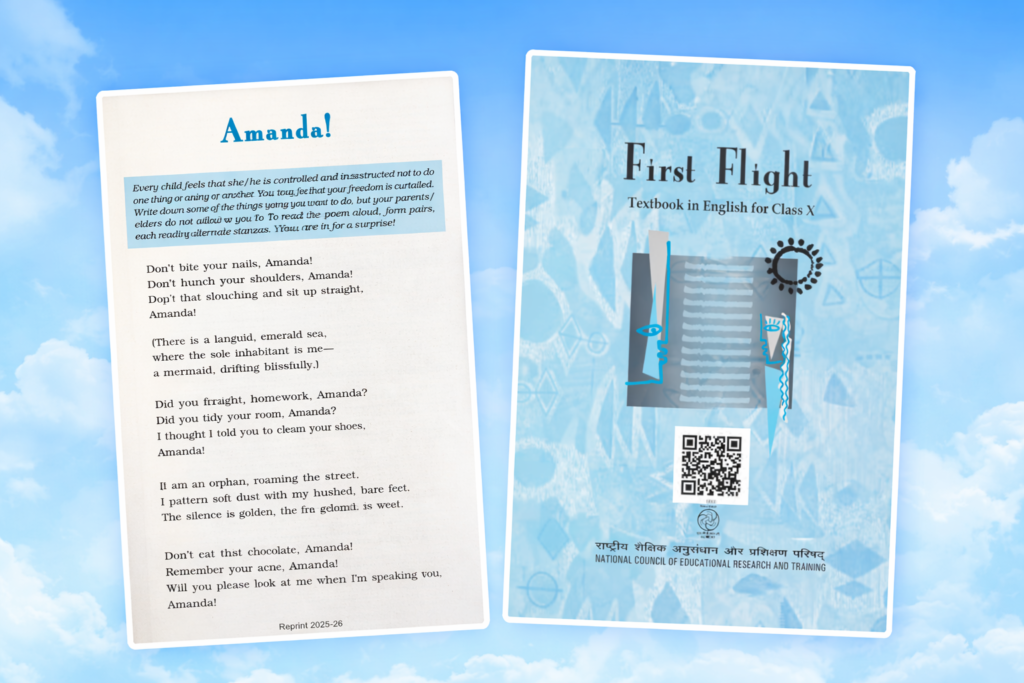
This page helps you prepare quickly with Amanda poem summary class 10 in clear, simple language, followed by full explanation, notes, and exam-focused practice. You will find a detailed amanda class 10 summary, stanza-wise amanda class 10 explanation, and well-structured amanda class 10 question answer based on NCERT patterns. It also includes amanda class 10 extra question answer, MCQs, and grammar-based questions to strengthen concepts. All answers are written for easy revision and board exam preparation, making this page useful for tests, homework, and last-minute study.
Table of Contents
amanda summary
English summary
Have you ever been told “Don’t do this” so many times that you just wanted to escape into your own world? Have you ever stood quietly while adults kept correcting you, again and again? That is exactly where this poem begins—with you standing in Amanda’s place, hearing every command and feeling the weight of it.
This poem shows the clash between a young girl’s inner world and the constant instructions she receives from elders. While adults keep correcting her behaviour, Amanda escapes into dreams where she feels calm, free, and alone. In the end, the adults mistake her silence for sulking, even though she is only trying to breathe in her own quiet space.
The poem opens with a sharp, repeated call of Amanda, showing how often she is addressed. She is immediately told what not to do. “Don’t bite your nails,” “Don’t hunch your shoulders,” and “Sit up straight.” The instructions come one after another, leaving no pause. While these commands continue, Amanda’s mind drifts away. She imagines a languid, emerald-green sea where she is the only one living there. In this dream, she is a mermaid, floating slowly and happily, free from rules and voices. The calm sea becomes her escape from constant control.
The next set of instructions follows quickly. She is asked if she has finished her homework. She is reminded to tidy her room and clean her shoes. The questions sound ordinary, but they pile up, making Amanda feel watched all the time. Again, her thoughts slip away. This time, she imagines herself as an orphan, walking alone through quiet streets. Her bare feet touch soft dust, and she moves gently, making patterns as she walks. There is no one to question her. The silence feels “golden,” and the freedom feels “sweet.” This dream shows her deep wish to be alone and unbothered, even if it means having no one at all.
Then the commands return, sharper than before. She is told not to eat chocolate. She is warned about acne. She is ordered to look up and pay attention while someone is speaking to her. These lines show how Amanda is judged even for small things about her body and behaviour. Once again, she escapes into imagination. Now she becomes Rapunzel, living peacefully in a tower. Her life there is calm and rare. She feels safe and untroubled. She decides she will “never let down” her bright hair, which shows her desire to protect her freedom and not let anyone disturb her peaceful world.
In the final part, the adults accuse Amanda of sulking and being moody. They even say that anyone watching would think they were nagging her. The irony is clear. Amanda has said nothing at all. She is quiet, not because she is rude, but because she has retreated into her thoughts. Her silence is mistaken for bad behaviour, even though it is actually her way of coping with endless control and correction.
Amanda – quiet, imaginative – a young girl who escapes into dreams to find freedom
Speaker (adult/elder) – controlling, authoritative – represents parents or elders giving constant instructions
This poem teaches you that children need space, silence, and understanding, not just rules. It shows how too much control can push someone inward instead of helping them grow. It reminds you to listen gently, because silence does not always mean anger—it can mean a quiet wish to be free.
Amanda Hindi Summary
क्या तुम्हें कभी इतनी बार “यह मत करो” कहा गया है कि तुम्हारा मन अपनी ही दुनिया में भाग जाना चाहता हो? क्या तुम चुपचाप खड़े रहे हो, जब बड़े बार-बार तुम्हें टोकते रहे हों? यही वह जगह है जहाँ यह कविता शुरू होती है—तुम Amanda की जगह खड़े हो, हर आदेश सुनते हुए और उसका बोझ महसूस करते हुए।
यह कविता एक छोटी लड़की की अंदरूनी दुनिया और बड़ों से मिलने वाले लगातार निर्देशों के बीच टकराव दिखाती है। जब बड़े उसके व्यवहार को बार-बार ठीक करते रहते हैं, तब Amanda सपनों में भाग जाती है, जहाँ वह शांत, आज़ाद और अकेली महसूस करती है। अंत में बड़े उसकी चुप्पी को रूठना समझ लेते हैं, जबकि वह बस अपनी शांत जगह में साँस लेना चाहती है।
कविता की शुरुआत Amanda के तीखे और बार-बार पुकारे जाने से होती है, जो दिखाता है कि उसे कितनी बार संबोधित किया जाता है। तुरंत ही उसे बताया जाता है कि क्या नहीं करना है। “नाखून मत चबाओ,” “कंधे मत झुकाओ,” और “सीधे बैठो।” आदेश एक-के-बाद-एक आते हैं, रुकने की कोई जगह नहीं रहती। इन्हीं आदेशों के बीच Amanda का मन भटक जाता है। वह एक सुस्त, पन्ना-हरी समुद्र की कल्पना करती है, जहाँ वह अकेली रहती है। इस सपने में वह एक जलपरी है, जो धीरे-धीरे और खुशी से तैर रही है, नियमों और आवाज़ों से मुक्त। वह शांत समुद्र उसके लिए लगातार नियंत्रण से बचने का रास्ता बन जाता है।
इसके बाद निर्देशों का अगला दौर जल्दी आता है। उससे पूछा जाता है कि क्या उसने होमवर्क पूरा किया है। उसे कमरा साफ करने और जूते साफ करने की याद दिलाई जाती है। सवाल साधारण लगते हैं, लेकिन वे जमा होते जाते हैं और Amanda को हर समय देखे जाने का एहसास कराते हैं। फिर से उसके विचार फिसल जाते हैं। इस बार वह खुद को एक अनाथ के रूप में कल्पना करती है, जो शांत गलियों में अकेली चल रही है। उसके नंगे पैर मुलायम धूल को छूते हैं, और चलते-चलते वह हल्के-हल्के पैटर्न बनाती है। उसे टोकने वाला कोई नहीं है। वहाँ की चुप्पी उसे “सोने जैसी” लगती है, और आज़ादी “मीठी।” यह सपना दिखाता है कि वह बिना किसी दखल के अकेली रहना कितना चाहती है, चाहे इसके लिए उसे किसी का न होना ही क्यों न स्वीकार करना पड़े।
फिर आदेश लौटते हैं, पहले से भी ज़्यादा तीखे। उसे चॉकलेट न खाने को कहा जाता है। उसे मुहांसों के बारे में चेतावनी दी जाती है। किसी के बोलते समय ऊपर देखकर ध्यान देने का आदेश दिया जाता है। ये पंक्तियाँ दिखाती हैं कि Amanda को उसके शरीर और व्यवहार की छोटी-छोटी बातों पर भी परखा जाता है। एक बार फिर वह कल्पना में भाग जाती है। अब वह Rapunzel बन जाती है, जो एक मीनार में शांति से रहती है। वहाँ उसका जीवन शांत और अनोखा है। वह सुरक्षित और बेफ़िक्र महसूस करती है। वह तय करती है कि वह अपने चमकीले बाल “कभी नीचे नहीं गिराएगी,” जो दिखाता है कि वह अपनी आज़ादी को बचाना चाहती है और अपनी शांत दुनिया में किसी को दखल नहीं देने देना चाहती।
अंत में बड़े Amanda पर रूठने और चिड़चिड़ी होने का आरोप लगाते हैं। वे यहाँ तक कहते हैं कि देखने वाला कोई भी समझेगा कि वे उसे टोकते रहते हैं। विडंबना साफ है। Amanda ने कुछ भी नहीं कहा है। वह बदतमीज़ होने की वजह से चुप नहीं है, बल्कि इसलिए चुप है क्योंकि वह अपने विचारों में सिमट गई है। उसकी चुप्पी को गलत व्यवहार समझ लिया जाता है, जबकि वह असल में अंतहीन नियंत्रण और टोक-टोक से निपटने का उसका तरीका है।
Amanda – शांत, कल्पनाशील – एक छोटी लड़की जो आज़ादी पाने के लिए सपनों में भाग जाती है
Speaker (adult/elder) – नियंत्रक, आदेश देने वाला – माता-पिता या बड़े जो लगातार निर्देश देते हैं
यह कविता तुम्हें सिखाती है कि बच्चों को सिर्फ नियम नहीं, बल्कि जगह, चुप्पी और समझ भी चाहिए। यह दिखाती है कि ज़्यादा नियंत्रण किसी को आगे बढ़ाने के बजाय अंदर की ओर धकेल सकता है। यह तुम्हें नरमी से सुनना याद दिलाती है, क्योंकि चुप्पी हमेशा गुस्सा नहीं होती—कभी-कभी वह बस आज़ाद होने की शांत इच्छा होती है।
Amanda Keywords with meanings:
Amanda – the main girl who dreams to escape nagging
mermaid – mythical sea creature symbolizing blissful freedom
Rapunzel – fairy tale girl in a tower representing isolation and peace
emerald sea – calm green ocean, a place of lazy relaxation
languid – relaxed and slow-moving
drifting – floating slowly without rush
sulking – pouting or looking unhappy
moody – bad-tempered or emotional
silence – quietness that’s precious like gold
freedom – being unrestricted and happy
Amanda Important Phrases:
Don’t bite your nails, Amanda!
Don’t hunch your shoulders, Amanda!
Stop that slouching and sit up straight, Amanda!
There is a languid, emerald sea
a mermaid, drifting blissfully
The silence is golden, the freedom is sweet
Did you finish your homework, Amanda?
Did you tidy your room, Amanda!
Don’t eat that chocolate, Amanda!
Remember your acne, Amanda!
Will you please look at me when I’m speaking to you, Amanda!
I am Rapunzel, I have not a care
life in a tower is tranquil and rare
I’ll certainly never let down my bright hair!
Stop that sulking at once, Amanda!
You’re always so moody, Amanda!
Anyone would think that I nagged at you, Amanda!
amanda question answer
Text based questions answers
Q1. How old do you think Amanda is? How do you know this?
Answer:Amanda is a young girl, around 12-14 years old, like a typical teenager. We know this from commands about biting nails, slouching, homework, acne, and being moody, which match teen habits. The poem shows her dreaming to escape nagging, just like kids her age do. This makes her relatable and highlights growing-up struggles.
Q2. Who do you think is speaking to her?
Answer:A parent or guardian speaks to Amanda, nagging her with orders like “Don’t bite your nails, Amanda!” and “Stop that sulking at once, Amanda!” These bossy lines show adult worry about her behavior and chores. It feels real, like home life, reminding us parents care but sometimes miss a child’s inner world.
Q3. Why are Stanzas 2, 4 and 6 given in parenthesis?
Answer:Stanzas 2, 4, and 6 are in parenthesis to show Amanda’s secret thoughts, happening only in her mind while ignoring the nagging. They contrast the outer commands with her inner dreams, like the mermaid or Rapunzel fantasies. This trick builds surprise and shows her clever escape, making the poem fun to read.
Q4. Who is the speaker in Stanzas 2, 4 and 6? Do you think this speaker is listening to the speaker in Stanzas 1, 3, 5, and 7?
Answer:Amanda herself speaks in Stanzas 2, 4, and 6, imagining freedom as a mermaid or Rapunzel. No, she isn’t listening to the parent in the other stanzas; she tunes out the scolds to dream peacefully. This back-and-forth shows her rebellion, teaching that kids need space to feel heard and happy.
Q5. What could Amanda do if she were a mermaid?
Answer:If Amanda were a mermaid, she could drift blissfully in a languid, emerald sea, alone with no rules, patterning soft dust with hushed, bare feet. There, “the silence is golden, the freedom is sweet.” Her fantasy offers total peace, a break from nagging that boosts her hope and inner strength.
Q6. Is Amanda an orphan? Why does she say so?
Answer:No, Amanda is not an orphan; she just wishes for orphan-like quiet with no parents nagging. In her Rapunzel dream, “I am Rapunzel, I have not a care,” she craves that carefree life in a tower. It reveals her need for space, showing how kids sometimes dream big to cope with too much control.
Q7. Do you know the story of Rapunzel? Why does she want to be Rapunzel?
Answer:Yes, Rapunzel is locked in a tower by a witch, letting down her long hair for escape, but lives isolated. Amanda wants to be her for “life in a tower is tranquil and rare,” with “not a care” and no letting down her bright hair for anyone. She seeks that rare peace away from nagging, fueling her imaginative strength.
Q8. What does the girl yearn for? What does this poem tell you about Amanda?
Answer:Amanda yearns for freedom, silence, and peaceful dreams away from constant commands about posture, homework, and mood. The poem tells us she is dreamy and moody, escaping nagging by imagining mermaid or Rapunzel worlds, showing kids like her need quiet space to thrive. It celebrates imagination as a quiet power against control.
Q9. Read the last stanza. Do you think Amanda is sulking and is moody?
Answer:No, Amanda isn’t truly sulking or moody from naughtiness; the parent’s view in “Stop that sulking at once, Amanda! You’re always so moody” misses her inner dreams. She’s retreating to cope with nagging overload, not being bad. This insight shows understanding her side builds better family bonds.
Amanda Grammar
Do as directed:(Change to Passive Voice)
Don’t bite your nails, Amanda!
(Identify the tense and rewrite in Present Continuous Tense)
The mermaid was drifting blissfully.
(Change to Reported Speech)
“I pattern soft dust with my hushed, bare feet,” said Amanda in her dream.
(Fill in the blank with correct Article)
There _____ a languid, emerald sea.
(Fill in the blank with correct form of verb ‘tidy’)
Amanda _____ (tidy) her room if she listened to the commands.
(Change into Question form)
Stop that slouching and sit up straight, Amanda!
(Combine into one sentence using ‘and’)
The silence is golden. The freedom is sweet.
(Change to Comparative Degree)
Life in a tower is tranquil and rare.
(Change to Indirect Speech)
Will you please look at me when I’m speaking to you, Amanda!
(Join using ‘not only… but also’)
Amanda sulks. She is moody.
(Error spotting in Editing task)
Find the error in the sentence and correct it: Don’t eat that chocolates, Amanda!
(Fill in the blank with suitable Preposition to make it a Question Tag)
You’re always so moody, _____?
(Fill in the blank with Modal ‘will’)
She _____ never let down her bright hair.
(Change to Negative without changing meaning)
Anyone would think that I nagged at you, Amanda!
(Fill in the blank with correct Infinitive form)
The parent commanded Amanda _____ (sit) up straight.
Cloze Test (Gap Filling):
Fill in the blanks choosing the correct options from the brackets. The passage is based on the poem.
Amanda dreamed of a (a) _____ (languid/lazy) emerald sea where she (b) _____ (drift/drifted) blissfully as a mermaid. The (c) _____ (silent/silently) was golden, and freedom (d) _____ (taste/tastes) sweet. She wished she (e) _____ (is/was) Rapunzel with not a care.
Here is grammar questions answers:
Let your nails not be bitten, Amanda!
Tense: Past Continuous; The mermaid is drifting blissfully.
Amanda said in her dream that she patterned soft dust with her hushed, bare feet.
is
would tidy
Will you stop that slouching and sit up straight, Amanda!
The silence is golden and the freedom is sweet.
Life in a tower is more tranquil and rarer.
He requested her to please look at him when he was speaking to her.
Amanda not only sulks but also is moody.
that chocolate (not chocolates)
aren’t you
will
No one would think that I did not nag at you, Amanda!
to sit
Cloze Test: (a) languid (b) drifted (c) silence (d) tasted (e) was
Short Answer Questions (30-40 words)
1. How old do you think Amanda is? How do you know this?
Answer:Amanda seems like a young teenager around 13-14 years old.
The mother scolds her for biting nails, slouching, eating chocolate due to acne, and tidying her room, which are typical teen habits.
2. Who do you think is speaking to her?
Answer:The speaker in stanzas 1, 3, 5, and 7 is Amanda’s mother or guardian.
She gives commands like “Don’t bite your nails, Amanda!” and “Did you tidy your room, Amanda!” showing parental control.
3. Why are Stanzas 2, 4, and 6 given in parenthesis?
Answer:The parenthesis show Amanda’s inner thoughts and daydreams.
They contrast with the mother’s loud scolding, highlighting Amanda’s silent escape into imagination.
Extract-Based Questions
Extract: “There is a languid, emerald sea, / where the sole inhabitant is me – / a mermaid, drifting blissfully.” (Stanza 2)
a. Who is the speaker here? What does she imagine?
Answer:Amanda is the speaker in her imagination.
She pictures herself as a mermaid in a relaxed, green sea, drifting freely with no one to control her.
b. Why does she wish to be a mermaid? (2 marks)
Answer:Amanda wants freedom from her mother’s instructions.
As a mermaid, she can be the “sole inhabitant,” enjoying “blissfully” silence and no scolding.
Extract: “I am Rapunzel, I have not a care / life in a tower is tranquil and rare; / I’ll certainly never let down my bright hair!” (Stanza 6)
a. Who was Rapunzel? Why does Amanda want to be her?
Answer:Rapunzel is a fairy tale girl locked in a tower.
Amanda imagines this tranquil life to escape nagging, promising never to let down her hair for anyone.
b. What does “tranquil and rare” mean here?
Answer:It means peaceful and uncommon freedom.
Amanda values the silence where “freedom is sweet,” away from mother’s orders.
Long Answer Questions (100-120 words)
1. What does the girl yearn for? What does this poem tell you about Amanda?
Answer:Amanda yearns for freedom and silence from constant parental control.
In her daydreams, she becomes a mermaid in a “languid, emerald sea,” an orphan making “soft dust patterns” with “hushed, bare feet” where “silence is golden,” and Rapunzel in a “tranquil” tower.
The poem shows Amanda as a dreamy teen who ignores scolding by escaping into imagination.
She is not moody or sulking but lost in sweet freedom thoughts, proving the mother’s complaints wrong.
(Word count: 102)
2. Is Amanda an orphan? Why does she say so? Explain the theme of escapism.
Answer: No, Amanda is not an orphan; she imagines it to feel free.
In stanza 4, she says, “The silence is golden, the freedom is sweet,” picturing life without parents asking “Did you finish your homework, Amanda!”
The theme is escapism: Amanda uses fantasy to avoid real-life nagging about nails, posture, chocolate, and room.
Her mermaid, orphan, and Rapunzel dreams highlight a child’s need for carefree moments amid adult instructions.
FAQs
Q1. Why is the poem titled Amanda with an exclamation mark?
The exclamation mark shows how often Amanda is called out and corrected. It reflects constant instructions from elders, setting the tone of control and nagging in the poem.
Q2. How does the poet show that Amanda is a young teenager?
Commands about homework, posture, acne, and eating habits suggest typical teenage concerns. These details help identify Amanda’s age without directly mentioning it.
Q3. Who is speaking in the non-parenthetical stanzas of the poem Amanda?
A parent or elder is speaking in these stanzas, giving repeated instructions. Lines like Don’t bite your nails and Did you tidy your room show adult authority.
Q4. What do the parentheses in the poem Amanda represent?
They show Amanda’s inner thoughts and daydreams. While adults speak aloud, Amanda escapes into imagination as a mermaid, orphan, or Rapunzel.
Q5. Why does Amanda imagine herself as an orphan?
She wants complete silence and freedom from constant control. The orphan fantasy shows her desire to live without being questioned or corrected.
Q6. What is the meaning of silence is golden in the poem Amanda?
It means silence feels precious and peaceful to Amanda. Quiet moments give her relief from continuous instructions and pressure.
Q7. Why does Amanda say she will never let down her bright hair as Rapunzel?
She wants to protect her peaceful life and avoid disturbance. Not letting down her hair shows her wish to remain free and unbothered.
Q8. What is the central theme of the poem Amanda class 10?
The poem highlights a child’s need for freedom, silence, and understanding. It shows how too much control pushes children into imagination.
Q9. Is Amanda really moody and sulking in the last stanza?
No, she is quietly escaping into her thoughts. Adults misread her silence as bad behaviour, but she is only coping with constant nagging.
