

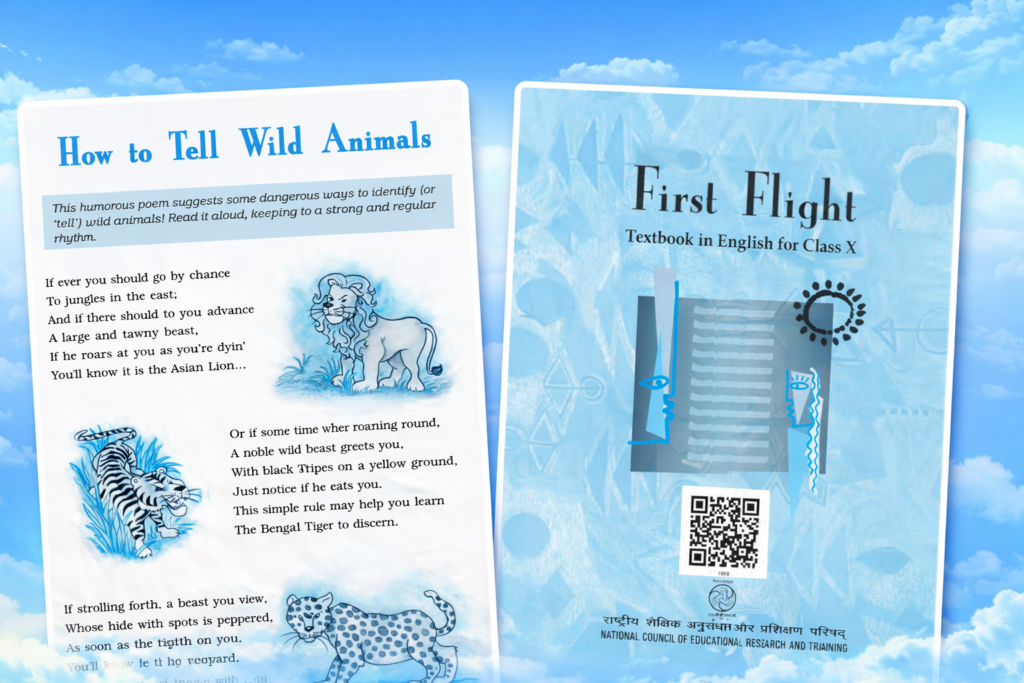
This page helps Class 10 students quickly understand how to tell wild animals summary with clear explanations and exam-focused content. It includes an easy poem summary, NCERT solutions, how to tell wild animals questions and answers, important and extra questions, and well-organised notes for revision. You will also find key points, extract-based questions, and details about how to tell wild animals poet, all written in simple language. The content is designed to support board exam preparation, improve answer writing, and save revision time with clear, syllabus-aligned explanations.
Table of Contents
how to tell wild animals summary
English summary
Have you ever wondered how you would recognize a wild animal if you suddenly met one? What if the only clue came at the most dangerous moment—when it was already too late? This poem pulls you straight into such moments, using humor and surprise to keep you alert from the very first line.
The poem presents a playful problem: how to identify wild animals. Instead of giving safe or sensible advice, the poet describes risky, funny situations where the animal’s behavior becomes the clue. Each animal is identified only after it attacks or reveals its nature, and the poem ends by showing that sometimes what you do not see can be the strongest sign of all.
The poem begins by imagining a traveler who might, “by chance,” wander into the jungles of the east. Suddenly, a large, tawny beast moves forward. There is no warning and no escape. If the animal roars at you while you are “dyin’,” that terrifying sound itself becomes the clue. At that moment, the speaker says, you will know it is the Asian Lion. The situation is dangerous, but the poem treats it lightly, using rhyme and rhythm to turn fear into humor.
Next, the poem shifts to another encounter. This time, someone is roaming around when a noble-looking wild animal appears. It has black stripes on a yellow ground, and it greets the person calmly at first. But the real test comes quickly. If the animal eats you, then the rule is simple. That is how you discern the Bengal Tiger. The poet jokingly calls this a “simple rule,” even though the situation is deadly, creating humor through contrast.
The speaker then describes another stroll where a beast comes into view. Its hide is covered with spots, as if it has been peppered all over. The moment it leaps on you, the answer becomes clear. It is the Leopard. Crying out or roaring in pain will not help at all, because the leopard will only “lep and lep again.” The poet even plays with spelling to keep the rhythm lively and the tone playful.
The poem moves closer to home in the next scene. This time, the setting is your own yard. If you meet a creature there that hugs you very, very hard, you can be sure it is a Bear. If you still have doubts, the poet jokes, the bear will give you just one more caress. The idea of a deadly attack is turned into a warm-sounding hug, which makes the humor darker and sharper.
Then the poet compares two animals that might confuse a novice. He explains that it can be hard to tell beasts of prey apart, but there is a rule that always works. Hyenas arrive with merry smiles, but if an animal appears to be weeping, then it must be a Crocodile. The line plays on the idea of “crocodile tears,” using common expressions to make the joke clear.
In the final stanza, the poem changes tone slightly. The Chameleon is described as small, like a lizard. It has no ears and not a single wing. But the true test comes from its special skill. If you look at a tree and see nothing there at all, then that very absence tells you the truth. What you cannot see is the chameleon itself.
Carolyn Wells uses danger, surprise, and playful language to turn wild animals into a series of humorous clues.
Asian Lion – fierce – reveals itself by its roar
Bengal Tiger – striped – identified when it attacks
Leopard – spotted – known by repeated leaps
Bear – powerful – shown through a crushing hug
Crocodile – deceptive – recognized by false tears
Hyena – smiling – compared with the crocodile
Chameleon – hidden – known by its invisibility
By the end, you understand that the poem’s lesson is simple and memorable. You should not test these rules in real life. The poet reminds you, through humor, that wild animals are dangerous and that learning about them is best done safely, not by experience.
how to tell wild animals Hindi summary
क्या तुमने कभी सोचा है कि अगर अचानक तुम्हारा सामना किसी जंगली जानवर से हो जाए, तो तुम उसे कैसे पहचानोगे? क्या हो अगर पहचान का इकलौता संकेत सबसे खतरनाक पल में मिले—जब सब कुछ बहुत देर हो चुका हो? यह कविता तुम्हें ऐसे ही पलों में सीधे खींच ले जाती है, जहाँ हास्य और चौंकाने वाले मोड़ तुम्हें पहली पंक्ति से ही सतर्क रखते हैं।
यह कविता एक मज़ेदार समस्या सामने रखती है—जंगली जानवरों को कैसे पहचाना जाए। सुरक्षित या समझदारी भरी सलाह देने के बजाय, कवि खतरनाक और हास्यास्पद हालात दिखाता है, जहाँ जानवर का व्यवहार ही संकेत बन जाता है। हर जानवर की पहचान तब होती है जब वह हमला करता है या अपनी असली प्रकृति दिखा देता है, और कविता यह बताकर खत्म होती है कि कभी-कभी जो दिखाई नहीं देता, वही सबसे बड़ा संकेत होता है।
कविता की शुरुआत एक ऐसे यात्री की कल्पना से होती है, जो “संयोग से” पूर्व की जंगलों में भटक जाता है। अचानक एक बड़ा, भूरा-पीला जानवर आगे बढ़ता है। न कोई चेतावनी होती है, न बचने का रास्ता। अगर वह जानवर तुम पर उस समय दहाड़े, जब तुम “मर रहे” हो, तो वही डरावनी आवाज़ पहचान बन जाती है। उसी पल, वक्ता कहता है, तुम्हें पता चल जाएगा कि वह एशियाई शेर है। हालात खतरनाक हैं, लेकिन कविता तुक और लय के सहारे डर को हास्य में बदल देती है।
इसके बाद कविता एक और मुलाक़ात की ओर बढ़ती है। इस बार कोई व्यक्ति घूम रहा होता है, तभी एक शालीन-सा दिखने वाला जंगली जानवर सामने आता है। उसके शरीर पर पीली ज़मीन पर काली धारियाँ होती हैं, और वह पहले शांत लगता है। लेकिन असली परीक्षा जल्दी आ जाती है। अगर वह जानवर तुम्हें खा जाए, तो नियम साफ़ है। इसी तरह बंगाल टाइगर की पहचान होती है। कवि मज़ाक में इसे “सरल नियम” कहता है, जबकि स्थिति जानलेवा होती है, और यही विरोधाभास हास्य पैदा करता है।
फिर वक्ता एक और सैर का वर्णन करता है, जहाँ एक जानवर दिखाई देता है। उसकी खाल पर जगह-जगह धब्बे होते हैं, मानो उसे पूरी तरह छिड़का गया हो। जैसे ही वह तुम पर छलांग लगाता है, जवाब साफ़ हो जाता है। वह तेंदुआ है। दर्द में चिल्लाना या दहाड़ना किसी काम का नहीं, क्योंकि तेंदुआ बस “फिर कूदेगा और फिर कूदेगा।” कवि लय को चंचल और माहौल को खेल-खेल वाला रखने के लिए वर्तनी से भी खेल करता है।
अगला दृश्य घर के और पास आता है। इस बार जगह तुम्हारा अपना आँगन है। अगर वहाँ कोई प्राणी तुम्हें बहुत, बहुत ज़ोर से गले लगा ले, तो समझ लो वह भालू है। अगर फिर भी शक हो, तो कवि मज़ाक में कहता है, भालू तुम्हें एक और दुलार दे देगा। घातक हमले को गर्मजोशी भरी झप्पी की तरह दिखाया गया है, जिससे हास्य और भी गहरा हो जाता है।
इसके बाद कवि दो ऐसे जानवरों की तुलना करता है, जो किसी नवसिखिए को भ्रमित कर सकते हैं। वह समझाता है कि शिकारी जानवरों में फर्क करना मुश्किल हो सकता है, लेकिन एक नियम हमेशा काम करता है। लकड़बग्घे खुश-मिज़ाज मुस्कान के साथ आते हैं, लेकिन अगर कोई जानवर रोता हुआ दिखे, तो वह मगरमच्छ ही होगा। यह पंक्ति “मगरमच्छ के आँसू” के विचार से जुड़ी है और आम कहावतों के सहारे मज़ाक को साफ़ कर देती है।
अंतिम पद में कविता का स्वर थोड़ा बदल जाता है। गिरगिट को छोटा बताया गया है, एक छिपकली जैसा। उसके न कान होते हैं और न ही एक भी पंख। लेकिन असली परीक्षा उसकी खास कला से होती है। अगर तुम किसी पेड़ को देखो और वहाँ कुछ भी न दिखे, तो वही कमी सच्चाई बता देती है। जो दिखाई नहीं देता, वही गिरगिट है।
कैरोलिन वेल्स खतरे, हैरानी और खेल-खेल वाली भाषा से जंगली जानवरों को मज़ेदार संकेतों की एक शृंखला में बदल देती हैं।
एशियाई शेर – क्रूर – अपनी दहाड़ से पहचान में आता है
बंगाल टाइगर – धारीदार – हमला करने पर पहचाना जाता है
तेंदुआ – धब्बेदार – बार-बार छलांग लगाने से जाना जाता है
भालू – ताक़तवर – ज़ोरदार झप्पी से पहचाना जाता है
मगरमच्छ – धोखेबाज़ – झूठे आँसुओं से पहचाना जाता है
लकड़बग्घा – मुस्कुराता हुआ – मगरमच्छ से तुलना में आता है
गिरगिट – छिपा हुआ – अपनी अदृश्यता से पहचाना जाता है
अंत में, तुम समझ जाते हो कि कविता का संदेश सरल और याद रहने वाला है। इन नियमों को असल ज़िंदगी में आज़माना नहीं चाहिए। कवि हास्य के ज़रिए यह याद दिलाता है कि जंगली जानवर खतरनाक होते हैं और उनके बारे में सीखना अनुभव से नहीं, बल्कि सुरक्षित तरीके से करना चाहिए।
how to tell wild animals Keywords with meanings:
Asian Lion – large tawny beast that roars as you die
Bengal Tiger – noble beast with black stripes on yellow ground
Leopard – spotted animal that leaps repeatedly on you
Bear – creature that hugs very hard
Hyena – animal that comes with merry smiles
Crocodile – beast that weeps fake tears
Chameleon – small lizard with no ears or wings that blends into trees
jungles – thick eastern forests where beasts appear
tawny – golden-brown color of lion’s fur
hide – animal’s skin
novice – someone new and puzzled by beasts
how to tell wild animals Important Phrases:
“If he roars at you as youre dyin Youll know it is the Asian Lion”
“With black stripes on a yellow ground, Just notice if he eats you”
“Whose hide with spots is peppered, As soon as he has lept on you, Youll know it is the Leopard”
“Who hugs you very, very hard, Be sure it is a Bear”
“Hyenas come with merry smiles But if they weep theyre Crocodiles”
“If there is nothing on the tree, Tis the chameleon you see”
“Twill do no good to roar with pain, Hell only lep and lep again”
“Hell give you just one more caress”
how to tell wild animals questions and answers
Text based questions and answers
Q1. Does dyin really rhyme with lion? Can you say it in such a way that it does?
Answer: No, “dyin” does not perfectly rhyme with “lion” in standard pronunciation, but the poet tweaks it for fun. Say “lion” like “lyin'” with a drawn-out “i” sound to match “dyin.”
This playful rhyme adds to the poem’s bouncy rhythm, making it memorable and humorous.
Q2. How does the poet suggest that you identify the lion and the tiger? When can you do so, according to him?
Answer: The poet says identify the Asian Lion by its roar when it advances as a large tawny beast and you’re dying: “If he roars at you as youre dyin Youll know it is the Asian Lion.” For the Bengal Tiger, notice its black stripes on yellow ground when it eats you: “Just notice if he eats you.”
This happens only during a deadly attack, turning fear into a silly clue. It keeps the humor sharp and sticks in your mind.
Q3. Do you think the words lept and lep in the third stanza are spelt correctly? Why does the poet spell them like this?
Answer: No, “lept” should be “leapt” and “lep” is not standard; correct forms are “leapt” or “leaped.” The poet spells them wrong on purpose to mimic the leopard’s quick, repeated jumps: “Hell only lep and lep again.”
This creates a fast, frantic rhythm that matches the animal’s action, boosting the poem’s funny energy.
Q4. Do you know what a bearhug is? Are there similar expressions and popular ideas about wild animals in your own languages?
Answer: A bearhug is a tight, crushing embrace like a bear gives: “Who hugs you very, very hard” and “just one more caress.” Yes, in Hindi, we say “bhains ki aankh mein bacha” for something dangerously close, or snakes “phir bhi daant dikhaate hain.”
These ideas make animals relatable and warn us cleverly through everyday sayings.
Q5. Look at the line A novice might nonplus. How would you write this correctly? Why is the poets incorrect line better in the poem?
Answer: Correctly, it should be “A novice might be nonplussed,” meaning puzzled or confused. The poet reverses it to “A novice might nonplus” for rhyme and surprise.
This twist fits the poem’s rhyme scheme perfectly and adds humor, making the line pop just like the beasts do.
Q6. Can you find other examples of poets taking liberties with language, either in English or in your own languages? Can you find examples of humorous poems in your own languages?
Answer: In English, Lewis Carroll in “Jabberwocky” invents words like “slithy” and “vorpal” for playful sound. In Hindi, Harivansh Rai Bachchan’s “Madhushala” bends rhythm for flow, or Kunwar Narayan’s witty verses twist meanings. Humorous Hindi poems include “Betal Pachisi” tales or Sukumar Ray’s “Abol Tabol” with nonsense fun.
Poets bend rules to spark joy and make language dance, helping ideas linger longer.
Q7. Much of the humour in the poem arises from the way language is used, although the ideas are funny as well. If there are particular lines in the poem that you especially like, share these with the class, speaking briefly about what it is about the ideas or the language that you like or find funny.
Answer:I like “If he roars at you as youre dyin Youll know it is the Asian Lion” because the dark idea of learning too late pairs with the perfect “dyin’-lion” rhyme for instant laughs. Also, “Hell only lep and lep again” mimics the leopard’s jumps so vividly, the misspelling bounces like the attack.
These lines mix scary beasts with clever words, turning danger into giggles that you can’t forget.
how to tell wild animals Grammar
Do as directed (Tenses) Fill in the blank with the correct tense form of the verb given in brackets:
If you _____ (go) to jungles in the east, a large beast _____ (advance) toward you.
Do as directed.(Voice Change) Change the voice:
“He roars at you as you’re dyin’.”
Do as directed.(Reported Speech) Report the speech:
The poet says, “You’ll know it is the Asian Lion.”
Do as directed. (Articles) Fill in the blank with the correct article:
_____ large and tawny beast advances toward you.
Do as directed. (Prepositions) Fill in the blank with the correct preposition:
The tiger has black stripes _____ a yellow ground.
Do as directed.(Modals) Fill in the blank with the correct modal:
You _____ notice if he eats you to discern the Bengal Tiger.
Do as directed.(Sentence Transformation) Transform into comparative degree:
The leopard leaps quickly. (Use ‘fast’)
Do as directed.(Voice Change) Change the voice:
“A beast greets you with black stripes.”
Do as directed.(Reported Speech) Change to indirect speech:
The poet asks, “Do you know what a bearhug is?”
Do as directed.(Tenses) Correct the verb form:
The hyena come with merry smiles but weep like crocodiles.
Do as directed.(Editing) Identify and correct the error in the underlined word:
The chameleon hasnt any ears at all, and not a wing.
Do as directed.(Omission) Fill in the missing word:
If there is nothing _____ the tree, ’tis the chameleon you see.
Do as directed. (Sentence Transformation) Combine the sentences using ‘when’:
You stroll forth. A beast views whose hide is peppered.
Do as directed. (Modals) Rewrite using a modal:
It does no good to roar with pain. (Use ‘may’)
Do as directed. (Gap Filling/Cloze Test) Fill in the blanks in the passage with correct forms:
If you meet a creature _____ (who/which) hugs you very hard, be sure it _____ (be) a Bear. He _____ (give) you one more caress if you have doubts.
Do as directed. (Negative to Affirmative) Transform:
It will do no good to roar with pain.
Do as directed.(Question Formation) Form a question:
Hell only lep and lep again.
Here are grammar questions answers:
go, advances
You are roared at as you’re dyin’.
The poet says that you will know it is the Asian Lion.
a
on
must
The leopard leaps faster than any other beast.
You are greeted by a beast with black stripes.
The poet asks if I/we know what a bearhug is.
comes
a single wing
on
When you stroll forth, a beast whose hide is peppered views.
You may roar with pain, but it does no good.
who/which, is, will give
It will do good to roar with pain.
Will he only lep and lep again?
Short Answer Questions
Q1. What is the main idea of the poem ‘How to Tell Wild Animals’?
Answer:The poem humorously teaches how to identify wild animals by their dangerous actions and features.
It uses funny clues like roars, eating, leaping, and hugging during attacks.
The poet turns scary jungle encounters into memorable riddles.
Q2. Describe how the poet identifies the Asian Lion.
Answer:A large and tawny beast advances in eastern jungles.
It roars at you as you’re dyin’, confirming it’s the Asian Lion.
The mighty roar is the key sign at the moment of danger.
Q3. How does the Bengal Tiger differ from other beasts in identification?
Answer:It has black stripes on a yellow ground.
Notice if it eats you to discern the noble Bengal Tiger.
This simple rule highlights its deadly eating habit.
Extract Based Questions
Extract: “If strolling forth, a beast you view, Whose hide with spots is peppered, As soon as he has lept on you, Youll know it is the Leopard. Twill do no good to roar with pain, Hell only lep and lep again.”
Q1. Who is the speaker describing in this extract? How?
Answer: The Leopard, with hide peppered with spots.
It leaps on you repeatedly, ignoring roars of pain.
The misspelled “lep” mimics its quick jumps.
Q2. What does the poet mean by “Twill do no good to roar with pain”?
Answer: Roaring in pain won’t stop the Leopard’s attack.
It will only leap and leap again without mercy.
This builds humor through helplessness.
Long Answer Questions
Q1. Explain how the poet differentiates between a Hyena and a Crocodile. (100-120 words)
Answer: Distinguishing beasts of prey can nonplus a novice.
Hyenas come with merry smiles, showing their laughing nature.
Crocodiles weep fake tears, like crocodile tears before snapping jaws.
This contrast uses popular ideas: hyenas laugh, crocs cry while preying.
The poet’s rhyme and surprise make it funny and easy to remember.
It warns that danger hides behind smiles or tears in wild animals.
Q2. Describe the Chameleon and how it is identified. What makes it unique? (100-120 words)
Answer: The true Chameleon is small, a lizard sort of thing.
It has no ears at all and not a single wing.
If nothing appears on the tree, ’tis the chameleon you see.
Its camouflage blends perfectly with branches, tricking the eye.
Unlike attacking beasts, it’s sneaky and invisible.
This shifts from violent clues to clever absence, adding poem variety.
FAQs
Q1. How does the poet differentiate between the Asian Lion and the Bengal Tiger in the poem?
The Asian Lion is identified by its loud roar as it advances in the eastern jungles.
The Bengal Tiger is recognized by its black stripes on yellow skin when it attacks and eats its prey.
Q2. What physical feature of the leopard’s hide helps identify it?
The leopard’s hide is described as being peppered with dark spots.
When it leaps repeatedly on its victim, this spotted skin confirms it is a leopard.
Q3. Which animals in the poem show deceptive behaviour while hunting?
The hyena and the crocodile show deceptive behaviour.
Hyenas appear with merry smiles, while crocodiles pretend to weep using false tears.
Q4. According to the poet, how can one surely identify a bear?
A bear is identified by its extremely tight and crushing hug.
The poet humorously calls this deadly grip a gentle caress.
Q5. What three physical characteristics distinguish the chameleon in the poem?
The chameleon is small like a lizard, has no ears, and has no wings.
Its main feature is camouflage, as it blends so well that it seems invisible.
Q6. How does the poet suggest telling a hyena from a crocodile?
Hyenas come with cheerful, smiling expressions.
If an animal appears to cry, the poet says it must be a crocodile, referring to crocodile tears.
Q7. What does the word tawny mean in the description of the Asian Lion?
Tawny refers to a golden-brown or yellowish-brown colour.
It describes the lion’s fur and adds to its powerful and fearsome appearance.
Q8. What is poetic license, and how is it used in the word dyin’?
Poetic license allows poets to bend language rules for effect.
The poet uses dyin’ instead of dying to create rhyme, rhythm, and humour in the poem.
