

This page helps you understand fire and ice class 10 summary clearly and prepare confidently for exams. It includes an easy explanation of the poem by Robert Frost, written in simple language for CBSE students. You will find NCERT-style questions and answers, extra questions for practice, and helpful notes covering theme, symbolism, and poetic devices. The page also supports exam preparation with fire and ice class 10 questions and answers, clear explanation, and revision-friendly content aligned with the Class 10 English syllabus.
Table of Contents
fire and ice class 10 summary
English Summary
Do you believe the world will end in flames, or will it freeze into silence? Imagine everything you know disappearing because of one powerful human feeling. This short poem pulls you straight into that frightening question and makes you think about yourself too.
The poem talks about two ideas people have about how the world might end. One idea is fire, and the other is ice. In the end, the poet shows that either one could destroy the world, because both come from dangerous human emotions.
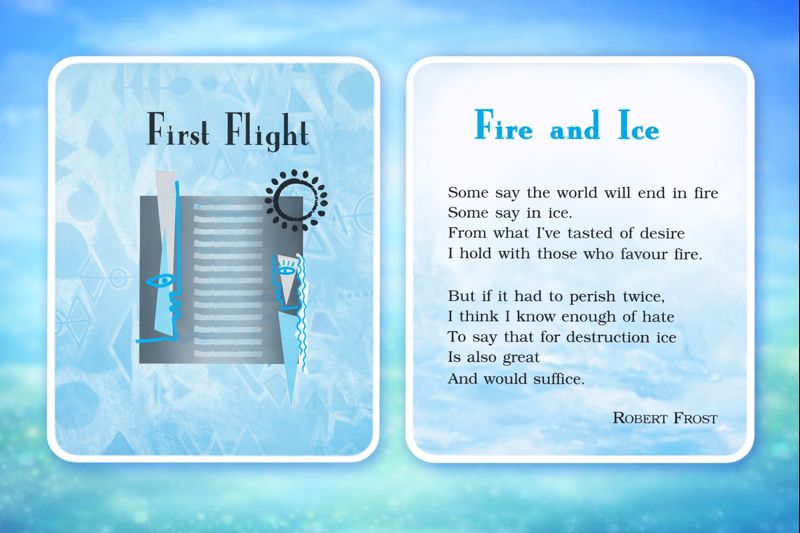
The poem begins by saying that some people believe the world will end in fire, while others believe it will end in ice. Right away, the speaker shows that there is disagreement and uncertainty about the future. The poet does not describe the real end of the world with science. Instead, he connects these endings to human feelings. When the speaker says, “From what I’ve tasted of desire,” he shows that he has personal experience with strong emotions. He has seen how desire can burn inside people. Because of this experience, he agrees with those who believe the world will end in fire. Fire here stands for burning emotions like desire, greed, and lust, which grow fast and can destroy everything in their path.
The poem does not stop there. It takes a turn with the line, “But if it had to perish twice.” This creates a new situation. The speaker now imagines the world ending again, a second time. He says that he knows enough about hate to believe that ice could also destroy the world. Ice represents cold emotions such as hatred, coldness, and indifference. These feelings may seem quiet and slow, but they can be just as deadly. Ice freezes warmth, care, and understanding between people.
In the final lines, the poet makes his point very clear. He says that for destruction, ice “is also great / And would suffice.” This means that hate alone is enough to destroy everything, just like fire. The poem ends calmly, but the message is serious. Both strong desire and deep hatred can lead to ruin. The world does not need explosions or disasters. Human emotions themselves are powerful enough to cause the end.
Characters
The Speaker – thoughtful – shares ideas and personal experience about human emotions
People of the world – divided – hold different beliefs about how the world will end
The message for you is simple but important. You learn that uncontrolled desire and cold hatred are equally dangerous. If these emotions grow, they can destroy relationships, societies, and even the world itself.
fire and ice Hindi Summary
क्या तुम्हें लगता है कि दुनिया आग की लपटों में खत्म होगी, या फिर पूरी तरह जमकर खामोश हो जाएगी? ज़रा सोचो, अगर एक ताक़तवर इंसानी भावना की वजह से तुम्हारी जानी-पहचानी हर चीज़ गायब हो जाए तो क्या होगा। यह छोटी-सी कविता तुम्हें सीधे इसी डरावने सवाल के सामने खड़ा कर देती है और तुम्हें अपने बारे में भी सोचने पर मजबूर करती है।
यह कविता दुनिया के अंत को लेकर लोगों के दो विचारों की बात करती है। एक विचार आग का है और दूसरा बर्फ का। अंत में कवि दिखाता है कि ये दोनों ही दुनिया को नष्ट कर सकते हैं, क्योंकि दोनों की जड़ इंसान की खतरनाक भावनाओं में है।
कविता की शुरुआत इस बात से होती है कि कुछ लोग मानते हैं कि दुनिया आग में खत्म होगी, जबकि कुछ लोग मानते हैं कि वह बर्फ में खत्म होगी। शुरू से ही वक्ता यह दिखा देता है कि भविष्य को लेकर मतभेद और अनिश्चितता है। कवि विज्ञान की मदद से दुनिया के असली अंत का वर्णन नहीं करता। इसके बजाय, वह इन अंतों को इंसानी भावनाओं से जोड़ता है। जब वक्ता कहता है, “मैंने इच्छा का स्वाद चखा है,” तो वह दिखाता है कि उसे तेज़ भावनाओं का निजी अनुभव है। उसने देखा है कि इच्छा कैसे इंसान के भीतर जलती है। इसी अनुभव के कारण वह उन लोगों से सहमत होता है जो मानते हैं कि दुनिया आग में खत्म होगी। यहाँ आग उन जलती हुई भावनाओं का प्रतीक है जैसे इच्छा, लालच, और वासना, जो बहुत तेज़ी से बढ़ती हैं और अपने रास्ते में आने वाली हर चीज़ को नष्ट कर सकती हैं।
कविता यहीं नहीं रुकती। पंक्ति “लेकिन अगर इसे दूसरी बार भी नष्ट होना पड़े” के साथ कहानी एक मोड़ लेती है। इससे एक नई स्थिति बनती है। अब वक्ता दुनिया के दूसरी बार खत्म होने की कल्पना करता है। वह कहता है कि उसे नफ़रत के बारे में इतना अनुभव है कि वह मानता है कि बर्फ भी दुनिया को नष्ट कर सकती है। बर्फ ठंडी भावनाओं का प्रतीक है, जैसे घृणा, ठंडापन, और उदासीनता। ये भावनाएँ भले ही शांत और धीमी लगें, लेकिन ये भी उतनी ही घातक हो सकती हैं। बर्फ लोगों के बीच की गर्मजोशी, परवाह, और समझ को जमा देती है।
अंतिम पंक्तियों में कवि अपनी बात बिल्कुल साफ़ कर देता है। वह कहता है कि विनाश के लिए बर्फ भी “काफी है / और पर्याप्त होगी।” इसका मतलब यह है कि सिर्फ़ नफ़रत ही सब कुछ नष्ट करने के लिए काफी है, ठीक वैसे ही जैसे आग। कविता शांत ढंग से खत्म होती है, लेकिन उसका संदेश बहुत गंभीर है। तेज़ इच्छा और गहरी नफ़रत—दोनों ही तबाही की ओर ले जाती हैं। दुनिया को खत्म करने के लिए धमाकों या आपदाओं की ज़रूरत नहीं है। इंसानी भावनाएँ ही अपने-आप में इतनी शक्तिशाली हैं कि वे अंत ला सकती हैं।
पात्र
वक्ता – विचारशील – इंसानी भावनाओं पर अपने विचार और निजी अनुभव साझा करता है
दुनिया के लोग – विभाजित – दुनिया के अंत को लेकर अलग-अलग मान्यताएँ रखते हैं
तुम्हारे लिए संदेश सीधा और ज़रूरी है। तुम सीखते हो कि बेकाबू इच्छा और ठंडी नफ़रत—दोनों ही बराबर खतरनाक हैं। अगर ये भावनाएँ बढ़ती हैं, तो ये रिश्तों, समाजों, और यहाँ तक कि पूरी दुनिया को भी नष्ट कर सकती हैं।
fire and ice Keywords with meanings:
- Fire – burning desire or strong passion
- Ice – cold hatred or indifference
- Desire – a strong wish or craving
- Hate – intense dislike or anger
- Perish – to die or end
- Suffice – to be enough
- Destruction – complete damage or ruin
- Conflict – disagreement or fight
- Fury – extreme anger
- Cruelty – causing pain without mercy
- Indifference – not caring at all
- Important Phrases
- “Some say the world will end in fire”
- “Some say in ice”
- “From what I’ve tasted of desire”
- “I hold with those who favour fire”
- “But if it had to perish twice”
- “I think I know enough of hate”
- “To say that for destruction ice is also great”
- “And would suffice”
fire and ice class 10 questions and answers
fire and ice Text based questions and answers
Q1. There are many ideas about how the world will end. Do you think the world will end some day? Have you ever thought what would happen if the sun got so hot that it burst, or grew colder and colder?
Answer: Many people believe that the world will end one day, either by becoming too hot or too cold. The poem makes us think about these possibilities by comparing them to fire and ice. If the sun got too hot and burst, it would be like fire destroying everything. If it grew colder and colder, it would be like ice freezing and stopping life. This helps us realize that nature’s forces, as well as human emotions, have powerful effects, and that we should think carefully about how we live and treat the world.
Q2. For Frost, what do fire and ice stand for?
Answer: In the poem, fire and ice are symbols of human emotions. Fire stands for strong desire, passion, and greed, which can burn and destroy. Ice represents cold hatred, hatred, and indifference, which can also cause destruction slowly but surely. Frost uses these symbols to show that both desires and hate are dangerous and have the power to end the world, meaning that our emotions can have great effects on ourselves and others if not controlled.
Q3. What is the rhyme scheme of the poem? How does it help in bringing out the contrasting ideas in the poem?
Answer: The poem follows a simple rhyme scheme of ABA ABC BCB. This pattern connects the ideas of fire and ice by repeating some rhymes and changing others, which shows the contrast between the two. The rhyme scheme helps to keep the poem short and sharp, making the powerful message clear and balanced. It highlights the opposing forces of passion and hate, helping readers understand that both are equally strong and destructive. This structure makes the poem easy to remember and impactful.
fire and ice Grammar
Do as directed: Fill in the blank with the correct tense.
The world ______ (end) in fire or ice, says some people.
Do as directed: Change into passive voice.
Some say the world will end in fire.
Do as directed: Report the speech in indirect form.
The speaker said, “I hold with those who favour fire.”
Do as directed: Fill in the blank with an appropriate article.
___ ice is also great for destruction.
Do as directed: Choose the correct preposition.
People argue ___ how the world will end someday.
Do as directed: Use a suitable modal verb.
You ____ be careful about your desires and hatreds.
Do as directed: Combine the sentences using ‘because’.
Desire can burn strong. It can destroy like fire.
Do as directed: Change the question into reported speech.
“What do fire and ice stand for?” asked the student.
Do as directed: Fill in the blank with the correct verb form.
If the world _____ (perish) once by fire, it may perish twice by ice.
Do as directed: Correct the sentence if there is any error.
The hatred are as dangerous as burning desire.
Do as directed: Form a negative sentence.
The world will end in ice.
Do as directed: Change into active voice.
The world is said to end in fire or ice.
Do as directed: Fill in the blanks:
The speaker thinks fire ____ (cause) by desire and ice ____ (cause) by hate.
Do as directed: Make a question for the answer.
Answer: Fire and ice represent human emotions in the poem.
Do as directed: Spot the missing word in the sentence.
Fire and ice are symbols ___ human feelings.
Here are grammar Questions answers
yes
The world is said to end in fire or ice.
The world will be ended in fire, say some people.
The speaker said that he holds with those who favour fire.
An ice is also great for destruction.
People argue about how the world will end someday.
You must be careful about your desires and hatreds.
Desire can burn strong because it can destroy like fire.
The student asked what fire and ice stand for.
If the world perishes once by fire, it may perish twice by ice.
Hatred is as dangerous as burning desire.
The world will not end in ice.
People say that fire or ice will end the world.
The speaker thinks fire is caused by desire and ice is caused by hate.
What do fire and ice represent in the poem?
Fire and ice are symbols of human feelings.
fire and ice Extra Question answers based on chapter
Q1. There are many ideas about how the world will end. Do you think the world will end some day? Have you ever thought what would happen if the sun got so hot that it burst, or grew colder and colder?
Answer: Many people believe the world will end someday by becoming too hot or too cold.
If the sun got too hot and burst, it would be like fire destroying everything.
If it grew colder and colder, it would be like ice freezing all life.
This makes us think about the power of nature and human emotions.
Q2. For Frost, what do fire and ice stand for?
Answer: Fire represents strong desires, passion, and greed that burn inside people.
Ice stands for cold hatred, cruelty, and indifference that freeze hearts.
Both fire and ice are symbols of powerful emotions that can destroy the world.
Frost warns us that these emotions, if uncontrolled, can be very dangerous.
Q3. What is the rhyme scheme of the poem? How does it help in bringing out the contrasting ideas in the poem?
Answer: The poem’s rhyme scheme is ABA ABC BCB, which connects and contrasts fire and ice ideas.
It uses repeated rhymes to link the two opposite forces, showing balance and contrast.
The rhyme helps keep the poem short, clear, and impactful.
This pattern makes the message memorable and emphasizes both emotions equally.
If you want me to prepare answers for more questions or specific ones, please share them.
FAQs
Q1. What is the central idea of the poem Fire and Ice by Robert Frost?
The central idea of Fire and Ice is that human emotions can destroy the world. Fire represents desire and greed, while ice stands for hatred and indifference. Frost shows that both emotions are equally dangerous.
Q2. What do fire and ice symbolize in Fire and Ice Class 10?
In Fire and Ice, fire symbolizes strong desire, passion, and greed. Ice represents cold hatred, cruelty, and indifference. Both symbols show how uncontrolled emotions can lead to destruction.
Q3. Why does the poet support those who believe the world will end in fire?
The poet supports fire because, from his experience, desire is powerful and destructive. The line From what I’ve tasted of desire shows that he has seen how desire can burn and ruin lives.
Q4. What is meant by the line But if it had to perish twice?
This line suggests a second possible end of the world. After fire, the poet imagines ice as another force of destruction. It shows that hatred alone is also sufficient to cause complete ruin.
Q5. Why is ice considered as dangerous as fire in the poem?
Ice represents hatred and indifference, which destroy slowly but deeply. According to Frost, cold emotions freeze love and understanding, making ice equally powerful and destructive as fire.
Q6. What is the rhyme scheme of Fire and Ice and why is it important?
The rhyme scheme of Fire and Ice is ABA ABC BCB. This pattern connects and contrasts the ideas of fire and ice, helping highlight the balance between desire and hatred in a short poem.
Q7. Is Fire and Ice about the literal end of the world?
No, the poem is not about a scientific end of the world. It has a deeper meaning and focuses on how human emotions like desire and hatred can destroy relationships and society.
Q8. What poetic devices are used in Fire and Ice Class 10?
The poem uses symbolism, metaphor, antithesis, and alliteration. Fire and ice are symbols of emotions, while their contrast strengthens the poem’s central message.
Q9. What is the main message of Fire and Ice for students?
The poem teaches that uncontrolled desire and deep hatred are equally harmful. Frost warns students that emotions, if not controlled, can cause serious damage to individuals and society.
Q10. Why is the poem Fire and Ice short but impactful?
The poem has only nine lines, but it delivers a strong message clearly. Its simple language, sharp contrast, and focused theme make it memorable and effective for exam preparation.
